
Reviewed · SUCRE AND MARAGUA TRIPS
Sucre: 2 days trek in Inca Trails and the Crater de Maragua
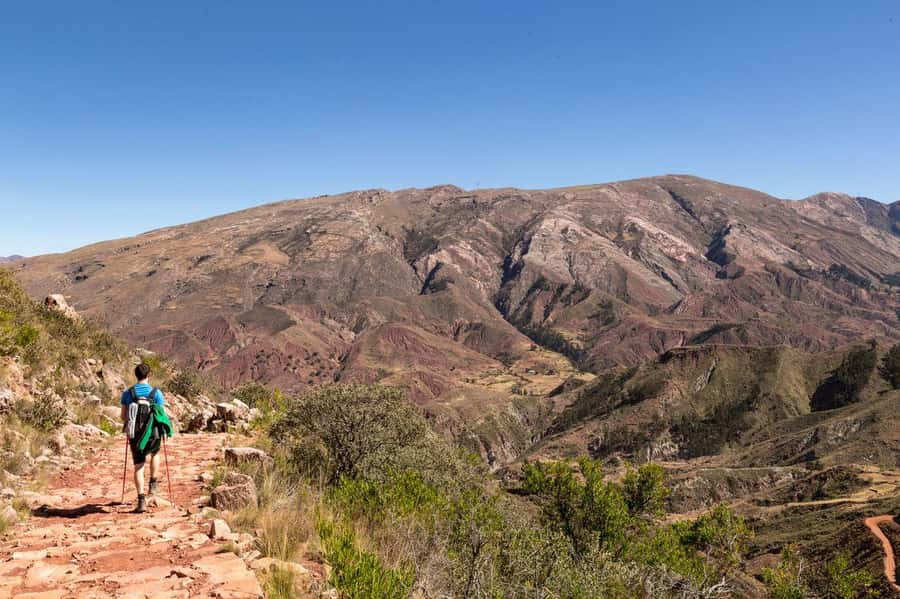
Maragua Crater is not really a crater in the volcanic sense. It is a huge folded bowl of red, green, purple, and ochre mountains, reached by old stone paths and narrow valleys south of Sucre. This two-day trek gives you a fine mix of scenery, local culture, dinosaur footprints, and one very memorable road back to town. I especially like the ancient Inca trail and the chance to meet a Jalqa weaver rather than simply walk past rural villages. The main caution is the terrain: day one includes a steep climb, and the overnight stay is simple.
I also like the small-group format, limited to 10 people, and the way the route combines public transport at the start with a private vehicle at the end. Guides who have led recent trips include Gary, Li, Lizandro, and Johnny, and the best reports single out their warmth, language skills, cooking, and knowledge of local geology and plants. Pack light, though. You will carry your things over two long walking days, and the food and lodging are practical rather than fancy.
Key points of the Sucre to Maragua trek
- Ancient walking route: Follow stone sections of a trail associated with the Inca period, then walk beside a river and through mountain valleys.
- Two different hiking days: Day one covers about 16 kilometres with a demanding climb to the crater. Day two covers about 12 kilometres and is generally easier after the first uphill exit.
- Maragua Crater viewpoints: Visit the Devil’s Throat and other viewpoints inside and above the folded mountain bowl.
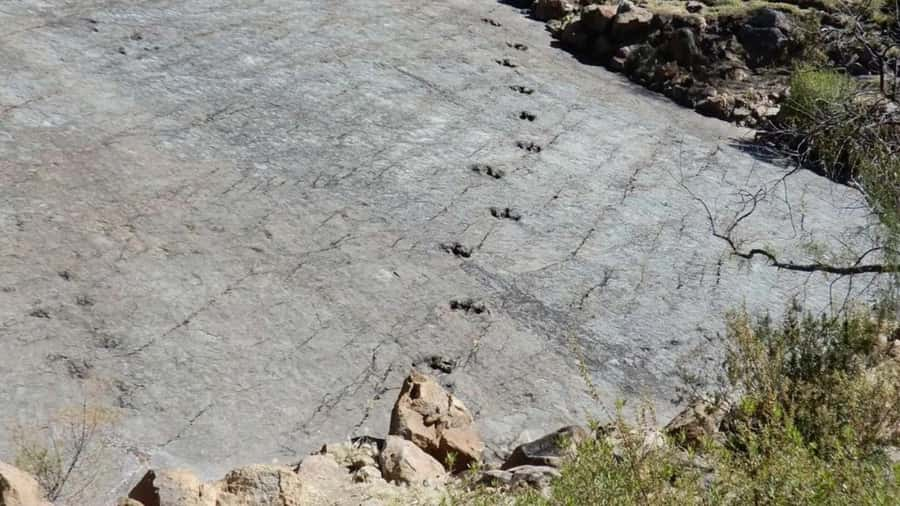
- Dinosaur footprints and Jalqa culture: See the Niño Mayo footprints and visit a local textile maker in the community.
- Simple rural overnight: Sleep in a shared room, with dinner, breakfast, and two lunches included.
- Good value at $124: The fee covers transport, entry tickets, a guide, lodging, meals, and fruit, making it a practical package for active visitors based in Sucre.
Why Maragua Crater is worth two days
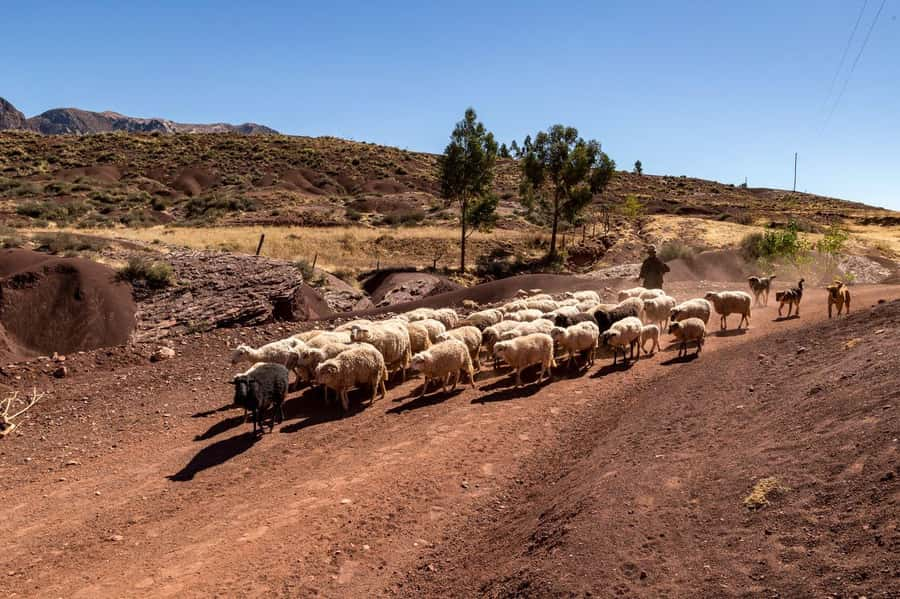
The appeal here is variety. You are not walking the same kind of trail for two straight days. The route begins on old stone paths, shifts to flatter ground beside a river, climbs through folded mountain country, and ends with a scenic drive back to Sucre.
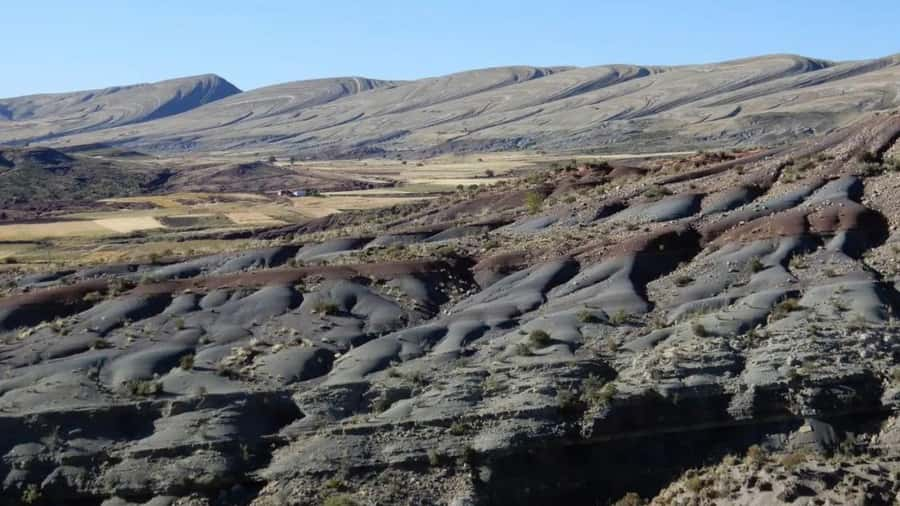
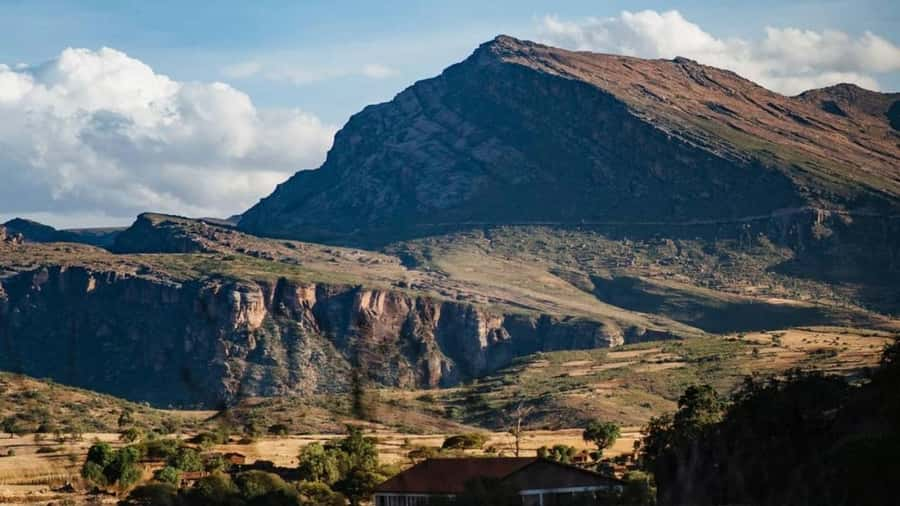
Maragua Crater is the visual centerpiece. Its colored ridges form a broad, dramatic bowl, with lines in the rock that make the mountains look folded by hand. The colors and scale change as you move through the area, so the first view is not the last word. Inside the crater, you can visit viewpoints such as the Devil’s Throat, where you may spot a wide range of birds.
The setting also matters because the route connects scenery with living communities. You pass through areas tied to Jalqa culture, see traditional villages, and visit a weaver who explains the textile work of the community. This gives the walk more purpose than a simple mountain outing. You get a look at how people in the area express local identity through cloth, color, and pattern.
The trek also follows paths connected with two very different periods of the past. The first day includes an old Inca route, while the second brings you to dinosaur footprints at Niño Mayo. The contrast is part of the fun: one moment you are stepping along carefully laid stone, and later you are looking at marks left by animals that walked here millions of years ago.
More Sucre and Maragua trips from Bolivia
- Walking tour in Sucre: History, Culture & Amazing Views
★ 4.8 · 79 reviews - Sucre: 1-Day Trek in the Crater of Maragua and Inca Trails
★ 4.8 · 75 reviews - Sucre: Free Walking tour (History, culture and traditions)
★ 4.8 · 47 reviews
Day one: Chataquila, Chaunaca, and the climb to the crater
Meet at 8:00 in the morning at the main entrance of Estadio Patria on German Mendoza Street. From there, you take a public bus toward Chataquila. The ride is scheduled for roughly 8:15 to 9:30, though the exact waiting time can vary with the number of passengers.
This public transport start is less polished than a private pickup, but it is part of the trip’s local character and helps keep the price down. It also means you should arrive on time and be ready for a little uncertainty before the walking begins. Your guide handles the group, but the bus schedule is not presented as a precise private departure.
At Chataquila, the first walking section follows old Inca stone paths. The trail descends, and this opening part gives you the clearest sense of the route’s archaeological character. Watch your footing and keep your knees in mind. A downhill stone path can be harder than it looks, especially if the stones are uneven.
The route then continues through the Chaunaca and Socapampa area. Here the trail follows the river for much of the way. The ground is mostly level, with some short, gentle rises and drops. This middle section offers a useful break after the initial descent, although you still have many kilometres ahead.
Some accounts of the walk describe guides moving at a brisk pace. That can be helpful for keeping the schedule, but it may leave less time for photographs. If you like stopping often, tell your guide early. A small group makes this easier, and a guide such as Li or Gary can usually explain what you are seeing while you walk.
The final part of day one is the hardest. You climb toward Maragua Crater, beginning with a steep ascent and then continuing along the mountain slopes. The total distance is about 16 kilometres. You do not need technical climbing skills, but you do need steady footing, decent stamina, and the willingness to walk uphill after an already full day.
That effort earns you the first real views into the crater. The route does not simply deliver you to one lookout and end. Once inside the crater, you have time for additional activities and viewpoints, including the Devil’s Throat. This is also the section where the scenery feels most unusual, with folded, colorful ridges surrounding the broad interior.
Dinner and the overnight stay are included. The accommodation is a shared room and should be treated as basic rural lodging. One especially positive account described the hostel as unexpectedly cute, while another pointed out that the food and accommodation were very simple. Both impressions can be true: the place may be pleasant and welcoming without offering hotel comforts.
The overnight stay and what to pack
The included meals are breakfast, two lunches, and dinner across the trip. Fruit is also provided. That is useful on a two-day hike, but bring extra snacks if you normally eat between meals. Water is not included, so carry enough for the walking day and plan to refill only where your guide confirms it is suitable.
Your overnight bag should be small. The advice to pack light is worth taking seriously. You need hiking shoes, sun protection, rain gear, a change of clothes, and personal items, but you do not need a full suitcase for one night. A waterproof bag helps protect clothing and documents if the weather turns wet.
The supplied list also calls for a flashlight, personal medication, a passport or copy, and an identity card or copy. Bring toilet paper, wet wipes, soap, and a toothbrush and toothpaste because personal hygiene supplies are not included. Swimwear is listed as an item to bring, though no specific swimming activity is described, so ask the provider if that matters to you.
Day two: dinosaur footprints, weaving, and Majada
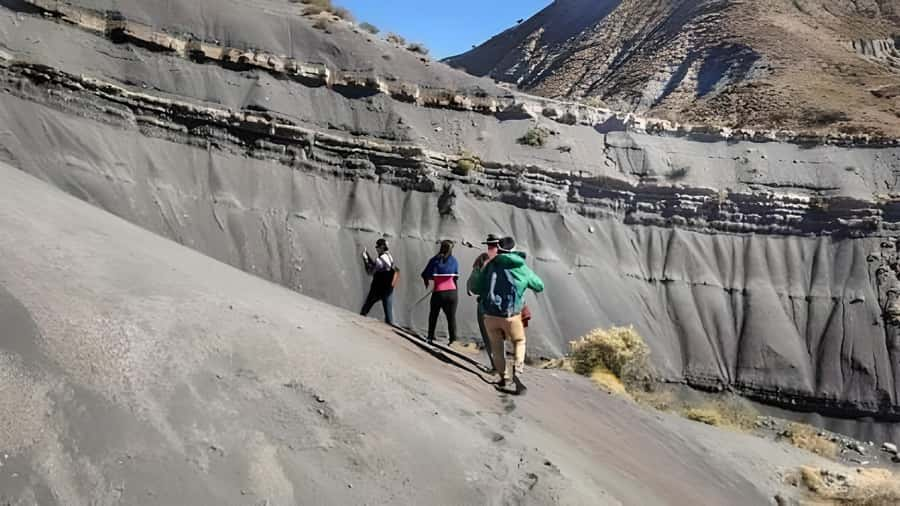
The second day starts early with a walk from the lodging through the Maragua area. To leave the crater, you hike uphill to a viewpoint where you can look back across the entire bowl. This climb is real, but the route becomes easier after reaching the high point.
From there, expect shorter ups and downs rather than another long, sustained climb. The trail leads toward the dinosaur footprints at Niño Mayo. The site adds a welcome change of focus. Instead of only looking at peaks and valleys, you are examining physical traces of prehistoric life in the rock.
The next stop is a local weaver. You can learn how textile work is made in the community and see the skill behind Jalqa designs. This is one of the most valuable parts of the trip for anyone who wants more than scenery. You are given a direct connection to local culture, not just a passing view of a village from the trail.
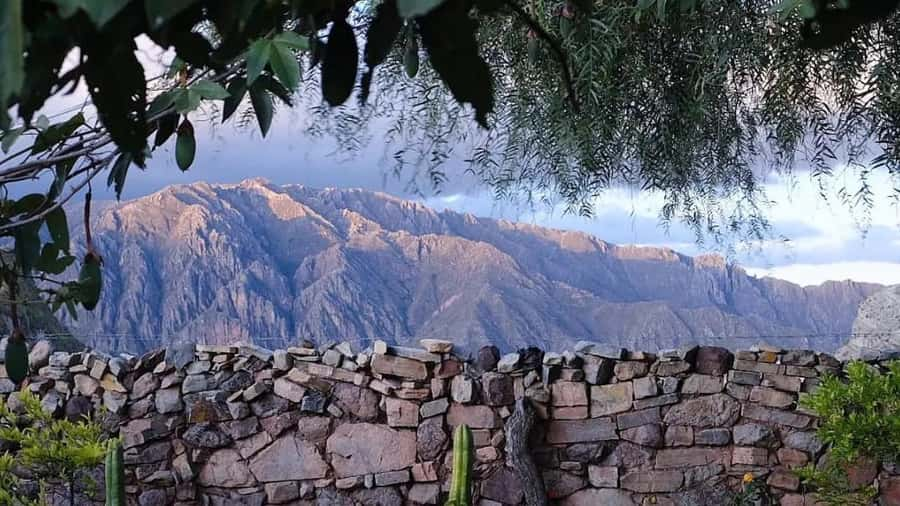
After Niño Mayo, the walk continues toward Majada. This five-kilometre section is described as easy but very scenic, with colorful mountains and views toward the Frailes Mountains. After roughly two hours of walking, a private vehicle meets the group for the return to Sucre.
The drive itself is a highlight, not merely a transfer. One recent account called the road back spectacular and said the return journey alone made the trip worthwhile. Expect a dramatic mountain road rather than a quick highway ride. If you are prone to motion sickness, consider bringing the medication you already use for winding roads.
The second day covers about 12 kilometres, bringing the total walking distance to around 28 kilometres. That is a substantial amount for two days, but the effort is spread across different types of ground. Day one is more demanding because of the final ascent to Maragua. Day two begins with a climb out of the crater, then settles into easier walking.
A few more trips around Bolivia worth a look
- La Paz: Charquini Mountain Guided Hike
★ 4.7 · 287 reviews - From La Paz: Condoriri Andes, Pico Austria Full Day Hiking
★ 5.0 · 3 reviews
Guides, group size, and the value of local knowledge
Jalq’a Tours was started by former CondorTrekkers guides who created their own small operation. The guide can make a big difference on a route like this, since the value is not only in reaching each stop. You want help understanding the geology, plants, footprints, villages, and weaving traditions along the way.
Recent departures have included guides named Gary or Gari, Li, Lizandro, and Johnny. Gary was praised for taking people away from the most obvious route to meet local residents, as well as for his understanding of botany and geology. Lizandro was noted for strong English, good humor, and careful organization. Johnny was described as a friendly English-speaking guide who cooked well and took excellent photographs.
Guide assignments can change, so you should not book expecting one specific person unless the provider confirms it. English and Spanish are available, and French may be possible depending on guide availability. Small groups are limited to 10, which gives you a better chance to ask questions and set a reasonable photo pace than you would have on a large bus tour.
The guide also provides an important safety net. Some people walk this route independently, but the trail includes several changes in direction, community areas, and cultural stops. A guide can help with timing, explain the dinosaur footprints, and make local encounters more respectful and useful.
What $124 includes, and what it does not
At $124 per person, this is a strong package if you want a guided two-day trek from Sucre without arranging each part yourself. The price includes entry tickets, the public transport from Sucre, private transport back, a professional guide, shared overnight lodging, one breakfast, two lunches, one dinner, and fruit.
The transport arrangement is particularly good value. You get the lower-cost public bus at the start and a private vehicle for the return, when everyone is tired and the road itself becomes part of the experience. Meals also remove much of the planning burden.
Still, the price does not cover water, snacks, or personal hygiene supplies. You should budget for those separately and bring them from Sucre. The overnight stay is shared, and the meals are simple. If you want private rooms, restaurant-style food, or a light daypack carried for you, this is not that kind of trip.
The tour allows free cancellation up to 24 hours in advance, and you can reserve without paying immediately. Those terms are useful if your Bolivia plans are still shifting, but the bigger decision is physical readiness. This is a proper hike, not a sightseeing outing with a short walk.
Who should book this trek
I would recommend it to you if you enjoy long day walks, unusual geology, old routes, and direct contact with rural communities. It suits active visitors who want to see a different side of Sucre and do not mind simple lodging.
You should be comfortable with a steep uphill section on day one, another climb out of the crater on day two, and roughly 28 kilometres over the full trip. Good hiking shoes matter. Sunglasses, a hat, sunscreen, rain gear, water, a flashlight, and a waterproof bag belong in your pack.
The tour is not suitable for children under 10, pregnant women, people with mobility impairments, people afraid of heights, or people over 95. Those limits are sensible given the uneven trails, exposed viewpoints, and long distances.
If two days sounds rushed, the route can be extended to three days and two nights. That version adds the Tumpeca area, with rock paintings, unusual geological formations, ancient paths, forests, and more contact with nearby communities. You need to arrange that option directly with the provider.
Should you book the Maragua Crater trek?
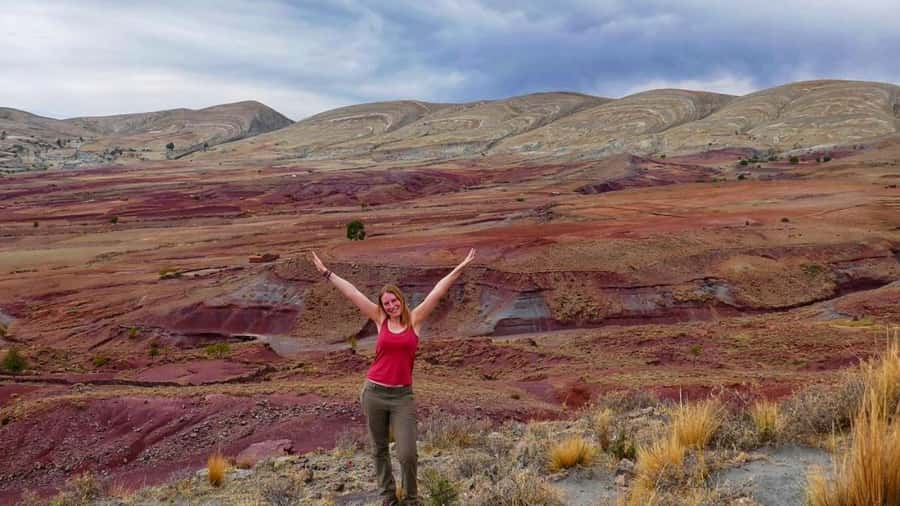
Book it if you want colorful mountain scenery with real variety, and if a simple overnight stay is acceptable. The route gives you much more than a viewpoint: an old Inca path, river walking, the Maragua bowl, the Devil’s Throat, dinosaur footprints, Jalqa textile work, and the Frailes Mountains near Majada.
Skip it if you prefer short walks, private rooms, fixed transport schedules, or plenty of spare time for photography. The first day is long, the food and lodging are basic, and some guides may keep a brisk pace.
For active visitors in Sucre, I think the $124 price is well judged. You pay for a compact, guided mountain experience with strong cultural and geological interest, not polished luxury. Pack light, bring water and snacks, tell your guide when you want photo stops, and this can be one of the most memorable two-day outings in the Chuquisaca region.
FAQ
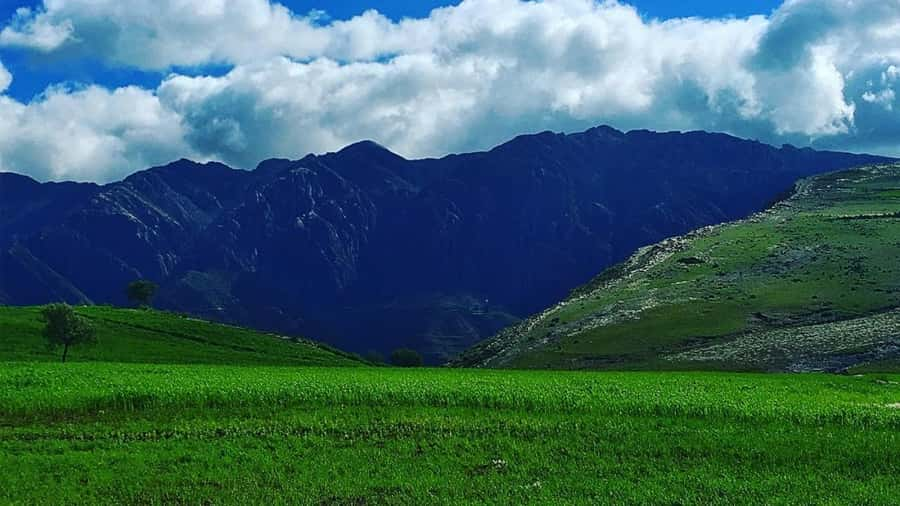
How long is the trek?
The trek lasts two days. The first day covers about 16 kilometres, and the second day covers about 12 kilometres, for roughly 28 kilometres in total.
Where does the tour meet in Sucre?
The meeting point is at the main entrance of Estadio Patria on German Mendoza Street. The meeting time is 8:00 in the morning.
What transport is used?
You take public transport from Sucre to Chataquila at the start. A private vehicle returns the group to Sucre from the Majada area on the second day.
Are meals included?
Yes. The trip includes one breakfast, two lunches, one dinner, and fruit. Water, snacks, and meals not listed are not included.
What kind of accommodation is provided?
You spend one night in a shared room. The accommodation is simple rural lodging.
Is the trek available in English?
Yes. Professional guiding is available in English and Spanish. French may be available depending on the guide assigned.
Can the trek be extended to three days?
Yes. A three-day, two-night option can include the Tumpeca area, rock paintings, geological formations, ancient trails, forests, and nearby communities. You need to contact the provider to arrange it.
More 2-Day Experiences in Bolivia
- From La Paz: Uyuni Salt Flats 2-Day Tour with Bus Transfers
★ 4.3 · 90 reviews - From La Paz: 2-Day Tour to Isla del Sol & Lake Titicaca
★ 4.3 · 54 reviews - From La Paz: Huayna Potosí 2-Day Climbing Trip
★ 4.7 · 10 reviews - La Paz: 2-day Excursion to Lake Titicaca and Sun Island
★ 3.6 · 6 reviews
Just added around Bolivia
- Uyuni tour express from Sucre by bus (round trip)★ 4.2 · 4 reviews
- Uyuni: Classic Uyuni Salt Flats Tour + Hotel Pickup★ 3.0 · 4 reviews
- UYUNI SALT FLAT: SUNRISE & STARLIGHT EXPERIENCE★ 3.1 · 3 reviews
- Uyuni: Salar de Uyuni Traditional Tour+Sunset Tour★ 4.8 · 3 reviews
- UYUNI SALT FLAT: SUNSET & STARLIGHT EXPERIENCE★ 5.0 · 3 reviews
- Uyuni: Salar de Uyuni and San Pedro de Atacama 3-Day Tour★ 4.2 · 4 reviews
- Uyuni: 3-Days Salt Flats and Desert Adventure Tour with Food★ 3.8 · 4 reviews
- Uyuni: Full-day tour, Salt flats and Sunset experience★ 4.8 · 5 reviews
Sucre and Maragua Trips, compared.
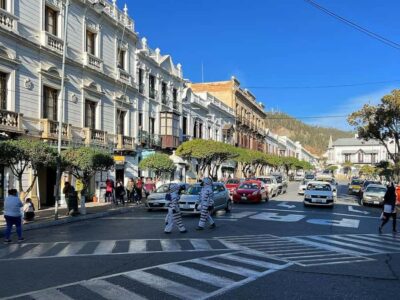
Walking tour in Sucre: History, Culture & Amazing Views
Read our review →
Free Walking tour (History, culture and traditions)
Read our review →
Sunrise, the Crater de Maragua and old Cave Paintings
Read our review →
A Day Spent Exploring the Historic Area of the City
Read our review →
Uyuni tour express from Sucre by bus (round trip)
Read our review →Browse the lists this tour appears in