
Reviewed · TIWANAKU RUINS TOURS
Tiwanaku; Pre Incan Ruins Tours from La Paz
Tiwanaku is one of the most striking ancient sites in the Andes, not because it has been perfectly preserved, but because its huge stone blocks still raise hard questions. The precision-cut masonry at Pumapunku and the carved Sun Gate give you a close look at a culture that worked stone with remarkable skill centuries before the Inca.
I like the tour’s strong range of sights, from temple platforms and monoliths to museum pieces that help explain the ruins. I also like the low $23 price for shared transport, a bilingual guide, and visits to the archaeological site and museums. The catch is simple: entrance fees, food, and drinks are extra, and the day involves a lot of walking under the open sky.
Key points to know before you go
- Pumapunku’s stonework is the main architectural puzzle: Look closely at the clean angles and repeated cuts in the huge blocks.
- The Sun Gate is smaller than many people expect: Its importance comes from its carvings and cultural meaning, not sheer size.
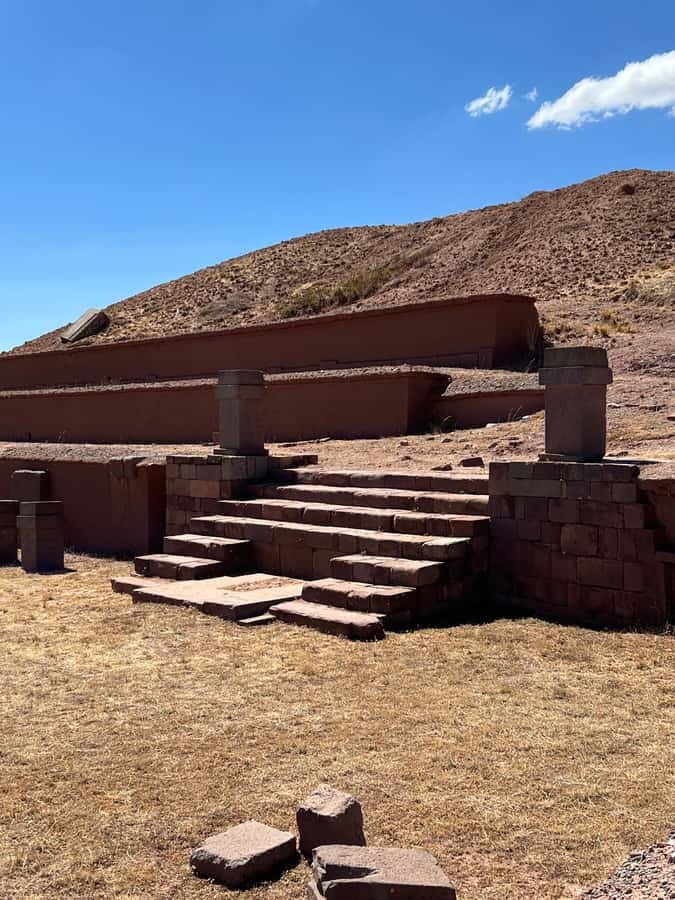
- Kalasasaya and Akapana show different sides of Tiwanaku: One is a stone ceremonial enclosure, while the other is a large stepped platform.
- The museums add needed context: The Bennett Monolith and ceramics make the outdoor ruins easier to understand.
- The day is long but efficient: Plan on about 8 hours and 30 minutes, including roughly four hours on the bus.
- Extra costs matter: The $23 tour price does not include admission, lunch, snacks, or drinks.
Why Tiwanaku deserves a day from La Paz
Tiwanaku sits near the southeastern shore of Lake Titicaca, about two hours from La Paz. The site covers several square kilometers, so this is not a quick stop beside the road. You need time to walk between the major structures and to place the carved stones in their wider setting.
The Tiwanaku culture developed in the high Andes and supported a large society in a difficult environment. Farming methods such as raised fields and terraces helped people grow crops despite cold conditions and thin air. Their influence reached well beyond the ceremonial center, shaping art, architecture, and religious ideas across nearby regions.
I find Tiwanaku especially valuable because it shows a different chapter of Andean history from the one most visitors know. The Inca arrived much later. Here, you are looking at the work of an earlier culture whose influence helped shape the Andes long before Spanish conquest.
The site’s exact purpose and decline are still not fully settled. That uncertainty is part of the appeal, but it also means your guide’s explanation matters. A good guide should separate established facts from guesses and help you understand what archaeologists know, what they debate, and what remains unclear.
More Tiwanaku ruins trips from La Paz
- Private Tiwanaku and Titicaca Day Trip from La Paz
★ 4.5 · 62 reviews - La Paz: Tiwanaku Archeological Site Full-Day Tour
★ 4.2 · 34 reviews - From La Paz: Tiwanaku and Lake Titicaca One-Day Tour
★ 4.7 · 17 reviews
Leaving La Paz from Hotel Sagarnaga
The tour begins near Hotel Sagarnaga, where the agency office is located. You can wait at the office or in the hotel lobby before departure. From there, shared transport takes you toward Tiwanaku, with about two hours on the road each way.
That bus time is a major part of the day. I would bring water, a small snack, and something warm, since conditions can change quickly at high altitude. Comfortable shoes are essential, and you should carry your passport or ID card as requested for the tour.
The transport is shared rather than private. That keeps the price down, but it also means the schedule is built around the group. If you want a quiet, flexible day with long stops at only one or two ruins, a private outing would give you more control. If you want a practical way to reach Tiwanaku without arranging transport yourself, this shared format makes sense.
The tour finishes at the Basilica of Saint Francis in La Paz. That central ending point is useful if you want to continue exploring the city on foot after returning.
First look at the Tiwanaku archaeological site
The main guided visit lasts about two and a half hours. That time is divided among the outdoor ruins and the museums, so do not expect a slow, solitary archaeological study. You will cover ground and hear an overview of the site’s history, design, and religious role.
The open-air setting is part of the experience. You can see the broad layout of the ceremonial center and compare large stone structures with smaller carved pieces. At the same time, the high-altitude sun can feel strong, and there is little shelter. I would use sunscreen, wear a hat, and keep water within easy reach.
Tiwanaku’s builders worked with local stone and created formal spaces that were carefully aligned and decorated. The scale is impressive, but the finer details are just as important. Look for carved faces, geometric patterns, and the way individual blocks fit together.
Your bilingual guide speaks English and Spanish. The quality of the day will depend heavily on how clearly the guide explains the ruins. One booking account described a guide as a conspiracy theorist and said a tip was requested before the tour had properly begun. I would treat that as a warning to clarify tipping expectations at the start and to judge unusual claims carefully. Another booking account praised the guide highly, so experiences can vary.
Pumapunku and the mystery of exact stone cuts
Pumapunku is the stop that most clearly shows Tiwanaku’s technical skill. The site is famous for massive blocks with straight edges, carefully shaped corners, and repeated cuts that appear highly controlled.
I would not visit expecting a complete temple. Much of the structure is ruined, and the scattered stones can look confusing without explanation. That is where the guide earns their place. The key is learning how the surviving blocks may have been arranged and why their workmanship matters.
At Pumapunku, you can focus on the practical questions. How were the blocks shaped? How were they moved? How were the pieces fitted together? The site does not provide one easy answer, which makes it a good place to listen closely and avoid exaggerated theories.
The ruins are outdoors, so you will spend time standing and walking on uneven ground. The tour information warns that there is very little sitting outside the bus and lunch. If you have trouble walking for long periods, this is an important factor to consider before booking.
A few more trips around La Paz worth a look
- La Paz and El Alto: Cable Car Rides and Walking Tour
★ 4.8 · 790 reviews - La Paz Half-Day Walking Tour
★ 4.8 · 591 reviews - La Paz: Private City Tour with Cable Car & Moon Valley Visit
★ 4.9 · 508 reviews - La Paz: Full Day Trip to Copacabana and Isla del Sol
★ 4.5 · 400 reviews
Kalasasaya, the Temple of the Standing Stones
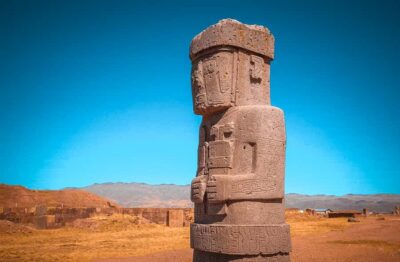
Kalasasaya is often translated as the Temple of the Standing Stones. Its upright stone markers create a more defined ceremonial space than the scattered blocks at Pumapunku.
This area helps you see that Tiwanaku was not simply a collection of large stones. The builders planned courtyards, platforms, and enclosed spaces for specific purposes. As you walk through the site, try to picture how the arrangement would have guided movement and attention during ceremonies.
Kalasasaya is also connected with some of Tiwanaku’s best-known carved monuments. The setting gives you a chance to look at both the stonework and the larger plan of the site. I like this stop because it shifts your attention from engineering alone to the social and religious life that once filled these spaces.
Your guide’s explanation is important here too. Without context, the standing stones can seem plain. With context, their placement becomes easier to read as part of a carefully designed ceremonial center.
The Sun Gate and its carved message
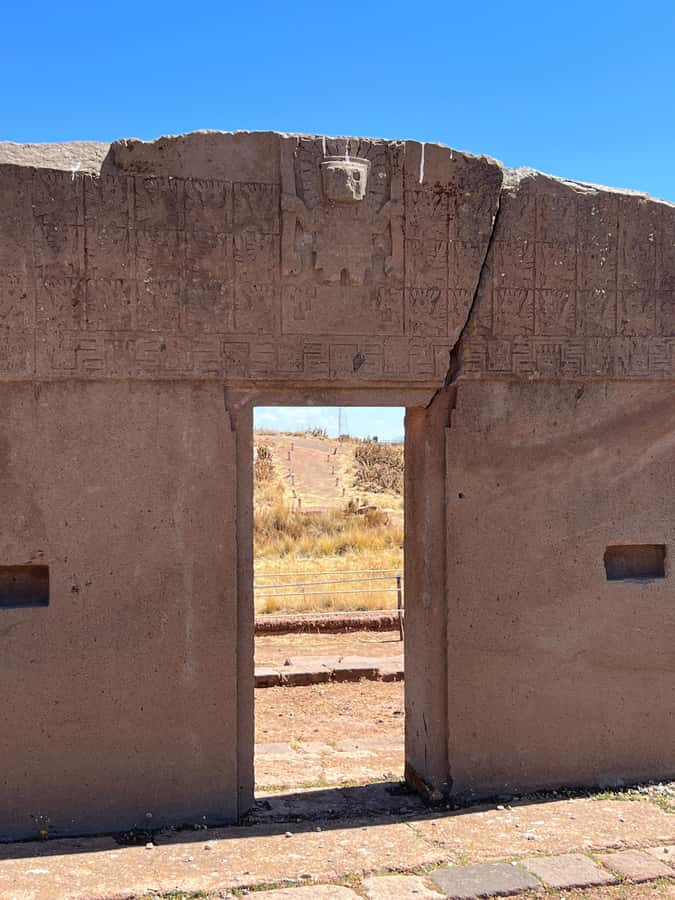
The Sun Gate is one of Tiwanaku’s most recognizable objects. It is a single stone gateway covered with intricate carvings, including a central figure and rows of smaller forms.
Do not judge it only by its size. The gateway is not enormous, but its surface decoration makes it special. Take time to look at the carving rather than simply taking a quick photograph and moving on. The details are difficult to appreciate from a distance.
The Sun Gate also gives you a direct view of Tiwanaku’s artistic style. The repeated figures and organized design show how visual symbols were used to express religious or political ideas. The precise meaning of every carved element is not certain, but the craftsmanship is clear.
The guided visit here lasts about 20 minutes. That is enough for an introduction and photographs, but not enough for a long independent study. If this is your favorite part of Tiwanaku, make a mental note to return to it during any free moment the schedule allows.
Akapana and the shape of a ceremonial platform
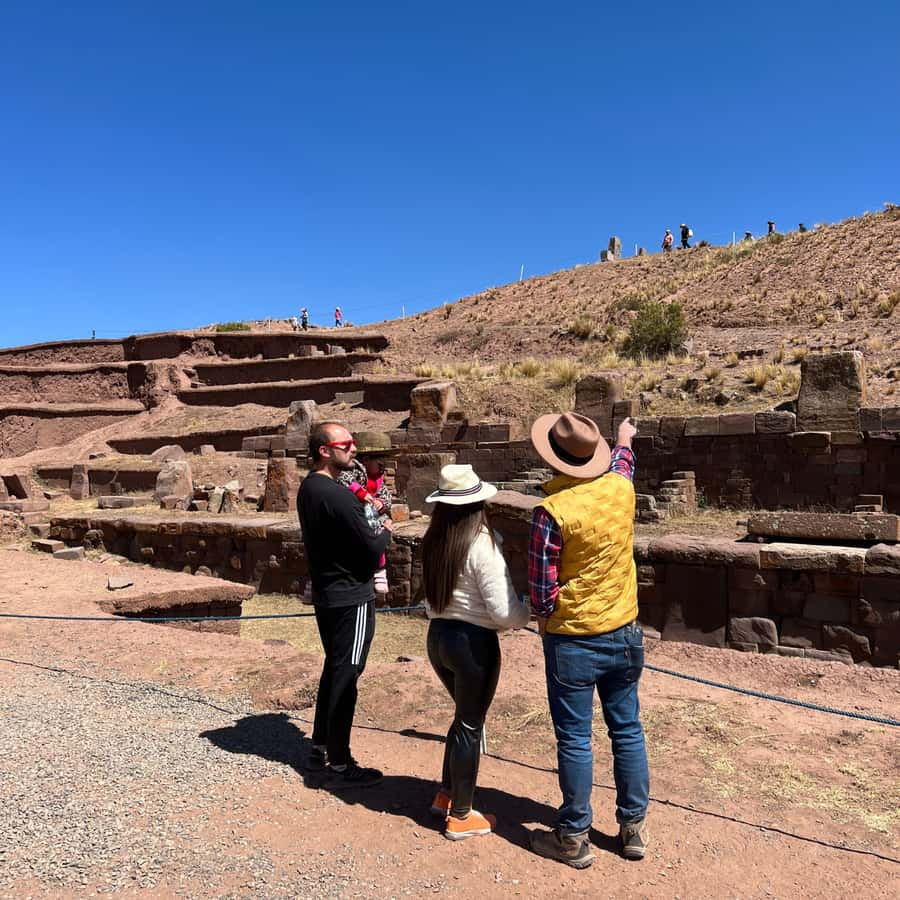
Akapana is a large stepped structure and one of the main outdoor stops. The guided visit lasts about 30 minutes, giving you time to understand its form and place in the ceremonial center.
From Akapana, the layout of Tiwanaku becomes easier to grasp. You can see how platforms and open spaces relate to each other, rather than viewing each ruin as an isolated object. The structure is not intact in the way a restored monument might be, so your guide’s description helps you imagine its original appearance.
This is another stop where comfortable shoes matter. The day includes frequent walking, and the ground around the ruins may be uneven. You should expect sun, wind, and limited opportunities to sit.
I also appreciate that Akapana adds variety to the tour. Pumapunku focuses on stone cutting, Kalasasaya on standing stones and enclosure, and Akapana on large-scale construction. Together, they show how Tiwanaku combined technical work with ceremonial planning.
The Ceramic Museum and site museum
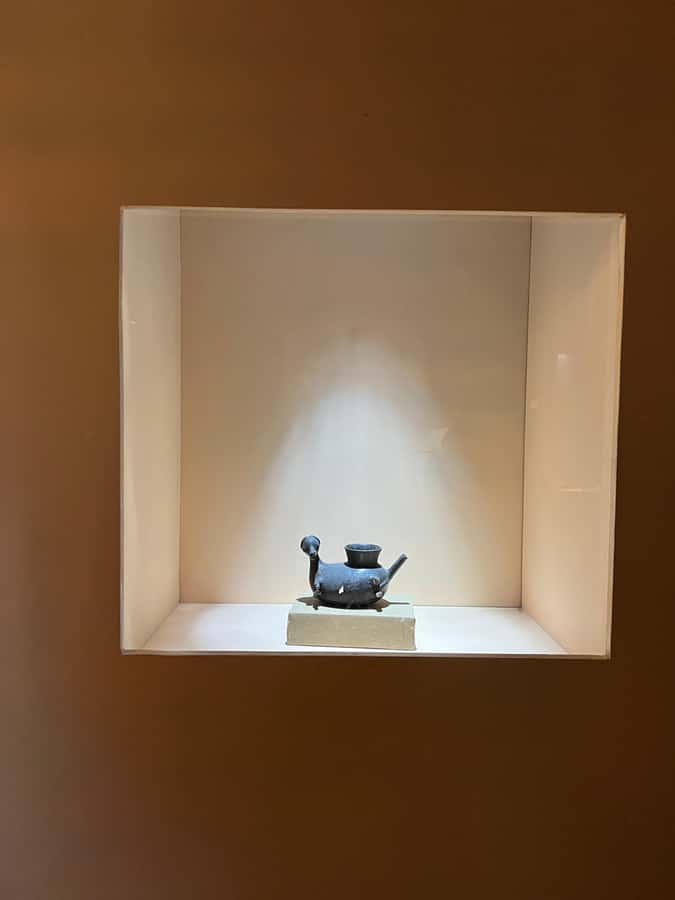
The museum visits are short but useful. The Ceramic Museum receives a guided visit of about 15 minutes, while the Museo del Sitio de Tiwanaku receives about 10 minutes.
Those brief stops will not replace a full museum visit, but they give you a closer look at objects that can be hard to understand outdoors. Ceramics reveal styles, symbols, and everyday or ceremonial details that large stone structures cannot show on their own.
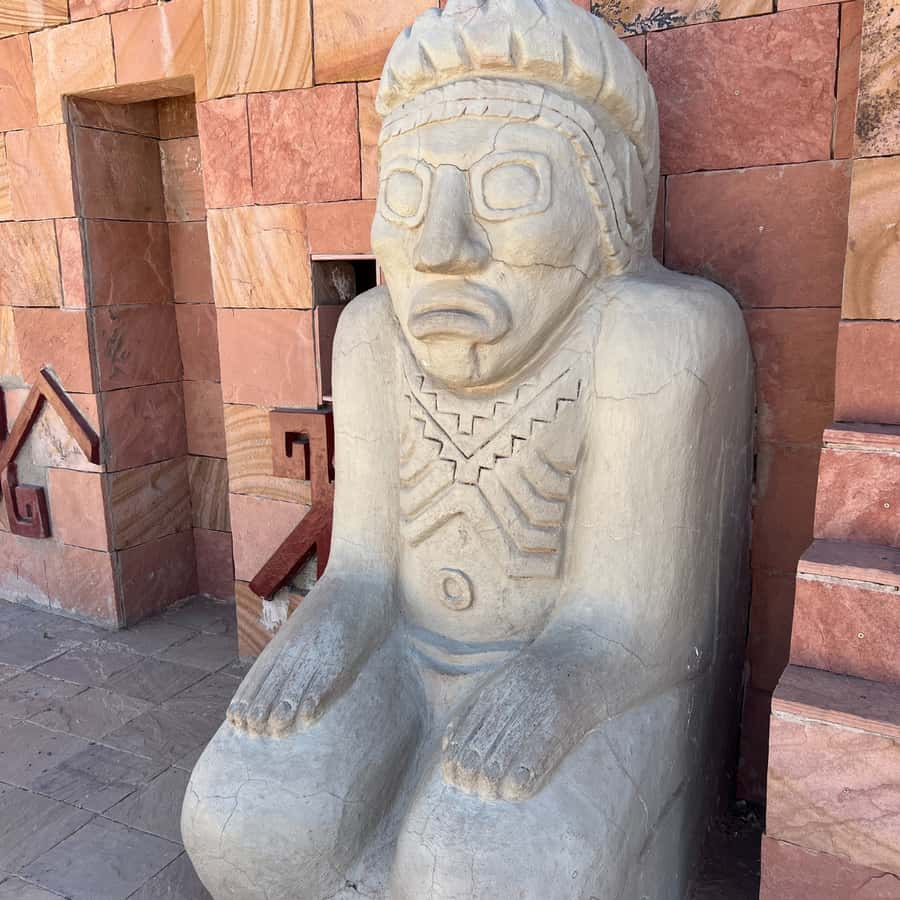
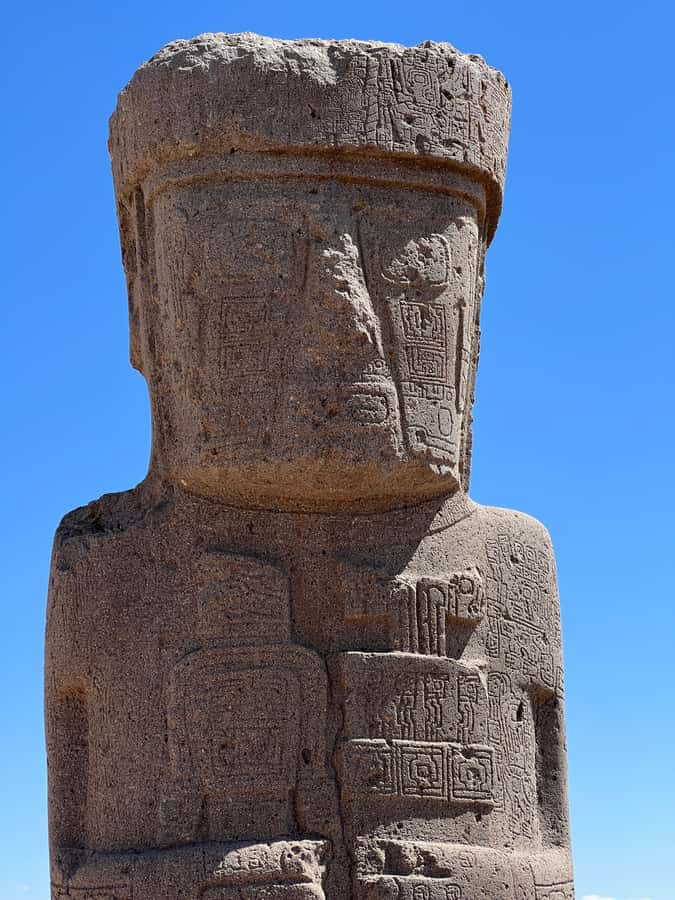
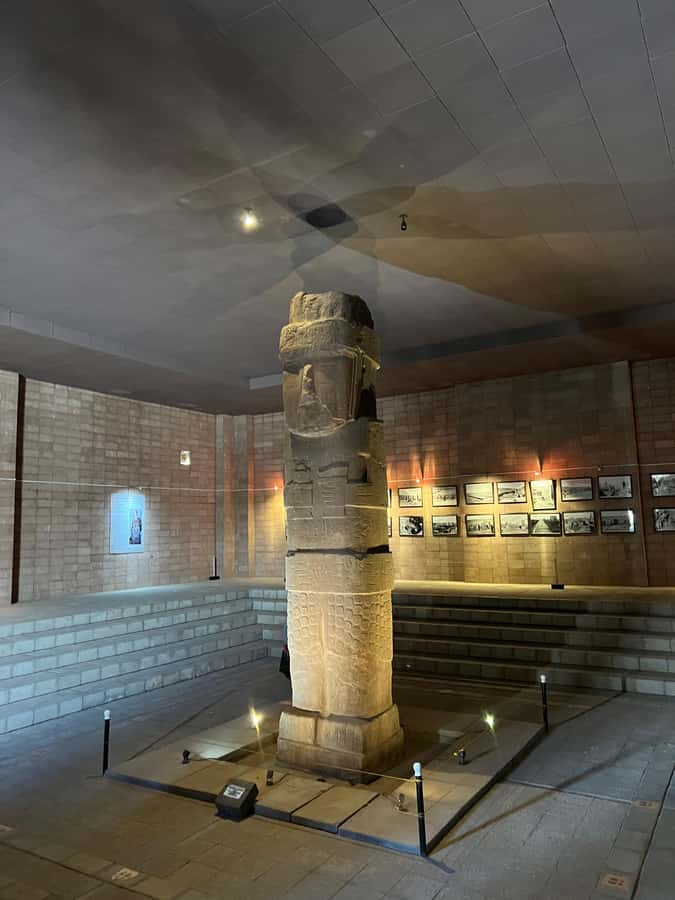
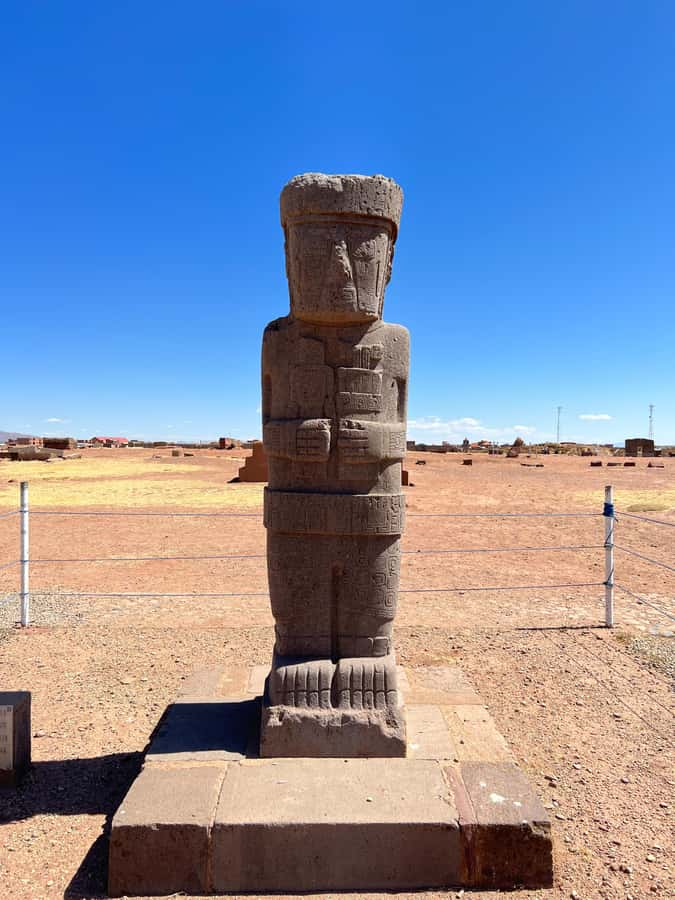
The site museum is home to the famous Bennett Monolith, one of Tiwanaku’s best-known carved figures. Seeing a major monolith indoors lets you inspect its form and surface more closely than you might manage in an exposed archaeological area.
I would pay attention to how the museum objects connect with the buildings outside. The best part of the day is not simply checking off ruins. It is seeing how carvings, ceramics, monoliths, and architectural spaces fit into one Andean culture.
The short museum visits may feel rushed if you prefer reading every display. Still, they are valuable because the outdoor sections can otherwise seem abstract. Think of the museums as quick visual background, not as the main event.
What the $23 price really covers
At $23 per person, this is an inexpensive way to reach Tiwanaku from La Paz. The price includes shared transport, a shared bilingual guide in English and Spanish, and visits to the ruins and museums.
The value is strongest if you are comfortable with a group schedule and want the basic logistics handled. The two-hour ride in each direction would be inconvenient to arrange without transport, and the guide adds structure to a large site that can be hard to interpret alone.
The price does not include the entrance fee, lunch, snacks, or beverages. One recent booking account reported additional charges totaling 140 Bs, not including a tip. Since the exact admission cost is not supplied here, I would ask the agency to confirm the current entrance amount and any other mandatory fees before departure.
Bring enough cash for the costs that are not included. A packed lunch or snack is sensible, since the day runs for 510 minutes and the schedule includes a long ride home. A bottle of water is also essential for the walking sections.
Free cancellation is available up to 24 hours before departure, and you can reserve now and pay later. Those policies help if your La Paz plans are still shifting, but the main decision is physical: can you handle a long day with extensive outdoor walking?
Who will enjoy this tour most
I would choose this tour if you want a straightforward first visit to Tiwanaku and prefer a guide to explain the site as you go. It suits history fans, architecture enthusiasts, and anyone curious about Andean cultures before the Inca.
It also works well for budget-conscious visitors. The shared format keeps the listed price low, and the English and Spanish guide makes the major sights accessible to a wider group.
You should think twice if you want a relaxed day with lots of spare time. The itinerary is packed with ruins, two museums, bus travel, and a lunch period, leaving little room for lingering. The tour also requires substantial walking in an outdoor archaeological site.
I would be cautious if you dislike unclear extra charges or strong personal opinions from guides. Ask about entrance fees and tipping before leaving La Paz, and expect the guide quality to shape the day. The most useful guide will explain the evidence and keep speculation in its proper place.
My verdict on the Tiwanaku day trip
I recommend booking this tour if your priority is seeing Tiwanaku without paying for private transport. You get the major sites, the Sun Gate, the Bennett Monolith, bilingual guiding, and a full day from La Paz for a modest base price.
Go in with realistic expectations. The ruins are not fully reconstructed, the outdoor conditions can be tiring, and the additional entrance cost changes the final budget. Bring water, a snack, sturdy shoes, sun protection, and your passport or ID card.
For me, the strongest reason to go is the contrast between the giant engineering at Pumapunku and the small carved details of the Sun Gate and museum objects. If you can handle the long bus ride and walking, Tiwanaku offers one of the clearest ways to encounter the older Andean world beyond the Inca story.
FAQ
How long does the Tiwanaku tour last?
The activity lasts 510 minutes, or about 8 hours and 30 minutes. The schedule includes roughly two hours of bus travel in each direction.
Where does the tour begin?
The meeting point is near Hotel Sagarnaga in La Paz. You can visit the agency office or wait in the hotel lobby until the tour begins.
Where does the tour finish?
The tour finishes at the Basilica of Saint Francis in La Paz.
Is transportation included?
Yes. Shared transportation is included in the tour price.
Is a guide included, and what languages are available?
Yes. A shared bilingual guide is included, with English and Spanish available.
Are entrance fees and food included?
No. The entrance fee, lunch or snacks, and beverages are not included.
Just added around La Paz
- Private Tour of Tiwanaku Ruins from La Paz★ 5.0 · 3 reviews
- From La Paz: Lake Titicaca and Copacabana Private Tour★ 5.0 · 5 reviews
- Private Tiwanaku and Titicaca Day Trip from La Paz★ 4.8 · 3 reviews
- LA PAZ: GUIDED TOUR CHACALTAYA + VALLEY OF THE MOON★ 3.6 · 3 reviews
- La Paz: Uyuni tour ending in Atacama Chile by bus.★ 3.9 · 3 reviews
- La Paz: The Feminist Tour★ 5.0 · 3 reviews
- Titicaca Lake: Highlights Tour from La Paz by Bus★ 4.0 · 3 reviews
- From La Paz: Trip to Uyuni Salt Flats with Wine at Sunset★ 4.4 · 4 reviews
Tiwanaku Ruins Tours, compared.
Private Tiwanaku and Titicaca Day Trip from La Paz
Read our review →

Private Tiwanaku and Titicaca Day Trip from La Paz
Read our review →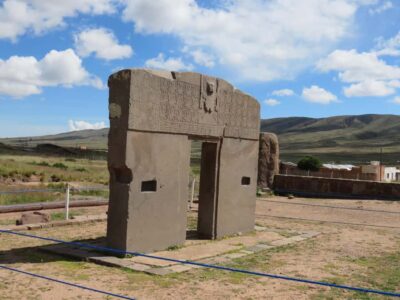
Browse the lists this tour appears in