
Reviewed · LA PAZ TOURS
La Paz: The Feminist Tour
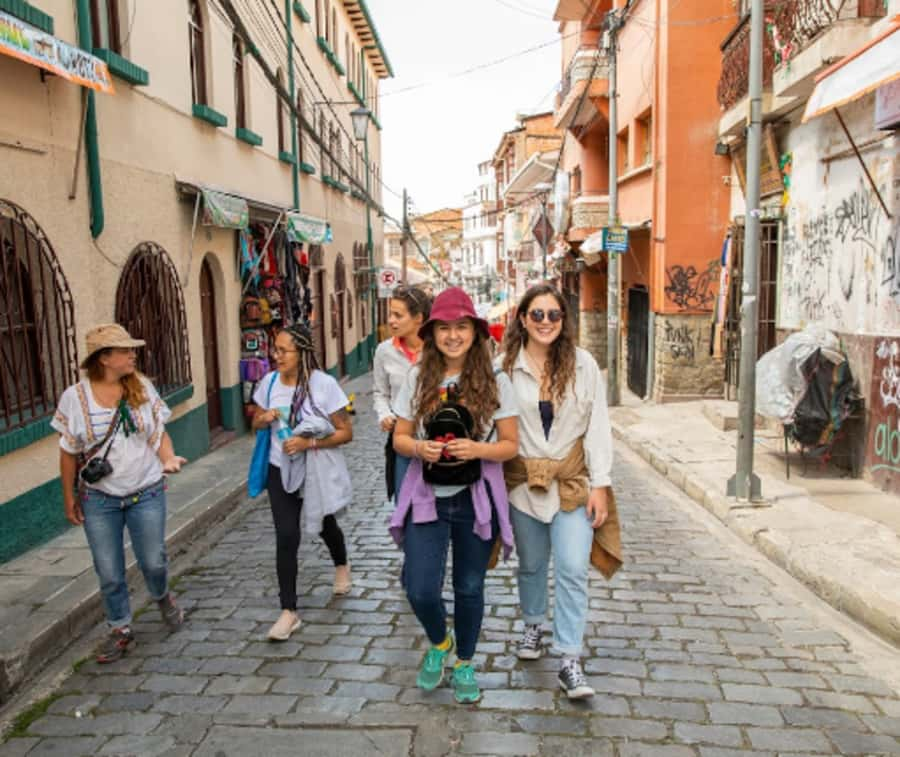
La Paz looks different when you follow the stories of its women. This 2.5-hour walk links city life with women’s rights, identity, and daily survival, asking what changes when you are indigenous, an immigrant, a mother, a student, or a street merchant. I like the clear focus and the chance to hear about Bolivia beyond monuments and markets. I also like the small group, capped at 10 people, which should leave room for real questions.
The main consideration is the high-altitude walking. You will need water, sun protection, and a steady pace. The tour is not suitable for wheelchair users, and it is a poor fit if you want a light sightseeing stroll with little discussion of social issues.
Key points at a glance
- A women-centered view of La Paz: Explore how gender, ethnicity, work, family, and migration shape life in the city.
- A small group of up to 10: The size should make sensitive questions easier to ask.
- Guides with personal specialties: Anita and Emma Radar Villaroel are among the guides associated with this experience, with different guides bringing subjects such as folklore, dance, rituals, or spiritualism.
- A serious but human conversation: Learn about access to education, control over one’s body, political voice, and women’s achievements in Bolivia.
- A practical high-altitude walk: Bring water, sunglasses, a hat, sunscreen, and comfortable clothing.
- Good value at $25: The price covers a 150-minute guided cultural walk, with no food or drinks included.
La Paz through women’s eyes
Many city walks explain what you are looking at. This one asks who gets to work there, move through it, speak publicly, study, raise a family, and make decisions about their own body.
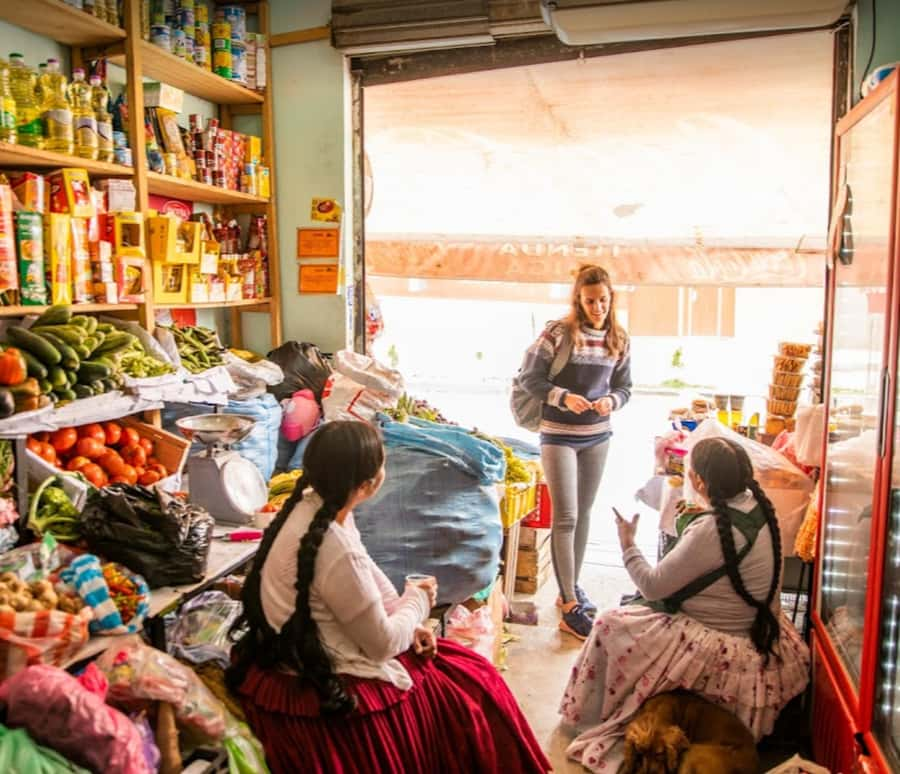
That shift gives the tour its purpose. You are not simply learning about women as a historical topic. You are looking at the city through different lived experiences: an Indigenous woman’s, a student’s, an immigrant’s, a mother’s, a merchant’s, a businesswoman’s, or an activist’s.
The supplied description does not name every street or stop, so you should not book this expecting a fixed monument-by-monument route. Instead, expect a guided conversation carried through La Paz’s central streets and public spaces. The value lies in the interpretation and discussion, not in checking off famous buildings.
You will meet your guide in front of the Basilica of Saint Francis. Look for the pink jacket. This is a useful landmark in a busy part of the city, and arriving a few minutes early will help you find the group without starting the walk in a rush.
A few more trips around La Paz worth a look
- La Paz and El Alto: Cable Car Rides and Walking Tour
★ 4.8 · 790 reviews - La Paz Half-Day Walking Tour
★ 4.8 · 591 reviews - La Paz: Private City Tour with Cable Car & Moon Valley Visit
★ 4.9 · 508 reviews
Starting at the Basilica of Saint Francis
The Basilica of Saint Francis is an apt place to begin because it puts you in one of La Paz’s most public and historic areas. From here, the tour can place everyday women’s stories beside the city’s religious, commercial, and civic life.
Do not expect the church itself to be the main subject. The point is the setting around it, where public life, work, tourism, and local routines meet. Your guide uses the city as a classroom, showing how larger questions about gender appear in ordinary places.
This opening should also help set the tone. The tour is not designed as a debate where you are handed a list of easy answers. It deals with ongoing struggles, including the effort to gain education, control over reproductive choices and bodies, and have women’s voices taken seriously in public decisions.
That can make the first part more demanding than a standard city walk. You will get more from it if you arrive ready to listen and ask respectful questions.
Indigenous identity, migration, and work
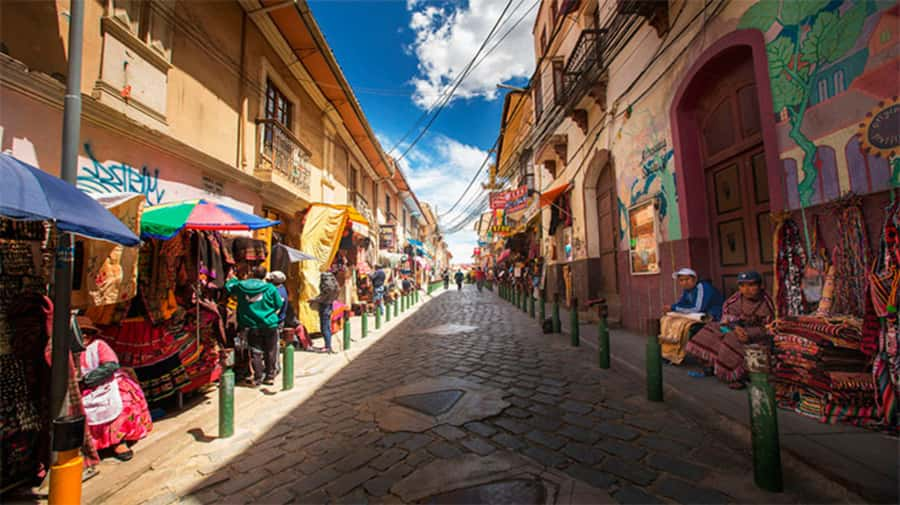
One of the strongest features is the range of identities built into the theme. Women in La Paz do not share one experience, and the tour makes that clear.
An Indigenous woman may face different barriers from a university student or a professional woman. An immigrant may have another set of challenges. A mother, merchant, activist, or businesswoman may all use the city in different ways and hold different forms of power within it.
The tour’s subject is especially useful for anyone who wants to understand how social issues are lived in public. Gender inequality is not only about laws or headlines. It can affect schooling, paid work, family duties, personal safety, political participation, and the ability to speak and be heard.
I appreciate that the experience includes achievements as well as hardship. A thoughtful women’s tour should not reduce Bolivian women to victims, and this one presents both the obstacles women face and the ways they organize, lead, work, study, and push for change.
Because the route is conducted in English, you can ask the guide to clarify terms or explain local context as you go. The language choice also makes this a useful first cultural activity in La Paz if you want a stronger base for understanding the city’s social life.
Education, bodily autonomy, and public voice
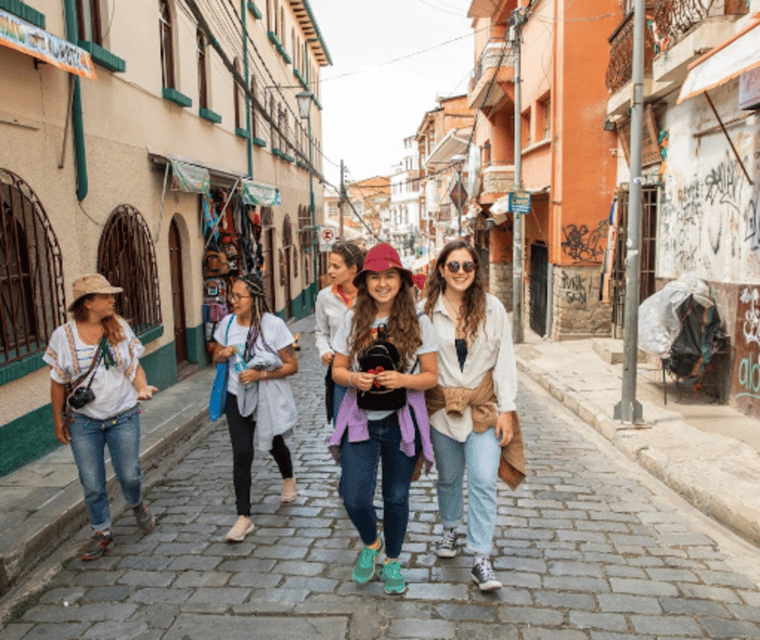
The central themes are direct: education, control over the body, and the right to have one’s proposals heard.
Education matters here because it affects far more than employment. It can shape independence, confidence, political participation, and a woman’s choices within her family and community. The tour connects these ideas to the women of La Paz rather than treating education as an abstract policy topic.
The discussion of bodily autonomy may be the most serious part of the walk. You should expect frank conversation about the ability to make personal decisions and the pressures that can limit that ability. This is not a polished, feel-good story about equality. It is meant to show why progress can exist alongside continuing inequality.
The final theme, public voice, ties the others together. A woman may be educated and employed yet still face barriers when she tries to influence institutions or public debate. Learning how women work to make their voices heard gives the tour a civic edge that most sightseeing walks leave out.
You will need to decide if this is the kind of subject you want during a city visit. I think it is worthwhile, but it demands attention. If you want only architecture, food, or photography, another La Paz walk may suit you better.
Same base, a very different day:
- La Paz: Full Day Trip to Copacabana and Isla del Sol
★ 4.5 · 400 reviews - La Paz: Mountain Bike Down the World’s Most Dangerous Road
★ 4.9 · 386 reviews - La Paz: Cholitas Wrestling Tickets and Transfer
★ 4.4 · 338 reviews - From La Paz: Uyuni Salt Flat Tour & Overnight Roundtrip Bus
★ 4.5 · 327 reviews
What the guide adds to the walk
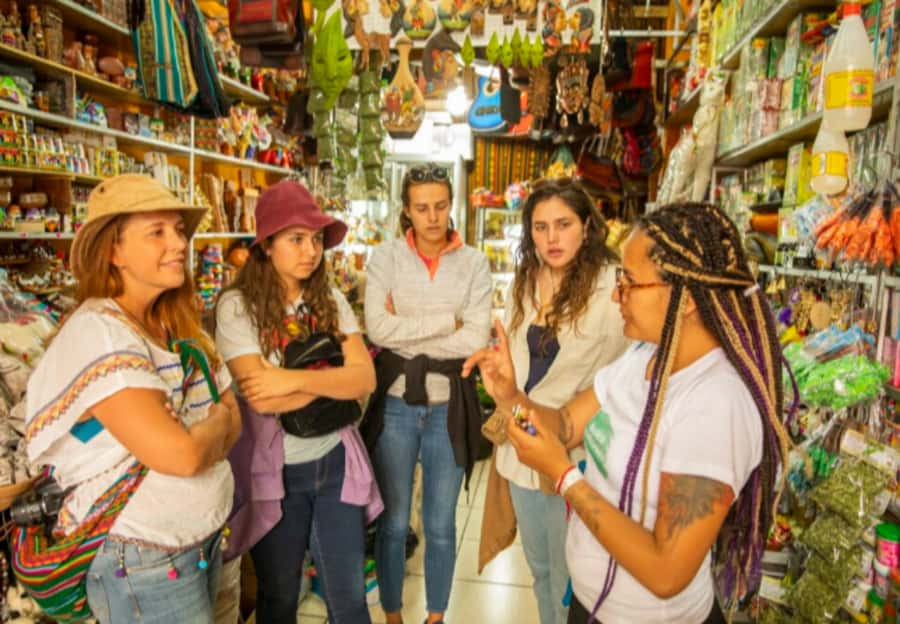
The guide is the experience. A local English-speaking guide leads the full 150 minutes, and the small group allows the discussion to move beyond a memorized speech.
Different guides bring different specialties. Anita is associated with a particularly strong focus on feminism, and she also brings a specialty in folklore, dance, rituals, or spiritualism into her interpretation. Emma Radar Villaroel has also led the experience. Since guide assignments can change, you should not assume that one specific guide will lead your date, but the different backgrounds are part of what gives the walk variety.
That also means two visits may not feel exactly alike. One guide may spend more time on folklore and dance, while another may give more attention to ritual, spirituality, or activism. The main feminist focus remains the same, but the examples and emphasis can shift.
I like this format because it gives the guide room to speak as a person with a particular area of expertise. At the same time, it means you should judge the activity by its broad theme rather than expecting a tightly scripted performance.
How the 150-minute pace feels
Two and a half hours is long enough to move past surface comments but short enough to fit into a full La Paz schedule. You will spend the time walking and listening, with the city providing the backdrop for the discussion.
The listing does not provide a detailed stop-by-stop plan, so be prepared for a flexible route rather than a printed sequence of named attractions. That is not a weakness if you want a social and cultural tour. It is a limitation if you need to know every stop before booking.
The walk begins at the Basilica of Saint Francis and continues through the city on foot. Wear comfortable clothes and shoes. The high elevation can make even a moderate walk feel harder than it would at sea level, especially if you have just arrived in Bolivia.
Take the practical advice seriously:
- Carry water.
- Use sunscreen and bring sunglasses.
- Wear a hat.
- Choose comfortable clothing.
- Leave large luggage behind.
- Do not bring alcohol or drugs.
- Smoking and audio recording are not allowed.
The tour does not include food or drinks, so eat and hydrate before meeting the guide. You should also avoid bringing a large bag because it is specifically not allowed.
Is $25 a fair price?
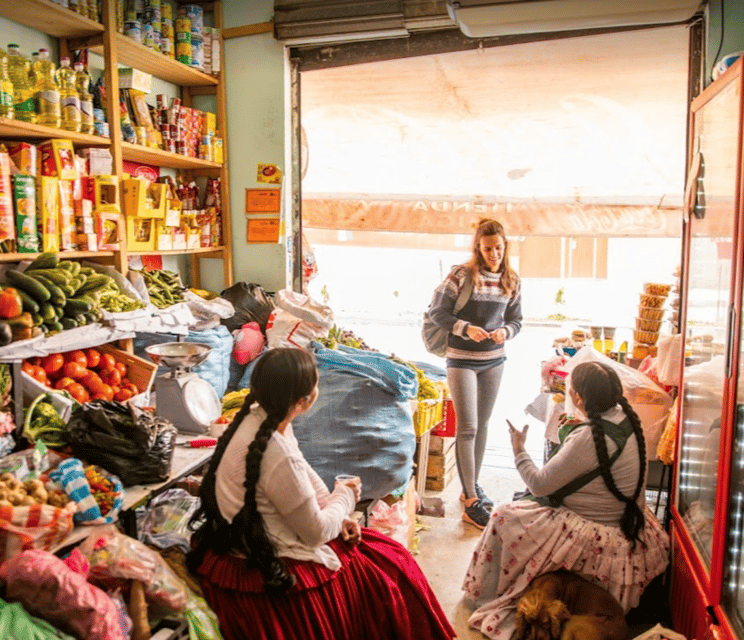
At $25 per person, this is a good value if you want a focused cultural discussion rather than a basic orientation walk. You receive 150 minutes with a local guide in a small group, which works out to a modest cost for a substantial amount of guided time.
The value is strongest for people who would otherwise struggle to find this context on their own. You can read about gender inequality in Bolivia, but a guide can connect those ideas to the people and places around you.
There are limits to the price. Food, drinks, and gratuity are not included. You are paying for interpretation and conversation, not admission to a museum or a meal. The tour also does not promise a broad overview of every major La Paz sight.
A tip is optional. If your guide gives you a thoughtful, well-researched walk and handles sensitive topics with care, you may choose to tip, but it is not part of the listed price.
Who should book this experience?
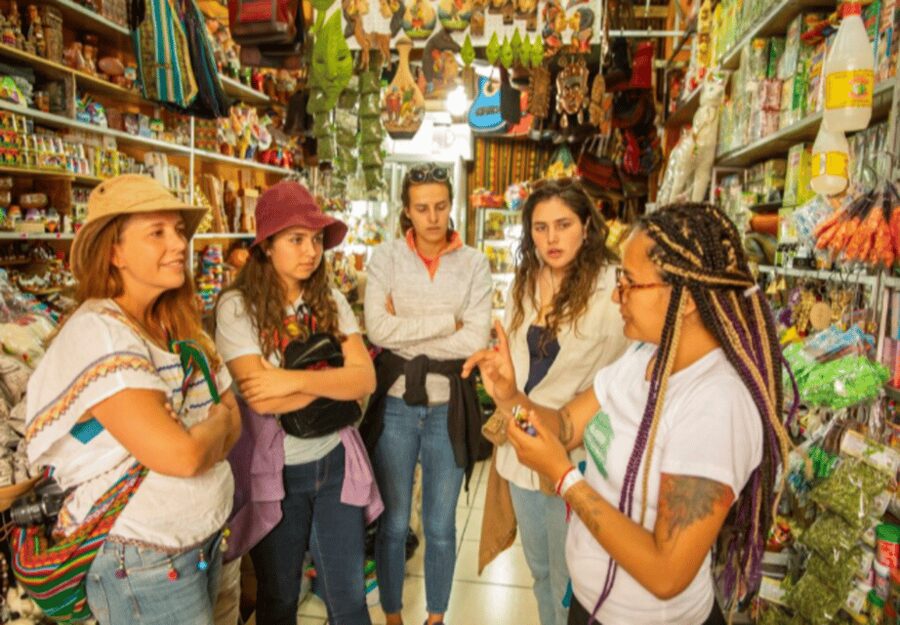
I would recommend this tour to solo visitors, couples, students, and anyone who wants to understand La Paz through its people rather than only its buildings. It should also suit anyone interested in feminism, Indigenous identity, migration, social justice, or Latin American politics.
The small group is helpful if you want a more personal exchange. A group of no more than 10 people is much better for questions than a large crowd, especially when the subject includes personal and political issues.
You should be comfortable walking at altitude and listening to difficult material. This is not suitable for wheelchair users, and it is not designed for unaccompanied minors. Children who attend must be accompanied, though the activity may not suit young children because of the subject matter and walking demands.
The tour can also work well early in your La Paz visit. It may give you a useful lens for later visits to markets, public squares, cultural sites, and neighborhoods. You will notice different details after hearing how work, gender, ethnicity, and public voice shape city life.
Booking details that matter
You can cancel up to 24 hours before the start time for a full refund. The reserve-now, pay-later option lets you hold a place without paying at once, which is useful when your Bolivian schedule may change.
The meeting point is clear: in front of the Basilica of Saint Francis. Your guide wears a pink jacket, so keep an eye out for that rather than waiting for a sign.
The activity is offered in English and runs for 150 minutes. Check the available starting times when booking. A small group is limited to 10 participants, but the exact number on your date can be lower.
Should you book the Feminist Tour?
Book it if you want a serious, personal look at La Paz and the women who shape it. The tour’s best qualities are its clear purpose, small group, English-speaking local guide, and attention to both struggle and achievement.
Skip it if you want a conventional sightseeing route, a food-focused activity, or a low-effort walk. The altitude matters, the subject can be challenging, and the route is not presented as a fixed list of famous sights.
At $25, I think it earns its place in a La Paz itinerary, especially for a first visit. It gives you questions to carry into the rest of the city, and that is often more useful than another quick list of monuments.
FAQ
Where does the Feminist Tour meet?
Meet your guide in front of the Basilica of Saint Francis in La Paz. The guide will be wearing a pink jacket.
How long does the tour last?
The walking tour lasts 150 minutes, or 2.5 hours.
What language is the tour in?
The tour is conducted in English by a live local guide.
How many people can join the group?
The group is limited to 10 participants.
What should I bring?
Bring water, sunglasses, a hat, sunscreen, and comfortable clothes. The tour includes walking at high altitude.
Is the tour suitable for wheelchair users?
No. The activity is not suitable for wheelchair users.
Just added around La Paz
- Private Tour of Tiwanaku Ruins from La Paz★ 5.0 · 3 reviews
- From La Paz: Lake Titicaca and Copacabana Private Tour★ 5.0 · 5 reviews
- Private Tiwanaku and Titicaca Day Trip from La Paz★ 4.8 · 3 reviews
- LA PAZ: GUIDED TOUR CHACALTAYA + VALLEY OF THE MOON★ 3.6 · 3 reviews
- La Paz: Uyuni tour ending in Atacama Chile by bus.★ 3.9 · 3 reviews
- Titicaca Lake: Highlights Tour from La Paz by Bus★ 4.0 · 3 reviews
- La Paz: Uyuni Salt Flats & Lagoon Share Trip (private room)★ 4.7 · 4 reviews
- From La Paz: Trip to Uyuni Salt Flats with Wine at Sunset★ 4.4 · 4 reviews
La Paz Tours, compared.
La Paz and El Alto: Cable Car Rides and Walking Tour
Read our review →

Mountain Bike Down the World’s Most Dangerous Road
Read our review →

Uyuni Salt Flat Tour & Overnight Roundtrip Bus
Read our review →
Valle de las Animas, Moon Valley, & Killi Killi Tour
Read our review →Browse the lists this tour appears in