
Reviewed · EVENING EXPERIENCES
Evening Foodie Tour of La Paz
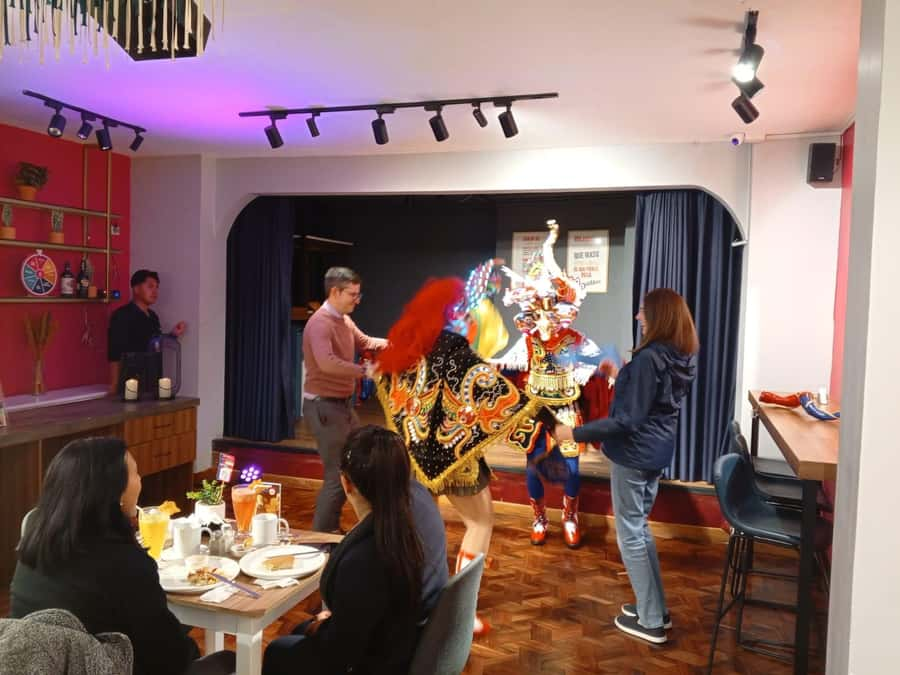
La Paz makes more sense when you eat it. This three-hour evening tour moves from market counters and street vendors to local restaurants, pairing five Bolivian specialties with stories about family meals, local customs, and the people who prepare the food. Guides such as Daniel, Matt, Max, and Marisol have led the route, with English and Spanish available.
I like the mix of street food and sit-down stops, since you get more than a restaurant dinner. I also like that the route passes markets, monuments, and central sights while you eat, giving the evening some city context. The main drawback is the sheer amount of food. Several stops can leave you stuffed, and only a few vegetarian choices are available.
Key points before you book
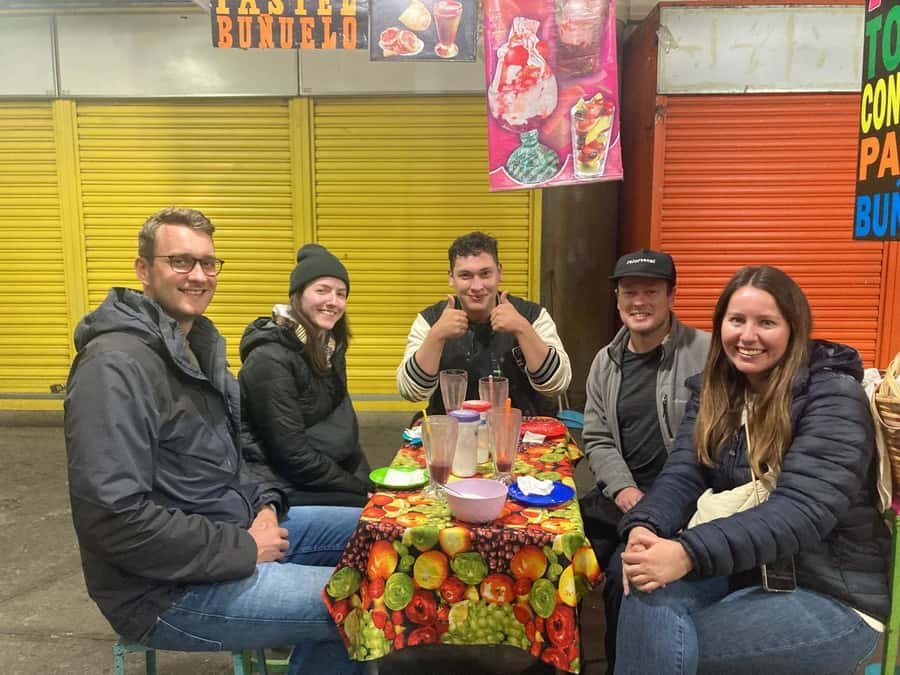
- Five food stops: Expect a mixture of street vendors, market food, and local restaurants.
- A full evening meal: You receive the listed food and drinks, so skip lunch or keep it light.
- A useful first look at local eating: Your guide explains how food fits into family life, drinking customs, and daily routines.
- Good guides matter: Daniel, Matt, Max, and others have been praised for clear English, humor, and personal stories.
- Simple meeting point: Meet at the big doors of San Francisco Church in San Francisco Square, looking for the red cap.
- Plan for La Paz conditions: Wear comfortable shoes, bring a jacket and ID, and carry cash for extra drinks, tips, and the taxi home.
Why food is a smart way to meet La Paz

Bolivian cooking may not arrive with the fame of Peruvian or Mexican food, but that is a poor reason to skip it. In La Paz, food is tied closely to home life, work, markets, family gatherings, and the pause that comes when the day is done.
That is what makes this tour useful. You are not simply handed five samples and sent on your way. At each stop, your guide explains what you are eating and where it fits in Bolivian life. The evening also gives you an easy way to ask questions that can be awkward to raise at a busy counter or when you are ordering from a menu you cannot read.
I especially like this kind of tour early in a La Paz visit. It can show you places you might pass without entering, and it can give you a short list of foods and restaurants to revisit later. One person even used the route as a guide for later meals in the city. That is a good sign that the tour works as more than a one-night tasting.
A few more trips around La Paz worth a look
- La Paz: Street Food Walking Tour
★ 3.3 · 6 reviews - La Paz: Cable Car Ride Tour with Food Tasting
★ 4.2 · 5 reviews - Uyuni: 3-Days Salt Flats and Desert Adventure Tour with Food
★ 3.8 · 4 reviews
Meeting at San Francisco Church at 6:25 PM
The meeting point is San Francisco Square, at the large doors of the church. Look for the guide wearing a red cap. Be careful with map details: the listed map information may point to the church office, but the group meets at the church doors.
The scheduled start is 6:25 PM, though you should check the available date before booking. The tour lasts about three hours, finishing around 9:25 PM. Transport to the meeting point is not included, so you need to arrange your own way there.
Bring your passport or ID card, comfortable shoes, a jacket, and cash. The cash is useful for extra drinks, tips, and the taxi home. You do not need to pack a full dinner. In fact, you should not. The food builds from stop to stop, and several people have found the final venues hard to finish after eating everything earlier.
The first bites: markets and street stalls
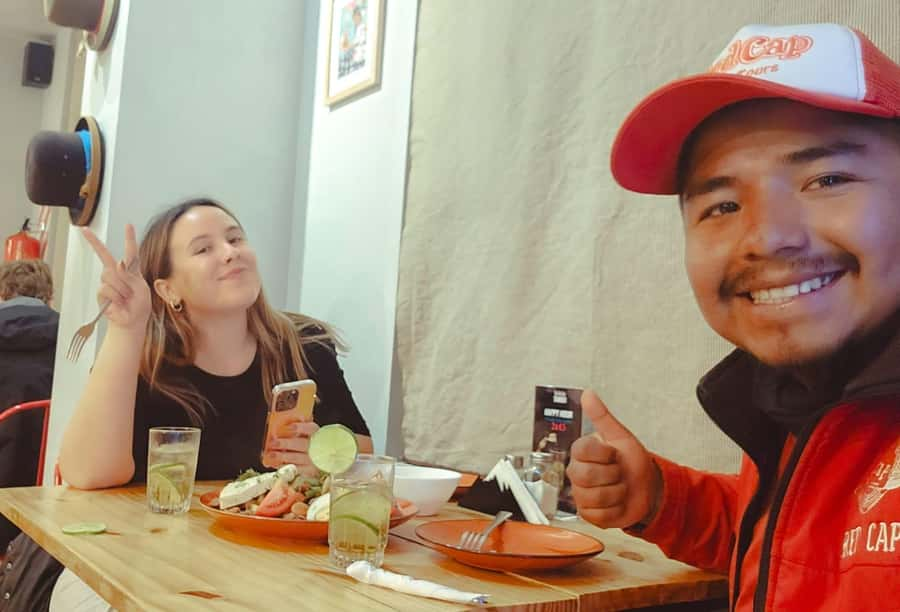
The opening part of the tour usually introduces you to the more casual side of La Paz eating. Expect market vendors and street stalls rather than polished dining rooms. These are places you might ignore on your own, especially if you are unsure about what is being served or how to order.
Your guide acts as translator, interpreter, and food filter. The chosen restaurants have been checked for cleanliness and proper food handling, and the tour includes stops selected for visitors to try local dishes with some guidance. That does not turn street food into a risk-free experience, but it does make the process less intimidating.
The market stops are valuable because they show how food works as part of ordinary city life. You see where ingredients and prepared foods meet, and you get a better sense of what local people actually eat outside tourist restaurants. The route also passes central sights, historical monuments, and distinctive markets, so the food is not cut off from the city around it.
The first few bites may be easier to enjoy if you pace yourself. The portions are not described as tiny samples, and the tour is designed to feed you, not merely tease your appetite. Try a little of each item, listen to your guide, and save room for the later restaurant dishes.
Three street-food stops and two restaurants
The route commonly includes about five venues, with the first three leaning toward street-food or market-style eating and the last two moving into local restaurants. The exact dishes and order can vary, but the overall design gives you a useful comparison.
At a street stall, the appeal is directness. You are close to the preparation, the setting is informal, and the food tells you more about daily habits than a formal meal might. At a restaurant, you get a different view of Bolivian cooking, with more time to sit, talk, and notice how dishes are presented.
One caution: not every stop will suit every palate. One restaurant stop was described as less enjoyable than the others, and the setting felt small and quiet. That is a fair reminder that a food tour is a sampler, not a guarantee that every plate will become a favorite. The benefit is that one weaker dish does not define the night because you keep moving through several styles of food.
The variety is the point. You might prefer the market food, or you might discover that a restaurant dish is easier to appreciate after your guide explains it. Either way, you get a broader picture than you would from ordering one plate at a restaurant.
Same base, a very different day:
- La Paz and El Alto: Cable Car Rides and Walking Tour
★ 4.8 · 790 reviews - La Paz Half-Day Walking Tour
★ 4.8 · 591 reviews - La Paz: Private City Tour with Cable Car & Moon Valley Visit
★ 4.9 · 508 reviews - La Paz: Full Day Trip to Copacabana and Isla del Sol
★ 4.5 · 400 reviews
Api and the drinks that shape the evening
Api has been one of the most memorable discoveries for some people on this route. It is a warm local drink, and it can be a welcome change from the heavy food served at other stops. If you enjoy it, you may want to look for more during the rest of your time in Bolivia.
The tour includes a local cocktail or local beer, depending on what is specified for your departure, along with the listed food and drinks. Extra drinks cost more. Guides have also taken care to make the drink portion feel connected to local custom rather than treating it as a simple bar stop.
Pay attention to your own limits. La Paz sits at high altitude, and one past participant found that alcohol and altitude did not mix well. You can simply slow down or decline a drink. The evening is about food and conversation, not proving how much you can consume.
The final stop includes a drink and time for conversation at one of La Paz’s more interesting restaurants. This gives the tour a social ending. After several food stops, it is also a chance to compare favorites, ask last questions, and decide which dishes you want to seek out again.
The guides make the difference
The guide is the key part of this experience. Food can be sampled without a guide, but food culture is harder to understand from a menu alone.
Daniel has led many departures and is known for explaining both the dishes and La Paz itself. Matt has been praised for attentive hosting, clear English, humor, and the ability to manage different needs in one group. Max has also been singled out for warm storytelling and a relaxed pace. Other guides have included Marisol, Denise, Roberto, David, and Amera.
You cannot necessarily choose who leads your departure, so book for the structure of the tour rather than one particular person. Still, the repeated praise for the guides is meaningful. The best part of the evening is not just naming a dish. It is learning why people eat it, where it belongs in the city, and how food connects with drinking and social life.
The guides also help solo visitors. One person traveling alone found the format comfortable and enjoyable, while another group valued the way the guides encouraged questions and conversation. If you are shy about trying unfamiliar food, this support is worth more than a printed menu.
How much food do you really get?
The short answer is a lot. Five specialty dishes, drinks, and several stops make this a replacement for dinner. You should eat lightly beforehand, not arrive after a large meal.
The practical trick is to pace yourself. You do not have to finish every portion, especially if you are already full. The tour is designed for tasting, but the accumulated food can feel heavy. Several people reached the final two stops with little room left.
This matters if you prefer small, carefully spaced tastings. The experience may feel more like a progressive dinner than a refined tasting menu. If you enjoy hearty food and want to try many things in one evening, that is a benefit. If you are a light eater, vegetarian, or sensitive to rich food, ask about options before booking and tell the operator about dietary restrictions.
Only a few vegetarian choices are available. The tour is therefore a better fit for someone comfortable with a meat-heavy local food tradition, though the operator should know your restrictions in advance.
Is $32 good value?
At $32 per person, the tour is reasonably priced if you would otherwise pay for dinner, several tastings, and a guide. You receive five specialty dishes, the included drinks, bilingual guidance, and access to places you may not find by yourself.
The value is strongest if you care about context. You are paying not only for food but also for help choosing unfamiliar dishes, translation, local stories, and a route through markets and restaurants. The guide can also save you from spending your whole evening guessing what to order.
The value is less clear if you mainly want cheap street food. Some of the stops are street vendors, and you may feel that the food alone does not justify the total price. In that case, you are paying for the organization and interpretation rather than the raw cost of the dishes.
I would compare it with the price of one regular dinner in La Paz. If you want a broad introduction and expect to eat enough to replace dinner, $32 is fair. If you already feel confident ordering from local markets and restaurants, you may prefer to explore independently.
Who will enjoy this La Paz food tour?
This tour suits you if you want a friendly introduction to Bolivian cuisine without spending days researching where to eat. It is also a good choice for solo visitors, couples, and small groups who like walking, conversation, and trying several foods in one night.
It works especially well on your first evening or two in La Paz. You can use the guide’s suggestions later, return to a favorite stop, and recognize foods on menus that would otherwise look unfamiliar.
You may want to skip it if you need a fully vegetarian menu, dislike substantial meals, or want a carefully controlled fine-dining experience. The tour is informal, filling, and built around local eating rather than culinary showmanship.
The walking is limited compared with a sightseeing walk, according to the available description. Still, comfortable shoes matter because you will move through markets, streets, and restaurant areas. Bring a jacket for the evening and do not assume the warmth of the food will keep you comfortable outside.
Booking details that matter
You can cancel up to 24 hours before the activity for a full refund, and the reserve-now, pay-later option lets you hold a place without paying immediately. Check the available start time when booking, since the tour is tied to an evening departure.
English and Spanish guides are available. Transport to the meeting point and the trip home are not included, so plan both ends of the night. You should also budget for extra drinks and a tip.
Tell the operator about dietary restrictions when you book. Do not wait until the first food stop, since only a few vegetarian choices are available.
Should you book the evening foodie tour?
Book it if you want a practical, sociable introduction to La Paz food and you are happy to let someone else choose the route. The strongest reasons are the five-stop variety, the mix of markets, street vendors, and restaurants, and the guides’ strong record of explaining food in plain language.
Go in with the right expectations. This is not a tiny tasting menu, and not every stop will be your favorite. Come hungry, pace yourself, limit alcohol if altitude affects you, and keep an open mind about hearty local dishes.
For $32, I think it is a good first look at Bolivian food, especially if you might otherwise stick to familiar restaurants. It gives you enough context to keep exploring on your own, which is exactly what a useful food tour should do.
FAQ
Where does the tour meet?
Meet at San Francisco Square, at the big doors of San Francisco Church. Look for the guide wearing a red cap.
What time does the tour start?
The tour starts at 6:25 PM. Check the available date when booking to confirm the starting time.
How long does the food tour last?
The experience lasts about three hours.
What food is included?
The tour includes five specialty dishes and all food and drinks specified for the activity. The stops may include street vendors, market vendors, and local restaurants.
Are drinks included?
A local cocktail or local beer is included as specified. Extra drinks are not included.
Are vegetarian options available?
Only a few vegetarian options are available. Tell the operator about dietary restrictions when booking.
Which languages are offered?
The tour is available with a live guide in English or Spanish.
What should I bring?
Bring your passport or ID card, comfortable shoes, a jacket, and cash. Cash is useful for extra drinks, tips, and the taxi home.
Can I cancel the booking?
You can cancel up to 24 hours in advance for a full refund. The reserve-now, pay-later option lets you book without paying immediately.
Just added around La Paz
- Private Tour of Tiwanaku Ruins from La Paz★ 5.0 · 3 reviews
- From La Paz: Lake Titicaca and Copacabana Private Tour★ 5.0 · 5 reviews
- Private Tiwanaku and Titicaca Day Trip from La Paz★ 4.8 · 3 reviews
- LA PAZ: GUIDED TOUR CHACALTAYA + VALLEY OF THE MOON★ 3.6 · 3 reviews
- La Paz: Uyuni tour ending in Atacama Chile by bus.★ 3.9 · 3 reviews
- La Paz: The Feminist Tour★ 5.0 · 3 reviews
- Titicaca Lake: Highlights Tour from La Paz by Bus★ 4.0 · 3 reviews
- From La Paz: Trip to Uyuni Salt Flats with Wine at Sunset★ 4.4 · 4 reviews
Evening Experiences, compared.

3-Day Uyuni Salt Flat Tour with Sunset and Red Lagoons
Read our review →


Uyuni Salt 1 day Tour with guide in English + Lunch and Sunset
Read our review →
5-Hour Uyuni Salt Flat Tour Stargazing and Sunset/Sunrise In Group
Read our review →


Browse the lists this tour appears in