
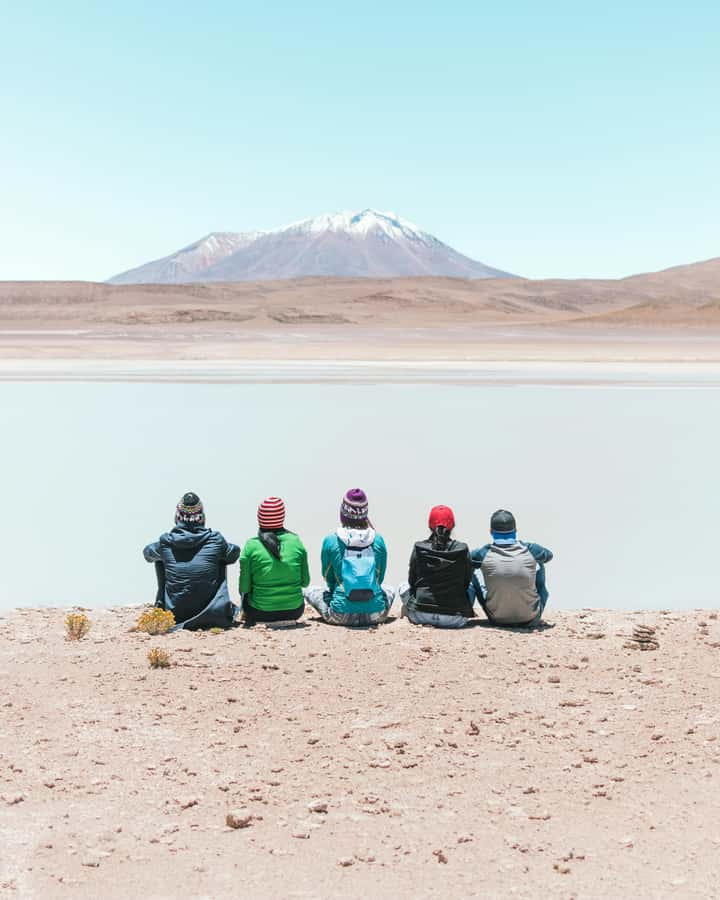
Reviewed · UYUNI SALT FLAT TOURS
Uyuni: 3-Day Salt Flats Tour ending in San Pedro de Atacama
The real prize here is the Uyuni Salt Flats at sunset, when the white salt crust can turn into a giant mirror and the horizon takes on a soft pink blur. I like that the trip pairs the famous photo stops with less polished places, including a rough refuge near Red Lagoon and a salt hostel where the setting matters more than comfort. I also like the small group of up to six people, which gives you a better chance to ask questions and get help with perspective photos.
The main drawback is the road. You’ll spend long hours in a bumpy 4WD, at high altitude, with very basic lodging on the second night. Hot water is not guaranteed, internet is scarce, and the trip is not a good fit if you have serious back problems or need a soft, predictable schedule.
Key points to know before booking
- Salt-flat photography is the main event: You’ll have time for panoramic, forced-perspective, and mirror reflection photos.
- The route crosses several extreme settings: Expect salt, desert, volcanoes, hot springs, geysers, and colored lagoons.
- The second night is very basic: The Laguna Colorada refuge uses shared dormitories with shared bathrooms.
- A small group makes a difference: Transportation is shared by up to six people per driver.
- You finish in Chile: The tour reaches the Hito Cajon border at about 9:30 AM, followed by a transfer to San Pedro de Atacama around 12:30 PM.
- Altitude and weather affect the plan: Roads and stops can change, especially from December through April.
Why this three-day route works
At $427 per person, this is not the cheapest way to see Uyuni. But the price covers three days of 4WD transport, meals, two nights of lodging, a bilingual guide and driver, water with meals, and the onward transfer to San Pedro de Atacama. You are paying for a difficult cross-border route that would be awkward to arrange on your own.
The value is strongest if you already plan to continue into Chile. Instead of returning to Uyuni, you cross the border near Licancabur Volcano and arrive in San Pedro around midday. That saves a separate travel day and gives the journey a clear direction.
The price does not include entrance fees, snacks, rubber boots, or toilet costs. Bring cash for these extras. A sleeping bag is included from May through September, but warm clothing remains essential because many stops are cold, windy, and far above sea level.
The group is limited to six people per driver. That matters on the salt flats, where everyone wants a turn with the camera, and on long road sections, where a cramped vehicle can quickly become tiring. The guide speaks English or Spanish, depending on the option you choose. Jamie may be assigned as a guide, and a recent booking singled out Jamie’s help and strong knowledge of the route.
More salt flat trips running from Uyuni
- Day Trip to Uyuni Salt Flats
★ 4.0 · 602 reviews - 3-Day Tour to Salt Flats and Lagoons
★ 4.5 · 168 reviews - From Uyuni: Red Lagoon & Uyuni Salt Flats 3-Day Guided Tour
★ 4.4 · 160 reviews
Day 1: train wrecks, salt workers, and the white horizon
Pickup begins around 10:30 to 10:45 AM. If you are already in Uyuni, the vehicle collects you at your hotel. If your bus arrives that morning, pickup is available from the terminal. Arrive early and you may wait at the office or be taken to a café for breakfast.
The first stop is the Train Cemetery outside Uyuni. Rusting wagons and locomotives from the Bolivian Railway Company sit in the open desert. This is a short, photogenic stop, but it also gives you a quick look at the abandoned industrial side of the region. The metal frames contrast sharply with the clean white salt you will see later.
At Colchani village, you can learn how local people process salt and browse small handicraft stalls. Keep some cash handy if you want souvenirs. This stop is useful because it shows that the salt flats are not only a giant photo backdrop. Salt remains part of local work and daily life.
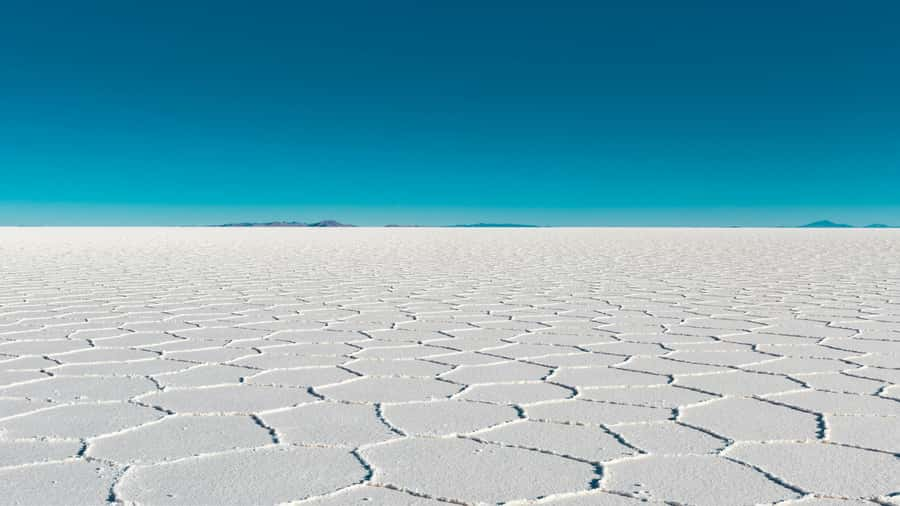
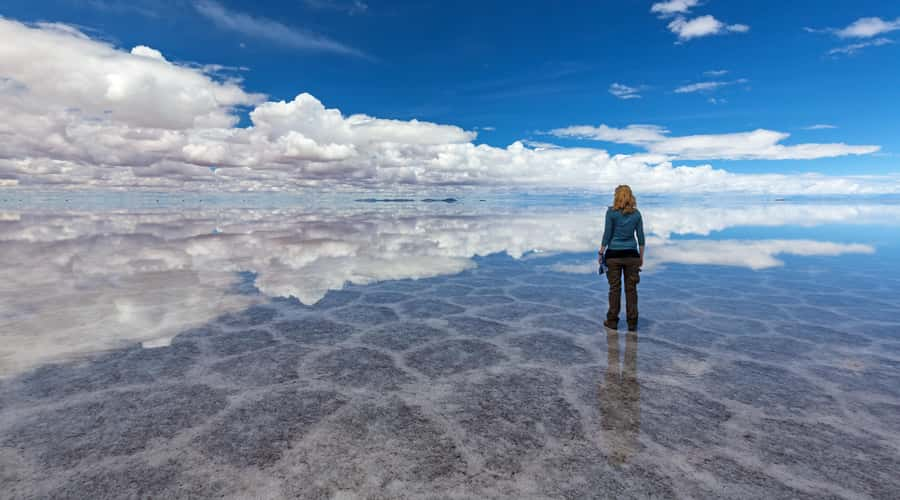
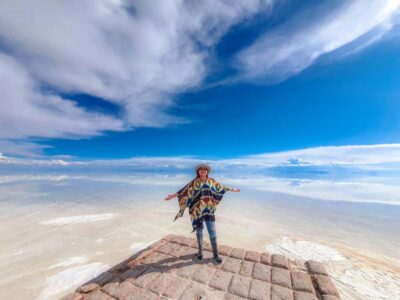
Then the road reaches the Uyuni Salt Flats. The surface can look perfectly white and flat, but underground aquifers run beneath it. The salt crust is divided into geometric patterns, and the open space makes scale difficult to judge. This is where your guide can help arrange perspective photos, using objects and people to create playful visual tricks.
Flags Square and the Dakar Monument provide familiar photo stops. You will also see the world’s first salt hotel, built from salt blocks. Lunch is served in the salt-flat area, although exact arrangements can change with weather and road conditions.
The best photography usually comes from taking your time. Ask the guide to help with wide shots, forced perspective, and reflections. During the rainy season, a thin layer of water can cover the salt, creating the famous mirror effect. It is beautiful, but the water can also affect access roads and overnight plans.
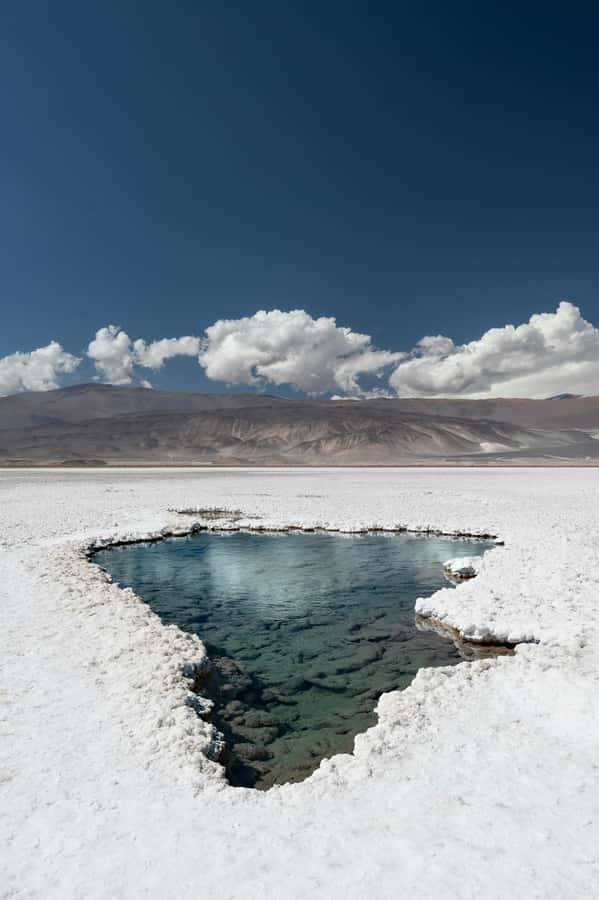
Incahuasi Island is the next major stop. The island rises from the salt and contains coral fossils and giant cacti. From here, you can look toward Tunupa Volcano and understand how strange the setting really is: fossil-bearing rock, enormous cacti, and a sea of white salt in every direction.
The day ends with sunset on the flats. When the light drops, the horizon can appear pink and blurred, with the salt reflecting the changing sky. You then continue to a salt hostel for the night.
The first night is the more comfortable of the two. Rooms are usually double or triple, with private bathrooms. In rare cases, four people may share a room. Even here, do not expect luxury or reliable heating. The setting is the main attraction.
Day 2: volcanoes, flamingos, and Red Lagoon
Day two begins after breakfast and moves into a more remote part of Bolivia. You stop in San Juan, a small village where you can buy snacks and use the restroom. This is a useful supply stop because the next sections are isolated, and food choices become limited.
The route continues toward Ollagüe Volcano. The volcano is active and sacred to Indigenous communities, so this is more than a scenic viewpoint. Your guide can provide context about its importance while you take in the broad, dry terrain around it.
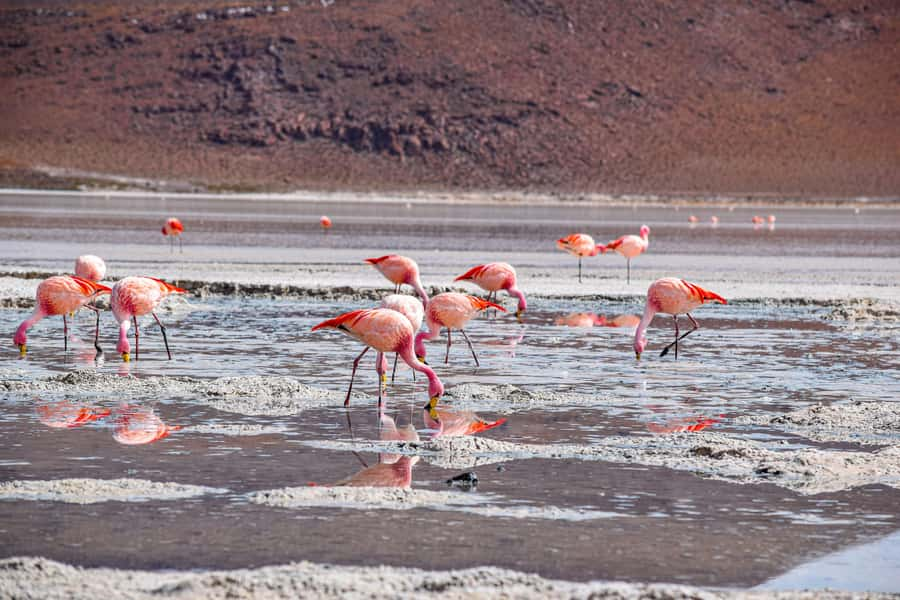
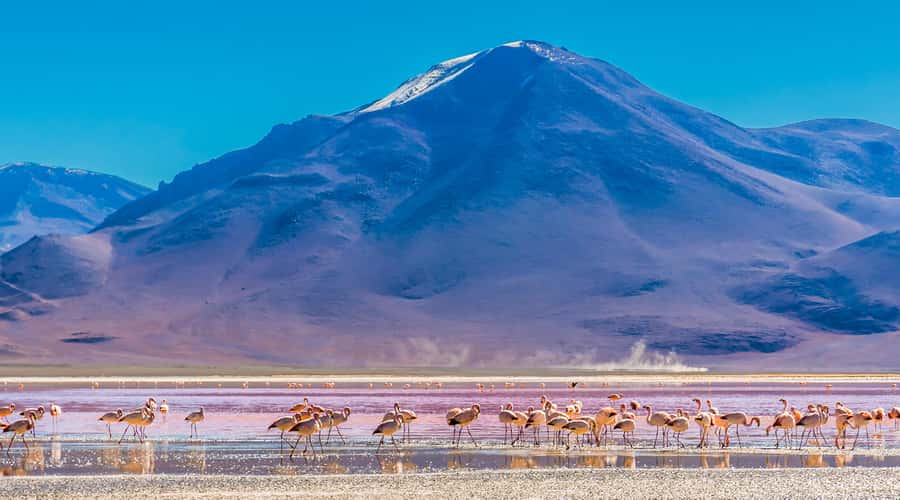
The Andean lagoons are the heart of the second day. Cañapa, Hedionda, Chiarcota, and Honda each offer a slightly different view, but the main attraction is wildlife against a stark high-altitude setting. Pink flamingos feed in the shallow water, while Andean ducks and seagulls may also appear.
Hedionda Lagoon is the lunch stop. The name refers to its sulfurous smell, so do not expect a fresh alpine lake. The odor is part of the place. Lunch is basic, and vegetarian food is available, though the menu is not elaborate.
The road then reaches the Siloli Desert, one of the driest places on Earth. The route reaches elevations of about 6,000 meters, making this a demanding day even if you are not walking far. Bring water, protect your face from the sun, and move slowly when getting out of the vehicle.
The famous Stone Tree is a volcanic rock formation shaped by wind erosion. It looks almost planted in the desert, with a narrow base and broad upper section. The stop is brief but worthwhile, especially because the rock makes the scale of the empty desert easier to understand.
Next comes Eduardo Avaroa National Reserve, Bolivia’s most visited national park. The scenery becomes increasingly stark, with colored water, volcanic rock, and very little plant life. Road conditions are rough and unpaved, so expect repeated jolts rather than a smooth scenic drive.
Red Lagoon is the day’s final major stop. Its color comes from mineral-rich water and algae, and flocks of pink flamingos may gather along the edges. The red water, white mineral shore, and distant mountains create one of the most memorable views on the route.
After Red Lagoon, you go to the Laguna Colorada refuge in Huayllajara. This is the least comfortable night. Dormitory rooms may contain two, three, four, or six beds, and the bathroom is shared. Assignment depends on availability.
The refuge is extremely basic. Heating is generally absent, and the cold can be severe from May through September. A sleeping bag is supplied in those months, but you should still pack thermal layers, a hat, gloves, and warm socks. Hot showers are included in principle, but frozen pipes, drought, and gas shortages can prevent them. Hot water is available about 75 percent of the time, not every time.
Internet is often unavailable on day two. Treat that as part of the route rather than a service failure. Download maps, confirmations, music, and any messages you need before leaving Uyuni.
Day 3: geysers, hot springs, and the Chilean border
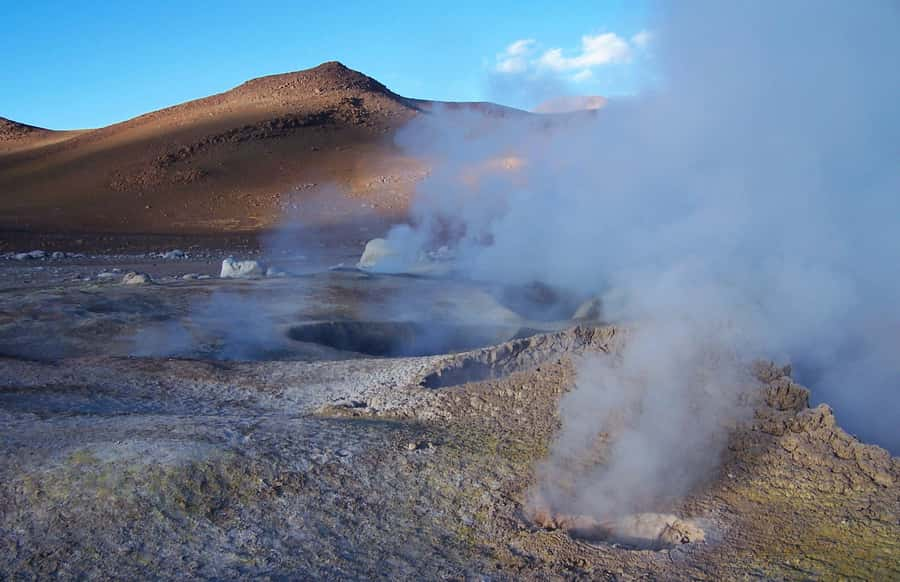
The final day starts early for the Sol de Mañana Geysers. Sunrise is the reason for the early departure. Steam rises from the ground in the cold morning air, and the volcanic activity feels close and raw.
This area requires care. Stay with the group and follow the guide’s instructions around hot ground and steam vents. The altitude and cold can make even a short stop feel strenuous.
After the geysers, you can warm up at Polques Hot Springs. This is a welcome break after the cold refuge and early start. The hot springs are included in the route, but comfort still depends on weather, water conditions, and available facilities.
The Dali Desert comes next. Its rounded rocks and isolated shapes resemble forms associated with Salvador Dalí’s paintings, giving the area its name. There is no museum or formal exhibit here. The appeal is the odd arrangement of natural rock in a wide, empty setting.
Green Lagoon is the final major stop in Bolivia. It sits beside Licancabur Volcano, whose steep form rises above the water and marks the natural border region with Chile. Wind can change the lagoon’s color, so the shade may not look exactly as expected on every visit.
The tour ends at the Chilean border around 9:30 AM. From Hito Cajon, you board another vehicle for San Pedro de Atacama and usually arrive around 12:30 PM. This transfer is included, but border procedures and road conditions can affect timing. Avoid booking a tight afternoon flight or an important fixed appointment.
More crossings to San Pedro de Atacama from Uyuni
- Uyuni: Uyuni Salt Flats and San Pedro de Atacama 3-Day Tour
★ 4.3 · 122 reviews - From La Paz to Atacama: Uyuni Salt Flats 4-Day Tour
★ 3.9 · 31 reviews - San Pedro de Atacama: 4-Day Uyuni Salt Flats Tour
★ 3.7 · 8 reviews - Uyuni: Salar de Uyuni and San Pedro de Atacama 3-Day Tour
★ 4.2 · 4 reviews
What the 4WD ride and lodging are really like
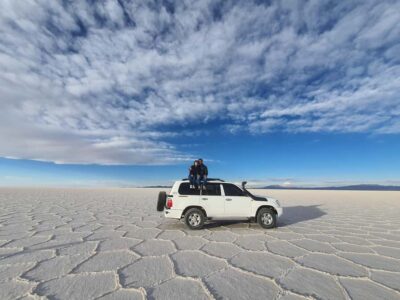
The route requires a 4WD because the roads are rough, remote, and often unpaved. You may spend hours seated in the vehicle, and the small group setup means each person has limited space for luggage. Pack light and keep water, sunscreen, snacks, and warm layers within reach.
The tour includes meals, but they are basic. The menu aims for variety, and a basic vegetarian option is available. If you need specific food, bring extra snacks from Uyuni or San Juan. Snacks are not included.
Toilets are another practical issue. Facilities are limited, and some stops charge to use them. Carry small cash and toilet paper. Rubber boots are not included, but they can be useful during the rainy season when water covers parts of the salt flats.
Weather can change the route. From December through April, flooding may prevent access to the salt lodges. If that happens, the overnight stay may move to a regular hostel in Uyuni. Other road or weather changes can affect the sequence of stops.
Who should book this route
I would choose this tour if you want the classic Uyuni sights and need to reach San Pedro de Atacama without backtracking. It suits people who care more about scenery and route efficiency than polished hotels.
You should be comfortable with altitude, cold, rough roads, shared facilities, and uncertain hot water. The tour is not suitable for children under three, pregnant women, or people with back problems.
Photographers will appreciate the time at the salt flats and the guide’s help with perspective shots. First-time visitors to Bolivia will also get a broad sample of the region in only three days, from salt production and railway ruins to flamingos, volcanoes, geysers, and hot springs.
The route is less suitable if you need dependable internet, private bathrooms every night, gentle roads, or a flexible sleep schedule. Day two is especially demanding, with high altitude and a basic refuge at the end.
Should you book the Uyuni to San Pedro tour?
Book it if the cross-border finish is important to you. The included transfer to San Pedro adds real value, and the route covers the region’s major sights without sending you back to Uyuni.
I would skip it if you want comfort to be part of the holiday. The salt hostel is manageable, but the Laguna Colorada refuge is cold and plain. The roads are rough, meals are simple, and conditions can change.
For the right person, this is a memorable trade: less comfort in exchange for a direct route through one of South America’s strangest natural regions. Bring warm clothes, cash, snacks, sunscreen, and patience. The salt flats, flamingos, Red Lagoon, geysers, and Licancabur views repay the discomfort.
FAQ
How long is the Uyuni to San Pedro de Atacama tour?
The tour lasts three days. It begins in Uyuni at about 10:30 AM and finishes at the Chilean border around 9:30 AM on the third day. The included transfer usually reaches San Pedro de Atacama around 12:30 PM.
Where does pickup take place in Uyuni?
Pickup is available from your hotel, the bus terminal, or the airport in Uyuni. Hotel pickup is usually between 10:30 and 10:45 AM.
What type of vehicle is used?
The tour uses 4WD vehicles, with up to six participants per driver.
Is accommodation included?
Yes. The first night is in a salt hostel, usually in a double or triple room with a private bathroom. The second night is in a basic Laguna Colorada refuge with shared dormitory rooms and a shared bathroom.
Is a sleeping bag included?
A sleeping bag is included from May through September. You should still bring warm clothing because nights can be very cold.
Are meals included?
Yes. The described meals are included, along with water during meals. Snacks are not included, and a basic vegetarian option is available.
Are entrance fees included?
No. Entrance fees are not included in the tour price. Bring cash for fees, snacks, and toilet use.
Can the itinerary change?
Yes. Weather and road conditions can change the route, especially during the rainy season from December through April. Flooding may also require a different overnight accommodation plan.
Is hot water guaranteed?
No. Hot showers are included, but drought, gas shortages, or frozen pipes can prevent them. Hot water is available about 75 percent of the time.
More 3-Day Experiences in Uyuni
- Uyuni Salt Flats 3 Days/ 2 Nights with English Speaking Guide
★ 4.0 · 91 reviews - 3-Day Uyuni Salt Flat Tour with Sunset and Red Lagoons
★ 5.0 · 83 reviews - Uyuni Salt Flats (3 Days) English Speaking Guide
★ 4.5 · 45 reviews - Uyuni Salt Flats Private 3 day tour (Palacio Sal 4* & Tayka 3*)
★ 5.0 · 38 reviews
Just added around Uyuni
- UYUNI SALT FLAT: SUNRISE & STARLIGHT EXPERIENCE★ 3.1 · 3 reviews
- Uyuni: Classic Uyuni Salt Flats Tour + Hotel Pickup★ 3.0 · 4 reviews
- Uyuni: Salar de Uyuni Traditional Tour+Sunset Tour★ 4.8 · 3 reviews
- UYUNI SALT FLAT: SUNSET & STARLIGHT EXPERIENCE★ 5.0 · 3 reviews
- Uyuni: Salar de Uyuni and San Pedro de Atacama 3-Day Tour★ 4.2 · 4 reviews
- Uyuni: Full-day tour, Salt flats and Sunset experience★ 4.8 · 5 reviews
- Uyuni: 3-Days Salt Flats and Desert Adventure Tour with Food★ 3.8 · 4 reviews
- Uyuni: 2-day tour to the salt flat and altiplanic lagoons★ 3.3 · 3 reviews
Uyuni Salt Flat Tours, compared.

Uyuni Salt Flat Tour & Overnight Roundtrip Bus
Read our review →
Red Lagoon & Uyuni Salt Flats 3-Day Guided Tour
Read our review →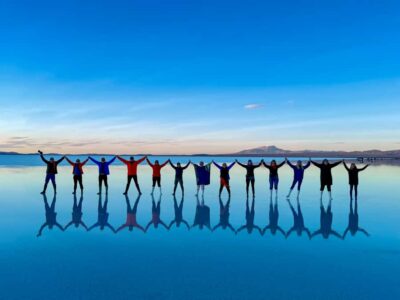
Uyuni Salt Flats & San Pedro de Atacama 3-Day Tour
Read our review →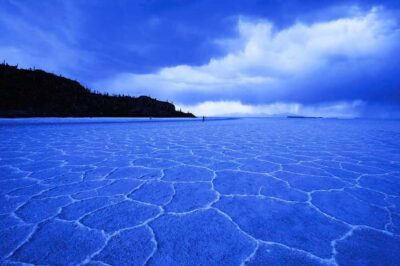
Uyuni Salt Flats and San Pedro de Atacama 3-Day Tour
Read our review →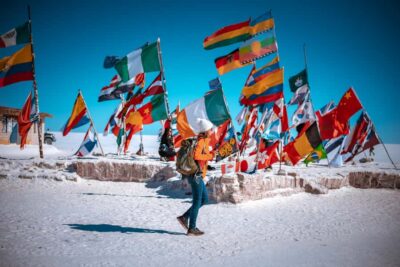
4-Day Trip to San Pedro de Atacama w/Salt Flats
Read our review →Browse the lists this tour appears in