
Reviewed · UYUNI SALT FLAT TOURS
Uyuni Salt Flats (3 Days) English Speaking Guide
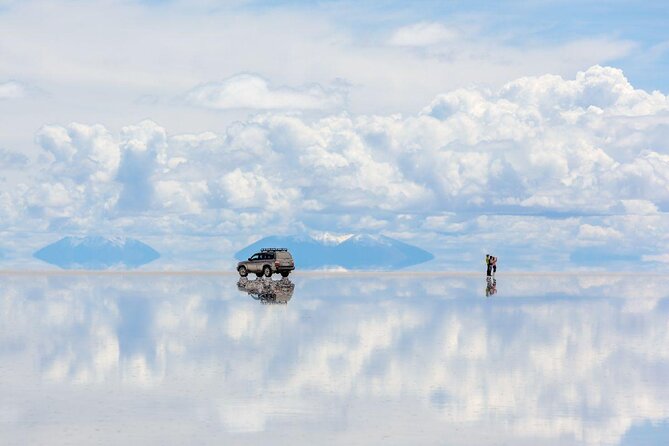
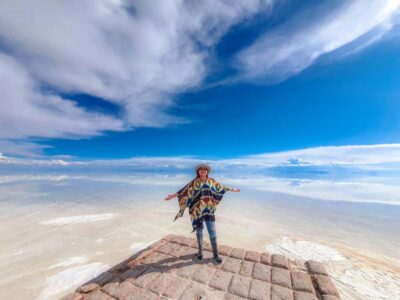
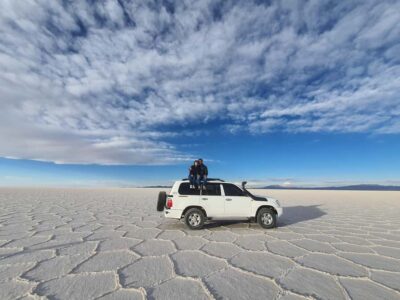
The first sight of the Uyuni Salt Flats is hard to beat: white salt runs to the horizon, the sky seems larger than usual, and the vehicle appears to float across a giant frozen lake. I like that this trip does not stop at the famous flats. It also reaches cactus-covered Isla Incahuasi, red Laguna Colorada, smoking geysers, and the volcanoes near the Chilean border. The second strong point is the small group, capped at five people, which gives you a better chance of asking questions and getting help with photos.
I also like the practical value of the $449 price, since it covers transport, two nights, six main meals, and an English-speaking guide. The tradeoff is comfort: both nights are basic, the second day involves rough, high-altitude roads and long hours in the vehicle, and several useful extras cost more. Bring warm clothes, sturdy shoes, toilet paper, and patience.
Key points to know before you book
- The salt flats are only the opening act: Days two and three bring volcanoes, desert rock formations, flamingos, geysers, and high-altitude lakes.
- Small groups matter: The vehicle carries no more than five people, useful for photo stops and tight accommodation.
- The first night is a salt hotel: You sleep in a building made from salt blocks after sunset on the flats.
- The second night is very basic: Hot showers, towels, sleeping bags, private rooms, hot springs, and park entry cost extra.
- Altitude shapes the whole trip: Siloli Desert reaches about 15,000 feet, while Laguna Colorada sits around 14,000 feet.
- The Chile connection costs extra: The transfer to San Pedro de Atacama is not included and costs 130 bolivianos per person.
What the $449 price really buys you
At $449 per person, this is not a luxury journey. It is a three-day transport-and-sightseeing expedition across a remote part of Bolivia, where simply moving between the sights takes much of the day.
The price includes round-trip transport from Skyline Traveller Uyuni, an English-speaking guide, a first aid kit, tea and coffee, two breakfasts, three lunches, and two dinners. It also includes two nights of basic accommodation. That package is useful because food and lodging are not easy to arrange independently once you leave Uyuni.
The value is strongest if you want to see the full circuit without organizing several separate transfers. A private room costs an additional $35 per person for both nights, while the shared setup keeps the base price lower. You will also need cash for Isla Incahuasi, the Eduardo Avaroa reserve, showers, hot springs, and optional equipment.
The entrance to Isla Incahuasi costs 30 bolivianos. Eduardo Avaroa Andean Fauna National Reserve costs 150 bolivianos. A hot spring visit costs 6 bolivianos, a hot shower costs 15 bolivianos, a sleeping bag rental costs 50 bolivianos, and a towel rental costs 20 bolivianos.
If you plan to finish in Chile, add 130 bolivianos for the transfer to San Pedro de Atacama. That is a useful option, but it means the advertised return to the Uyuni meeting point does not describe every possible finish.
More salt flat trips running from Uyuni
- Day Trip to Uyuni Salt Flats
★ 4.0 · 602 reviews - 3-Day Tour to Salt Flats and Lagoons
★ 4.5 · 168 reviews - From Uyuni: Red Lagoon & Uyuni Salt Flats 3-Day Guided Tour
★ 4.4 · 160 reviews
Day one: rusted trains and the first white horizon
The morning begins at 10:30 a.m. at Skyline Traveller Uyuni on Avenida Ferroviaria. The first stop is the Train Cemetery, only about three kilometers from Uyuni’s railway station.
This is no polished museum. More than 100 old train cars sit in the open air, their metal bodies hollowed and heavily corroded by salt-laden winds. Many date from the early 20th century and were imported from Britain. You can walk inside some carriages and climb on parts of them, though the rusted metal calls for care.
The trains are tied to Uyuni’s former role as a transport center. Plans for a larger rail network failed amid technical problems and tensions with neighboring countries, leaving the equipment behind. The result is a strange open-air collection of locomotives, graffiti, and jagged steel on an otherwise empty plain.
You get about 45 minutes here. That is enough for photographs and a quick look around, but not enough for a long history lesson. Wear shoes with a firm sole, since the ground and metal surfaces are uneven.
Next comes Colchani, a small salt-processing village just outside the flats. Its cooperative processes about 25,000 tonnes of salt each year from an estimated 10 billion tonnes held by the Salar de Uyuni.
I like this stop because it connects the dramatic scenery with daily work. Salt extraction once supported long llama caravans that carried salt to other Indigenous communities in exchange for coca, maize, and goods unavailable on the Altiplano. Today, road transport has changed the trade, and salt is sold in Bolivia and Brazil.
You can visit a traditional salt factory, see how salt is extracted and refined, and leave a donation for the local person explaining the process. Colchani also sells salt handicrafts, llama and alpaca textiles, and small souvenirs. The Salt Museum takes only five to ten minutes, with salt-brick walls and carved figures. Expect a quick stop rather than a major museum visit.
Then the vehicle reaches the Salar de Uyuni itself. This is the great visual reward of the first day. The salt crust covers more than 4,050 square miles, with polygonal patterns spreading across the surface like enormous tiles.
In the dry season, the geometric crust gives the flats their famous white geometry. During wetter periods, a thin layer of water can turn the surface into a mirror, reflecting the sky. That sight depends on conditions, and Isla Incahuasi may be inaccessible when the salar is flooded, so the exact experience changes with the season.
The tour allows about three hours on the flats before the lunch stop near the Dakar Monument. The monument recalls the Dakar Rally, which began using Bolivian territory in 2014. It has become a popular photo stop, though you should expect other vehicles and groups in the same area.
Isla Incahuasi and a night inside a salt hotel
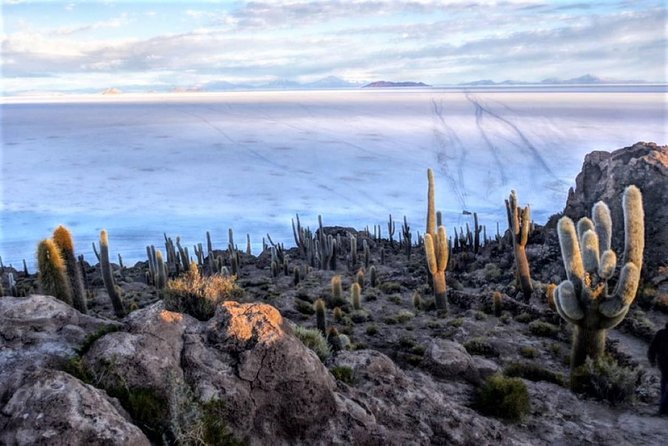
The afternoon highlight is Isla Incahuasi, an isolated hill rising from the middle of the salt plain. It is covered with tall Trichocereus cactus and surrounded by white hexagonal salt tiles.
The walk to the top takes about 15 minutes, followed by a loop trail. The view is worth the modest climb: cactus, salt, distant mountains, and a nearly level horizon all fit into one frame. The 30-boliviano entry fee is not included, so carry local currency.
This is one of the busiest stops on the route. The island is far less lonely than it once was, and groups gather along the trail for photographs. Still, the setting remains unusual enough to justify the crowd. During the wet season, water can prevent access altogether.
After sunset, you drive to a hotel built from salt blocks. Spending the night in a salt building is one of the trip’s memorable details, but do not confuse it with a resort. The accommodation is basic, and the tour’s useful extras list makes that clear: private rooms, hot showers, towels, and sleeping bags all cost more.
The first day is long, with several hours spent moving between stops. That is the price of covering such a huge area. If you prefer slow meals and long walks at every stop, this schedule may feel rushed. If you want to see as much of the salar as possible in one day, it works well.
Day two: volcano views and the Siloli Desert
Day two leaves the salt plain for the high desert near Ollagüe, a 19,252-foot stratovolcano on the Bolivia-Chile border. You see it from a viewpoint rather than climb it. Its summit crater and fumarole are part of an active volcanic system, and sulfur mining has taken place on the mountain.
The geology is impressive, but the main pleasure is the scale. The road crosses open, spare country where volcanic peaks and salt pans replace the white crust of day one. The drive can be demanding, and you should expect cold, dust, and limited comfort rather than a string of easy roadside attractions.
The Siloli Desert reaches about 15,000 feet, making it one of the highest deserts in the world. This is where altitude becomes more than a number. Walk slowly, drink water, and avoid treating short paths as ordinary lowland strolls.
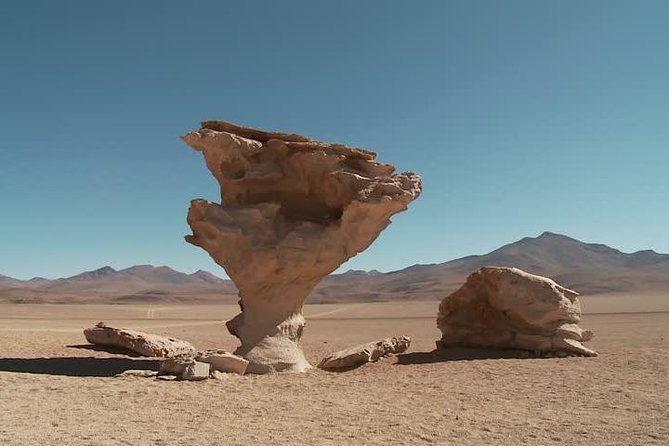
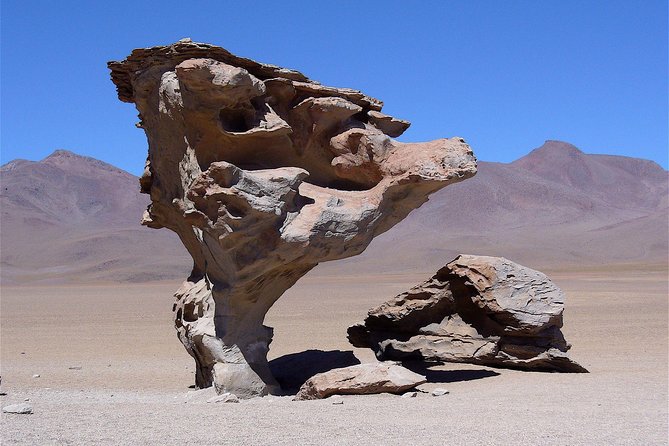
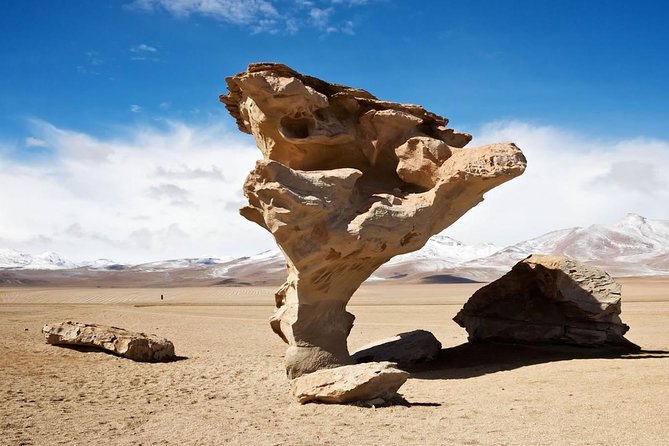
The famous Arbol de Piedra, or Stone Tree, rises about 22 feet from the desert floor. Wind has worn the softer sandstone into a narrow trunk and broad top. You have about an hour for the rock formation and surrounding desert, with plenty of time for photographs if you are comfortable at altitude.
The day’s major stop is Laguna Colorada, roughly 14,000 feet above sea level. Red algae and microorganisms give the water its orange-red color, while white borax deposits form pale patches across the surface.
James’s flamingos feed around the lake. They are native to the Andes and Altiplano, but their numbers are limited, so bring binoculars if you have them. Llamas, alpacas, Andean foxes, cats, and pumas also occur in the wider area, though sightings are not promised.
Laguna Colorada lies within the Eduardo Avaroa Andean Fauna National Reserve, a protected area recognized as a Ramsar wetland. The reserve entrance fee is 150 bolivianos and is not included. You spend the night in basic accommodation, likely the most demanding part of the trip for anyone who expects hotel comforts.
A few more trips around Uyuni worth a look
- Uyuni: Uyuni Salt Flats and San Pedro de Atacama 3-Day Tour
★ 4.3 · 122 reviews - Uyuni Salt Flats 3 Days/ 2 Nights with English Speaking Guide
★ 4.0 · 91 reviews - 3-Day Uyuni Salt Flat Tour with Sunset and Red Lagoons
★ 5.0 · 83 reviews - Uyuni: 3-Day Salt Flats Tour ending in San Pedro de Atacama
★ 4.7 · 62 reviews
Day three: geysers, hot water, and the Chilean border
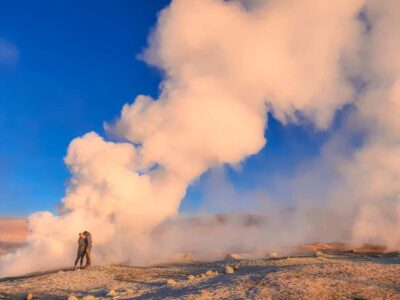
The final morning starts early at Sol de la Mañana, a field of geysers and boiling mud pools. The strongest geyser can push steam about 160 feet into the air.
There are no safety barriers. Stay alert, keep a sensible distance from the mud, and do not treat the area as a place for close-up selfies. The thin air, cold morning, and unstable ground make caution more important than getting the perfect photograph.
Next comes the Dali Desert, named for its surreal shapes and colors. Brown and ochre ground contrasts with the blue sky and snow-covered volcanic peaks. Scattered rocks give the area an odd, almost painted appearance.
At Laguna Verde, the water sits below Licancábur volcano. The lagoon is less green than it once was, but it remains a dramatic stop because of the mountain behind it. Licancábur reaches about 19,555 feet and has been used for NASA experiments connected with future Mars missions. Climbing it requires extra payment and considerable physical ability, so this tour only provides a view.
The final stops take about two hours altogether, but the full day includes the return or onward transfer. If you are continuing to Chile, the San Pedro de Atacama transfer costs 130 bolivianos per person. Confirm your exact ending point before departure, since the standard meeting information lists a return to Skyline Traveller Uyuni.
Guides, driving, and the small-group advantage
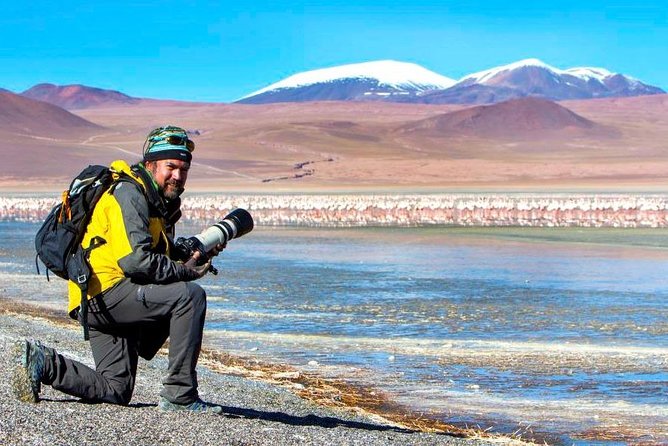
The guide can make or break a trip built around long drives. Named guides Edgar and Nelson have been praised for explaining the area, answering questions, helping with photographs, and keeping the mood friendly. Kevin has also been identified as a careful driver on one well-regarded departure.
Those names do not guarantee who will lead your trip, so ask when booking if a particular guide matters to you. The best version of this tour combines safe driving with clear explanations, not just transport from one viewpoint to the next.
The maximum group size is five. That is a real advantage on narrow trails, in basic hostels, and during photo stops. It also means less waiting when the group is ready to leave. The vehicle still spends many hours on rough and remote roads, so a small group does not turn this into a comfortable road holiday.
Pack thermal layers, gloves, a warm hat, sunglasses, sunscreen, sturdy walking shoes, water, snacks, toilet paper, and cash in bolivianos. Warm clothing and toilet paper are especially important because they may not be supplied at the accommodation. A sleeping bag and towel can be rented, but bringing your own may be more convenient if you have room.
Who should book this Uyuni trip?
I would choose this tour if you want the full natural circuit and prefer one organized package over piecing together transport, food, and lodging. It suits photographers, first-time visitors to the Altiplano, and anyone who wants the salt flats plus volcanoes, flamingos, geysers, and high desert in one trip.
It also works well for people continuing to Chile, provided you budget for the extra transfer. The small vehicle and English-speaking guide are useful when the scenery is remote and the route is complicated.
I would hesitate if you need private bathrooms, reliable hot showers, a relaxed pace, or high-comfort lodging. The schedule is active, the altitude is serious, and the second night is basic. Also remember that the most famous places can be crowded, especially Isla Incahuasi and the main salt-flat viewpoints.
At 4.7 out of 5 from 45 ratings, with 91 percent recommending the experience, the package has a strong record overall. The praise centers on friendly guides, careful driving, good food, strong organization, and the sheer range of scenery. The main warning is equally useful: communication before departure may not cover every packing need, and guide quality can shape the experience.
Book it if you see the trip as a high-altitude expedition with basic beds, not a hotel tour. With warm clothing, sensible expectations, and enough cash for fees, it offers a memorable and reasonably priced route through one of Bolivia’s most remarkable regions.
FAQ
Where does the tour start?
It starts at Skyline Traveller Uyuni on Avenida Ferroviaria in Uyuni, Bolivia, at 10:30 a.m.
How large is the group?
The tour has a maximum of five travelers.
Does the price include accommodation?
Yes. The $449 price includes two nights of basic accommodation. A private room costs an additional $35 per person for both nights.
Is Isla Incahuasi included?
The stop is included, but the 30-boliviano entrance fee is not included.
Is the Eduardo Avaroa reserve fee included?
No. Entry to Parque Eduardo Avaroa costs 150 bolivianos per person.
Are meals included?
The package includes two breakfasts, three lunches, two dinners, tea, and coffee.
Can I continue to San Pedro de Atacama?
Yes. A transfer to San Pedro de Atacama in Chile is available for an additional 130 bolivianos per person.
Can I cancel for a full refund?
You can cancel for a full refund if you do so at least 24 hours before the experience start time. Changes or cancellations made less than 24 hours beforehand are not accepted for a refund.
Just added around Uyuni
- UYUNI SALT FLAT: SUNRISE & STARLIGHT EXPERIENCE★ 3.1 · 3 reviews
- Uyuni: Classic Uyuni Salt Flats Tour + Hotel Pickup★ 3.0 · 4 reviews
- Uyuni: Salar de Uyuni Traditional Tour+Sunset Tour★ 4.8 · 3 reviews
- UYUNI SALT FLAT: SUNSET & STARLIGHT EXPERIENCE★ 5.0 · 3 reviews
- Uyuni: Salar de Uyuni and San Pedro de Atacama 3-Day Tour★ 4.2 · 4 reviews
- Uyuni: 3-Days Salt Flats and Desert Adventure Tour with Food★ 3.8 · 4 reviews
- Uyuni: Full-day tour, Salt flats and Sunset experience★ 4.8 · 5 reviews
- Uyuni: 2-day tour to the salt flat and altiplanic lagoons★ 3.3 · 3 reviews
Uyuni Salt Flat Tours, compared.

Uyuni Salt Flat Tour & Overnight Roundtrip Bus
Read our review →
Red Lagoon & Uyuni Salt Flats 3-Day Guided Tour
Read our review →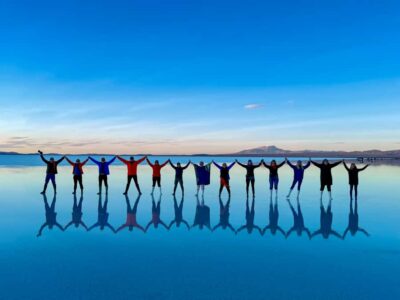
Uyuni Salt Flats & San Pedro de Atacama 3-Day Tour
Read our review →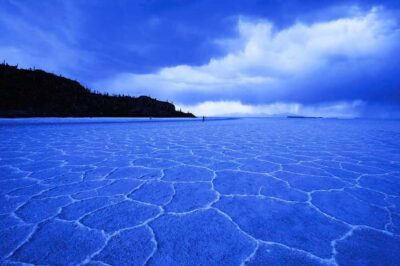
Uyuni Salt Flats and San Pedro de Atacama 3-Day Tour
Read our review →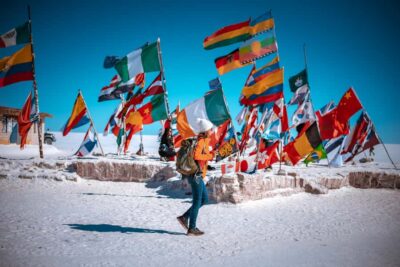
4-Day Trip to San Pedro de Atacama w/Salt Flats
Read our review →Browse the lists this tour appears in