
Reviewed · UYUNI SALT FLAT TOURS
From La Paz: 4-Day Trip to San Pedro de Atacama w/Salt Flats
The big draw here is the three-day 4WD journey across Bolivia’s high desert, ending in Chile. You move from the Uyuni Salt Flats and giant cacti to flamingo-filled lagoons, smoking geysers, hot springs, and the red, white, and green lakes near Licancabur Volcano.
I like the efficient route from La Paz to San Pedro de Atacama, and I like the small group size, limited to 11 people. Guides such as Mary, Andres, James, and Grover have earned praise for their English, photo help, and calm handling of the border crossing. The main drawback is that the first night is really an overnight bus ride, so this is closer to two and a half days with the tour team than a full four-day guided trip.
- Overnight sleeper bus: Leave La Paz at 9:00 p.m. and reach Uyuni around 7:30 a.m.
- Salt-flat highlights: See the Train Cemetery, Colchani, salt eyes, the Salt Hotel-Museum, Dakar Monument, flags, and Incahuasi Island.
- High-altitude wildlife: Look for flamingos, llamas, alpacas, and vizcachas around the lagoons and desert.
- Basic desert lodging: Sleep in shared rooms with shared bathrooms, limited electricity, and little or no Wi-Fi.
- Chile transfer included: Guides assist with the border crossing, with drop-off in San Pedro’s main square.
- Extra cash needed: Budget for park entry, toilets, hot springs, migration tax, snacks, drinks, and tips.
The overnight ride from La Paz to Uyuni
Your trip begins at the bus office in La Paz at 8:30 p.m. The bus leaves at 9:00 p.m., so arrive ready to check in rather than treating this as a relaxed evening departure.
The bus includes dinner, breakfast, a bottle of water, a hot drink, heating, a toilet, a polar blanket, Wi-Fi, and a first-aid kit. Several people found the sleeper bus comfortable, but comfort on an overnight bus still depends on how well you sleep sitting or reclining in your seat.
You arrive in Uyuni at about 7:30 a.m. There is free time before meeting the local team at 10:00 a.m. Departure for the salt flats is scheduled for 10:30 a.m. This gap can feel disorganized, especially if you are tired after the bus ride, so keep your day bag handy and use the time to eat, walk around, or buy anything you forgot.
One practical point matters here: the bus ride is counted as Day One. If you are comparing this with a three-day Uyuni tour, you are paying for a combined transfer and sightseeing trip, not four full days of guided activity.
Train Cemetery and the first salt-flat stops
The first 4WD stop is Uyuni’s Train Cemetery. Rusting locomotives from the late nineteenth and early twentieth centuries sit in the open desert, far from the tracks that once served the area. It is a striking place for photos, with the empty surroundings making the engines look even more isolated.
Next comes Colchani, a village tied to local salt production. You can see small-scale salt work, browse an artisanal market, and visit a museum. This stop gives you a useful glimpse of the people and businesses connected to the flats, instead of treating the area as scenery alone.
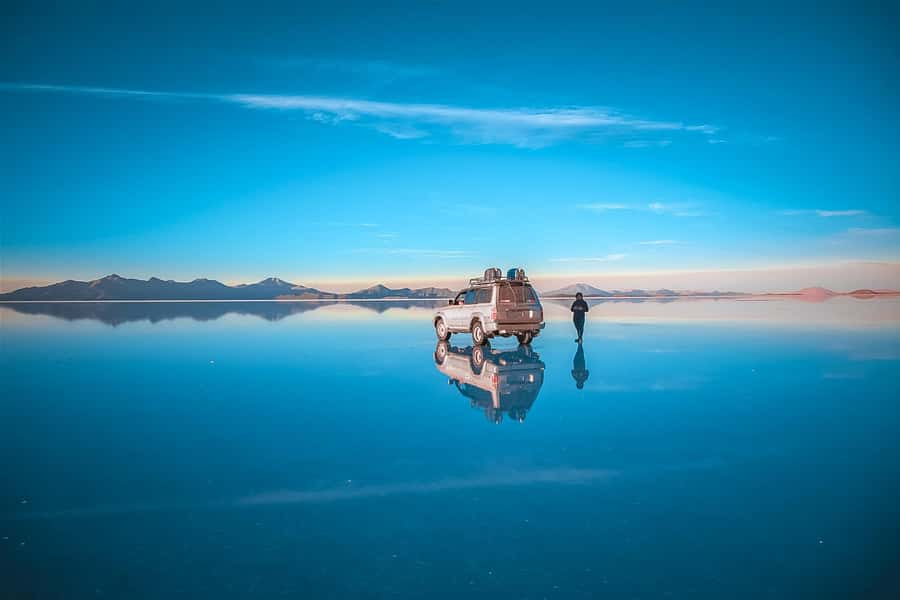
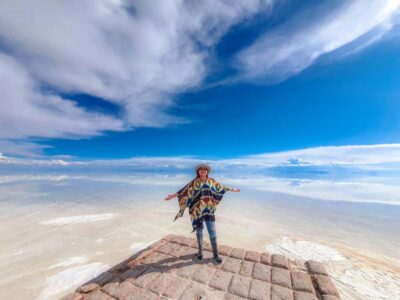
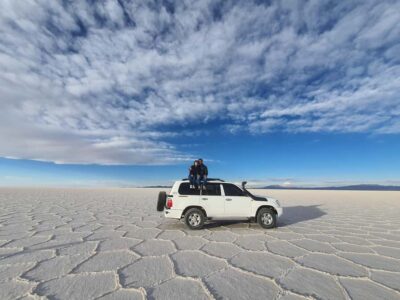
Then the road reaches the Salar de Uyuni. The sheer scale is hard to grasp from photographs. In dry conditions, the salt forms a bright, seemingly endless plain. During the rainy season, usually January through April, a thin layer of water can create the famous mirror effect. Access to Incahuasi Island is not possible during this season, and the route or overnight location may change because of water and road conditions.
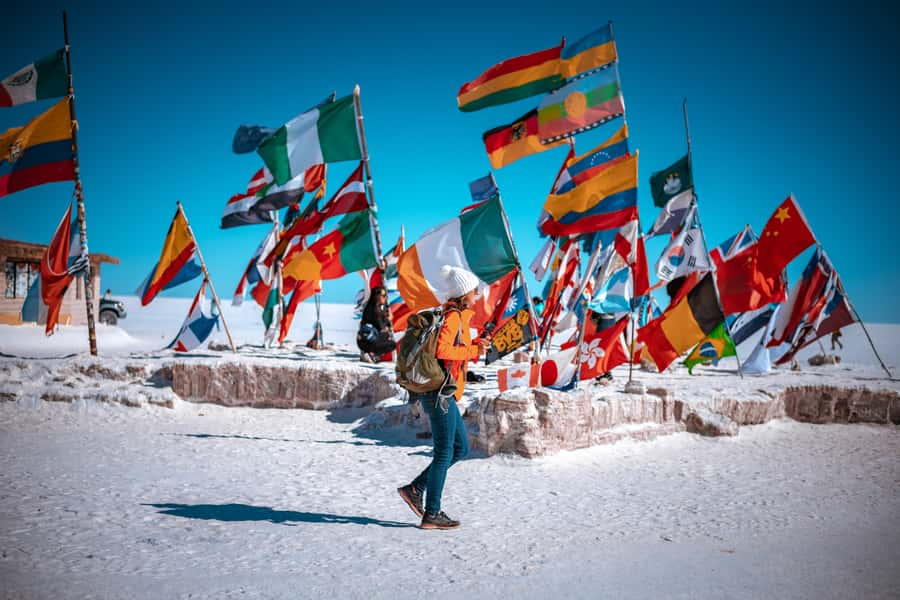
The salt flats itinerary includes salt eyes, the Salt Hotel-Museum, the Dakar Monument, and the flags of the world. The Salt Hotel-Museum is built from salt blocks, while the monuments and flags provide easy photo stops in an otherwise almost featureless setting.
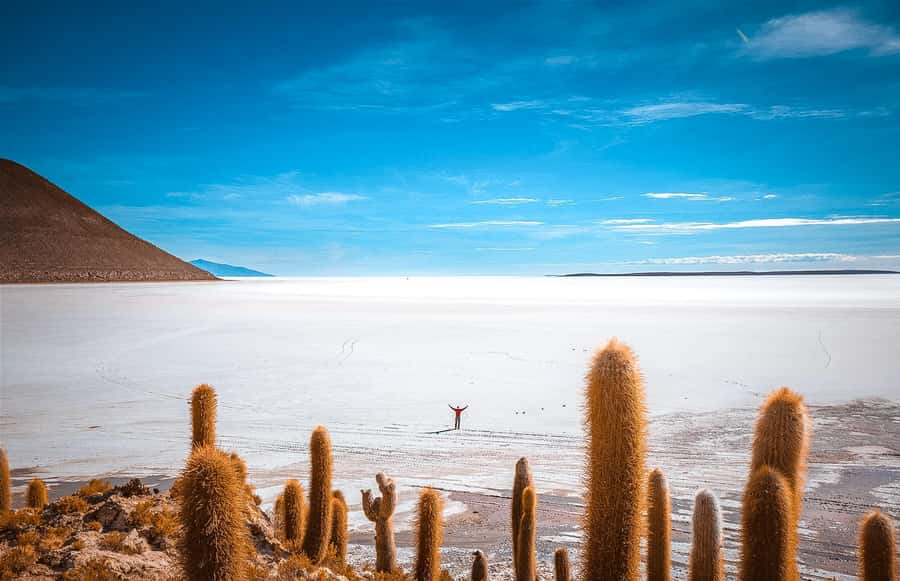
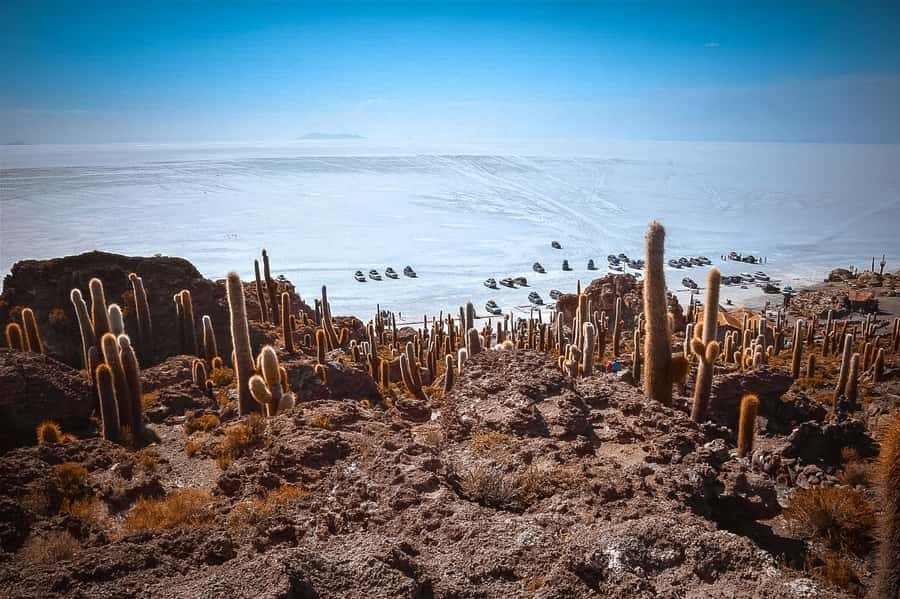
You then reach Incahuasi Island, a rocky outcrop covered with giant cacti. From here, you get one of the best views over the white expanse. Guides often help with perspective photos on the flats, and the open surface is ideal for playful images that make people look much larger or smaller than they are.
The day ends with sunset, wine, and a light platter before dinner at the first hostel in Agencha. This is one of the more memorable parts of the route, but bring warm clothing. The temperature can drop quickly once the sun is gone.
More salt flat trips running from La Paz
- From La Paz: Uyuni Salt Flat Tour & Overnight Roundtrip Bus
★ 4.5 · 327 reviews - La Paz: Uyuni Salt Flats & San Pedro de Atacama 3-Day Tour
★ 4.1 · 145 reviews - From La Paz: Uyuni Salt Flats 2-Day Tour with Bus Transfers
★ 4.3 · 90 reviews
Two nights where comfort takes second place
The first night is in a shared four-, five-, or six-person room with a shared toilet. Conditions are basic, though some visitors found the first hostel warm and comfortable enough. Hot water can be unreliable, and showers may cost extra.
The second night is in Huayllajara, in a shared six-person room with a shared toilet. This is the more primitive stay. Electricity may be available for only a few hours, rooms may have no heat, and hot water is not guaranteed. Wi-Fi, if offered, costs extra and may not work well.
Bring toilet paper, a towel, toiletries, a power bank, and several warm layers. Sleeping bags are not included, but they can be useful in the coldest months. Some rooms provide many blankets, yet the high-altitude cold can still be severe, especially in May, June, and July.
The lack of comfort is not a small detail. You spend long hours in the vehicle, then return to simple accommodation without reliable charging or hot water. If you need a private bathroom, steady electricity, or dependable Internet, this trip will test your patience.
Flamingo lagoons and the red desert
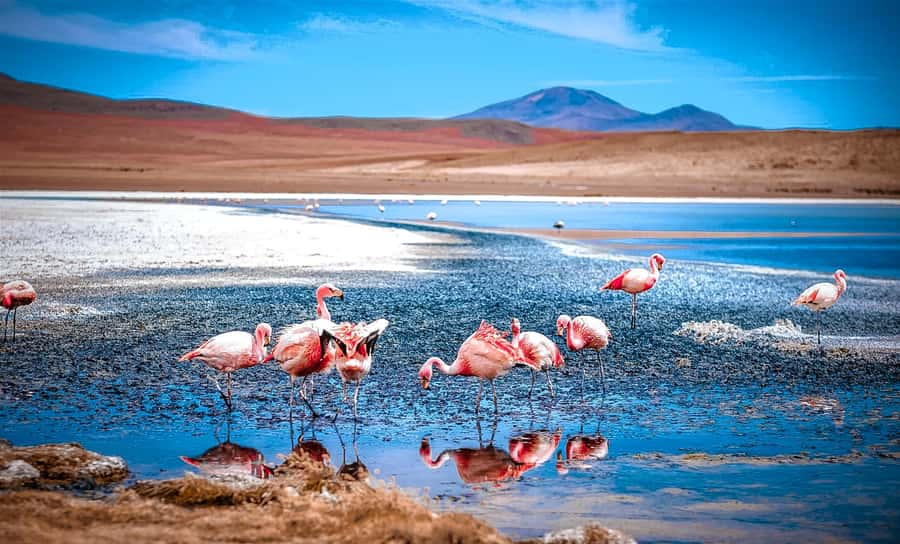
After breakfast, the 4WD vehicles head toward the lagoons of Cañapa, Hedionda, and Chiarcota. Flamingos gather around the water, creating one of the route’s best wildlife moments. You may also see llamas, alpacas, and vizcachas, small rabbit-like animals that live in the rocky desert.
The lagoons are valuable because they break up the long drive with changing colors, birds, and open views. Each stop feels different, even when the ground around you appears stark and empty. Wind can be fierce, so keep a jacket within reach rather than buried under your luggage.
Lunch is served during the day, followed by the Siloli Desert and its Stone Tree. The Stone Tree is a naturally shaped rock formation rising from the sand and gravel. It is a quick stop, but the unusual form makes it one of the most recognizable sights on the route.
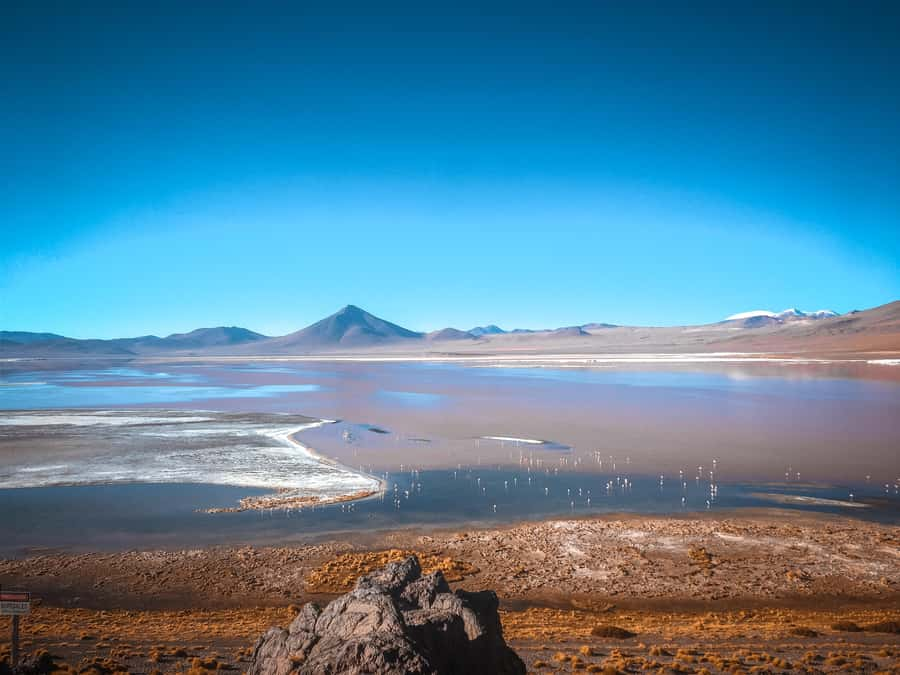
The final major stop is Laguna Colorada, or Red Lagoon. Its reddish tone comes from mineral content and algae, with flamingos often standing in the shallow water. The color depends on light and conditions, so it may look more muted than photographs suggest, but the setting remains memorable.
This is a long, bumpy day. Vehicles carry up to six people, and the back seats can feel tight, especially if you are tall. Groups often trade seats during the drive. That simple courtesy makes a real difference.
Geysers, hot springs, and the border to Chile
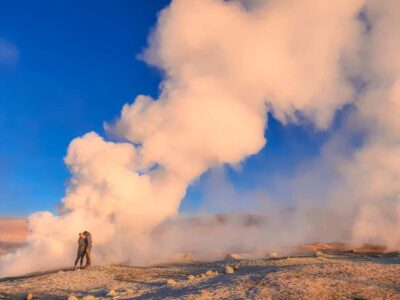
The final morning starts early with a visit to Sol de Mañana, a geothermal area with fumaroles, bubbling mud, steam, and a strong sulfur smell. You are seeing active volcanic features, not a polished park attraction. Stay close to the guide and watch your footing around the openings.
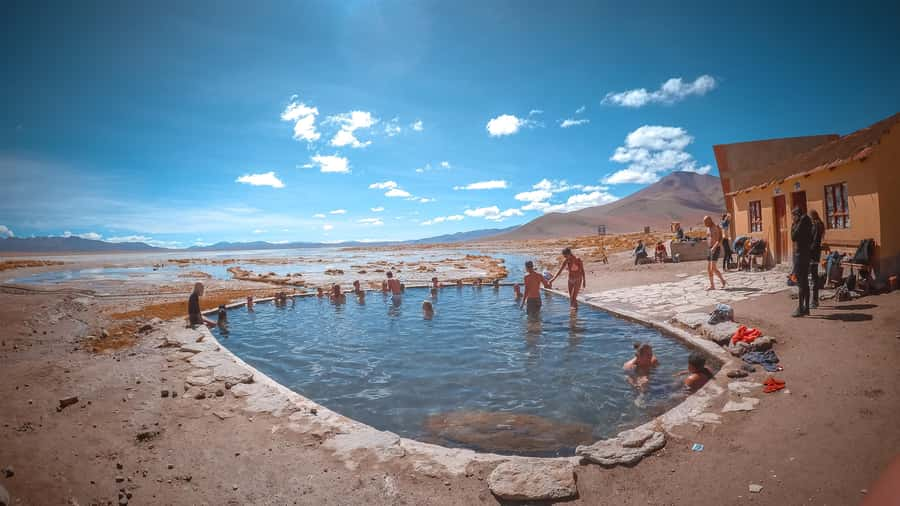
Next comes the Polques hot spring. For many people, this is a highlight because you can sit in warm water while looking across the cold high desert. Bring a swimsuit, towel, and dry clothes in an easy-to-reach bag. The air can be bitterly cold when you get out, even if the bath itself is pleasant.
The route continues through the Salvador Dalí Desert, named for its surreal rock formations and open stretches of sand. You then reach viewpoints over the Green Lagoon, White Lagoon, and Licancabur Volcano. These are some of the final Bolivian views before the border, and the contrast between the lake colors and volcanic peaks makes a strong finish to the route.
Border assistance is scheduled around 10:00 a.m., with arrival in San Pedro de Atacama around 1:30 p.m. The guide helps with the crossing, but this is not a fast airport-style procedure. Carry your passport or ID card, keep immigration documents accessible, and expect the process to take time.
The tour ends in San Pedro’s main square. That makes the trip useful if you are building a larger Bolivia and Chile route, but it also means you should plan your next accommodation before you arrive.
More crossings to San Pedro de Atacama from La Paz
- La Paz: Uyuni tour ending in Atacama Chile by bus.
★ 3.9 · 3 reviews - Uyuni: Uyuni Salt Flats and San Pedro de Atacama 3-Day Tour
★ 4.3 · 122 reviews - Uyuni: 3-Day Salt Flats Tour ending in San Pedro de Atacama
★ 4.7 · 62 reviews - San Pedro de Atacama: 3 D. Tour Uyuni and Back to San Pedro
★ 4.8 · 61 reviews
Food, vehicles, and guide quality
Meals are included on the bus and during the 4WD section: one bus dinner, one bus breakfast, two lunches, two dinners, and two breakfasts. Food quality varies. Some people found the meals surprisingly good, while others described the food as basic and functional.
Breakfast is usually simple, such as bread, jam, and tea or coffee. If you need a large breakfast, pack snacks from La Paz or Uyuni. Drinks and snacks are not included, and there are stretches where you cannot count on finding supplies.
The 4WD vehicles have rooftop luggage racks, but interior space is still limited. Pack a small day bag for the cabin and keep warm clothes, water, camera equipment, and toiletries close. Large bags should stay secured on the roof.
The guide makes a major difference. Mary has been praised for helping with accommodation and immigration. Andres was noted for organizing the trip closely and keeping the group involved. James was appreciated for his English, energy, patience, and photo help. Drivers such as Yvan, Ivan, Jonny, Pedro, Arturo, and Roger have been praised for safe driving on rough tracks.
There can be a catch: one English-speaking guide may serve two vehicles. If the guide is riding in the other 4WD, you may receive little commentary between stops. Ask at the start how the guide will divide time between the vehicles.
What the $493 price really covers

At $493 per person, the price includes the La Paz to Uyuni bus, the 4WD journey, English-speaking guide, local driver, accommodation, meals, and transfer to San Pedro de Atacama. For someone who wants one booking to handle a difficult cross-border route, that package has real value.
You are also paying for coordination. The route covers remote roads, isolated hostels, national-park stops, and an international border. Having a guide organize the vehicles, meals, lodging, and handover to Chile can be worth more than the raw transport cost.
Still, the price does not cover several unavoidable expenses:
- Incahuasi Island: 30 bolivianos
- Eduardo Avaroa Reserve: 150 bolivianos
- Toilets along the route: about 30 bolivianos
- Hot springs: 6 bolivianos
- Bolivian migration tax: 15 bolivianos
- Personal expenses: about 150 bolivianos
- Drinks, snacks, toiletries, and possible tips
Carry at least 350 bolivianos in cash, with some extra if you want drinks, snacks, Wi-Fi, or souvenirs. You may find a similar route for less by arranging the bus yourself and booking in Uyuni. The trade-off is more planning and less help if something changes.
The activity has free cancellation up to 24 hours before departure and allows you to reserve before paying. Those policies help if your Bolivia plans are still shifting, but the real decision is your comfort level with basic conditions.
Who should book this route

I would choose this trip if you want to connect La Paz and San Pedro without arranging several separate buses, agencies, hostels, and border transfers. It suits people who value scenery, wildlife, and variety more than comfort.
You should be fit enough for long vehicle days, rough roads, cold mornings, and high-altitude conditions. The activity is not suitable for people with back problems, altitude sickness, or people over 95 years old.
Pack for conditions, not for the brochure:
- Several warm layers, gloves, and a hat
- Toilet paper and toiletries
- Towel and swimsuit for the hot springs
- Power bank and spare phone storage
- Snacks and extra water
- Cash in bolivianos
- Passport or ID card
- Sleeping bag if you feel the cold easily
The route is busy but rewarding. You see salt flats, volcanoes, geysers, lagoons, flamingos, giant cacti, and desert rock formations in a short time. The cost is comfort: long drives, cold nights, shared rooms, and a border crossing that may take longer than expected.
Should you book the La Paz to San Pedro trip?
Book it if the main goal is to see the Uyuni region and reach San Pedro in one organized journey. The strongest parts are the scenery, the range of stops, the small group, and the help provided by good English-speaking guides and careful drivers.
Think twice if you want a relaxed four-day holiday or private rooms. The first night is an overnight bus, the last morning ends at the border area by early afternoon, and the two desert hostels are basic.
For most hardy sightseers, the route offers strong value at $493, provided you budget for entry fees and arrive prepared for cold, limited electricity, and rough roads. I would book it for the route and the scenery, not for the beds or showers.
FAQ

Where does the tour start and finish?
It starts at the bus office in La Paz and finishes at San Pedro de Atacama’s main square in Chile.
What time does the bus leave La Paz?
Check-in is at 8:30 p.m., and the bus departs at 9:00 p.m.
Is an English-speaking guide included?
Yes. The tour includes an English-speaking guide, although one guide may sometimes be shared between two 4WD vehicles.
What accommodation is provided?
The first night is in Agencha in shared four-, five-, or six-person rooms with shared toilets. The second night is in Huayllajara in a shared six-person room with a shared toilet.
Is Incahuasi Island visited all year?
No. Incahuasi Island is not accessible during the rainy season, generally from January through April. The route or overnight location may also change because of road access and weather.
What extra fees should I budget for?
Extra costs include the Incahuasi Island fee, Eduardo Avaroa Reserve entry, toilets, hot springs, the Bolivian migration tax, personal expenses, drinks, snacks, toiletries, and possible tips.
What should I bring?
Bring your passport or ID card, warm layers, toiletries, toilet paper, a towel, a power bank, snacks, and cash. A sleeping bag may also be useful in cold conditions.
More 4-Day Experiences in La Paz
- From La Paz to Atacama: Uyuni Salt Flats 4-Day Tour
★ 3.9 · 31 reviews - San Pedro de Atacama: 4-Day Uyuni Salt Flats Tour
★ 3.7 · 8 reviews
More 1-Day Tours in La Paz
- La Paz: Full Day Trip to Copacabana and Isla del Sol
★ 4.5 · 400 reviews - From La Paz: Day Trip to Chacaltaya and Moon Valley
★ 4.4 · 65 reviews - Private Tiwanaku and Titicaca Day Trip from La Paz
★ 4.5 · 62 reviews - From La Paz: El Alto and Cholets Guided Day Trip
★ 4.2 · 7 reviews
Just added around La Paz
- Private Tour of Tiwanaku Ruins from La Paz★ 5.0 · 3 reviews
- From La Paz: Lake Titicaca and Copacabana Private Tour★ 5.0 · 5 reviews
- Private Tiwanaku and Titicaca Day Trip from La Paz★ 4.8 · 3 reviews
- LA PAZ: GUIDED TOUR CHACALTAYA + VALLEY OF THE MOON★ 3.6 · 3 reviews
- La Paz: Uyuni tour ending in Atacama Chile by bus.★ 3.9 · 3 reviews
- La Paz: The Feminist Tour★ 5.0 · 3 reviews
- Titicaca Lake: Highlights Tour from La Paz by Bus★ 4.0 · 3 reviews
- La Paz: Uyuni Salt Flats & Lagoon Share Trip (private room)★ 4.7 · 4 reviews
Uyuni Salt Flat Tours, compared.

Uyuni Salt Flat Tour & Overnight Roundtrip Bus
Read our review →
Red Lagoon & Uyuni Salt Flats 3-Day Guided Tour
Read our review →
Uyuni Salt Flats & San Pedro de Atacama 3-Day Tour
Read our review →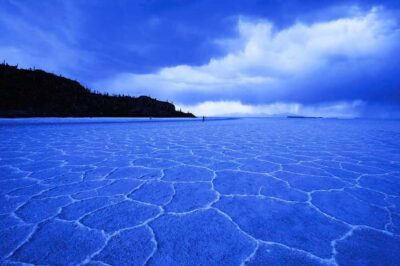
Uyuni Salt Flats and San Pedro de Atacama 3-Day Tour
Read our review →
Uyuni Salt Flats 3 Days/ 2 Nights with English Speaking Guide
Read our review →Browse the lists this tour appears in