
Reviewed · UYUNI SALT FLAT TOURS
Uyuni: 3 day-tour, salt flats & surrealistic deserts
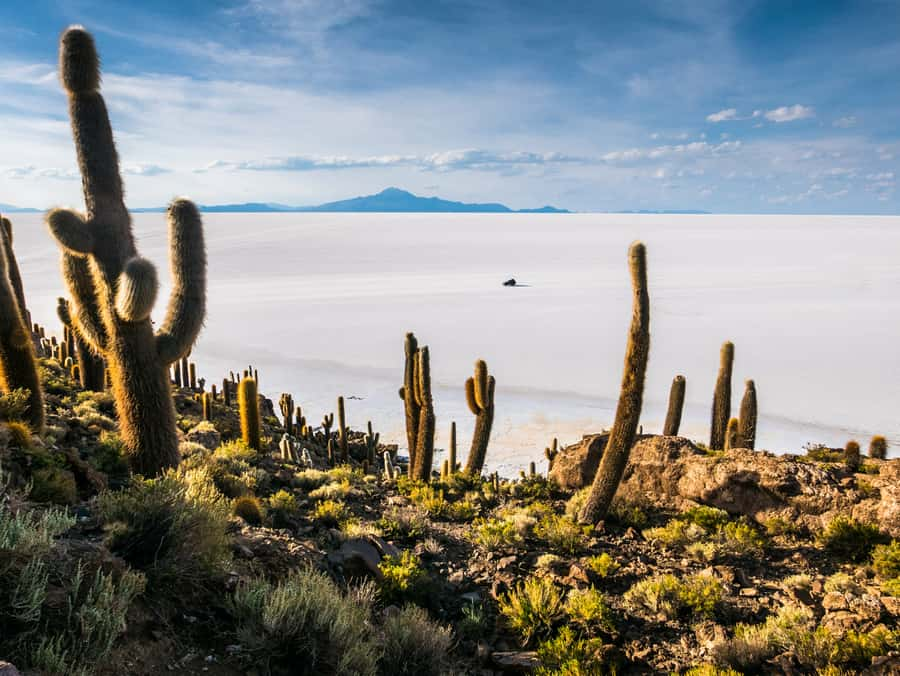
Uyuni’s salt flats can feel like a place designed by a dreamer: white ground running to the horizon, giant cacti rising from an island, red water under flamingos, and steam lifting from the earth at 4,500 meters. This three-day trip links the famous salt crust with Bolivia’s far wilder highland deserts.
I like the small group of up to six and the fact that meals, 4WD transport, airport or hotel pickup, and two nights of lodging are included. I also like the range of scenery: you are not spending three days looking at one white expanse.
The tradeoff is comfort. The roads are rough, the second refuge is extremely basic, internet can disappear for a full day, and hot water is never guaranteed. A larger group may also be divided between vehicles, so confirm your language arrangement if you are traveling alone.
Key points to know before you book
- The first night is in a salt hostel, with double, triple, or quadruple rooms and private bathrooms.
- The second night is much more rustic, in a basic refuge at high altitude with little or no heating.
- The best mirror effect comes in the rainy season, usually December through April, but flooding can change the route.
- Altitude is part of the experience, with hot springs, lagoons, and desert stops reaching roughly 4,500 meters.
- Entrance fees are extra, including Incahuasi Island, Polkes Hot Springs, and Eduardo Avaroa Reserve.
- The English option matters, especially because the driver-guide may speak only Spanish and vehicles can be split.
Day one: the train cemetery and the white sweep of Uyuni
Pickup is available from your Uyuni hotel, airport, or bus station. If you arrive early by bus or train, you can wait at the local office until the tour begins. For those already in town, pickup is generally between 10:30 and 10:45 in the morning, so wait in your accommodation lobby.
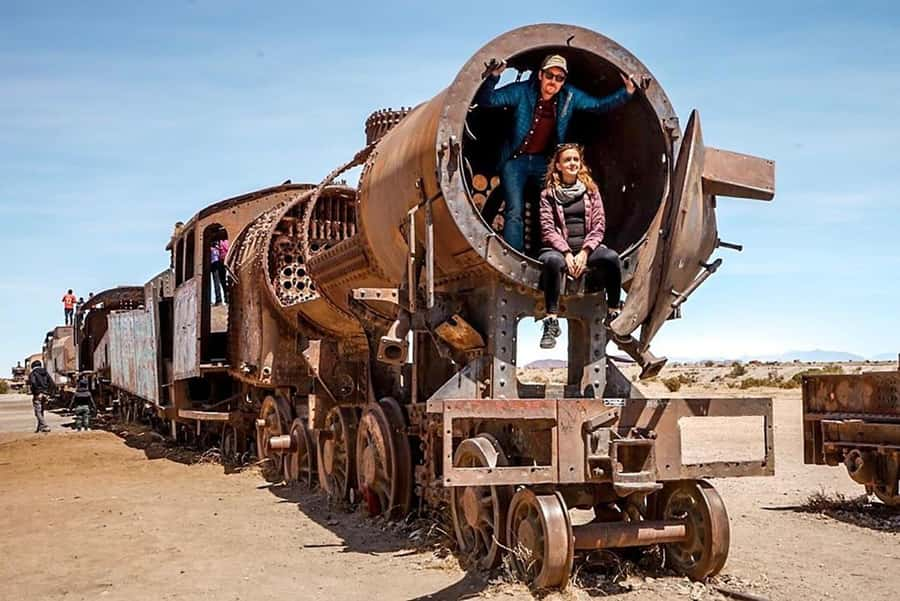
The first stop is the train cemetery outside Uyuni. Rusted locomotives sit in the open desert, their metal frames worn down by wind and salt. It is an easy place to take striking photos, though the stop is more about atmosphere than a long guided visit.
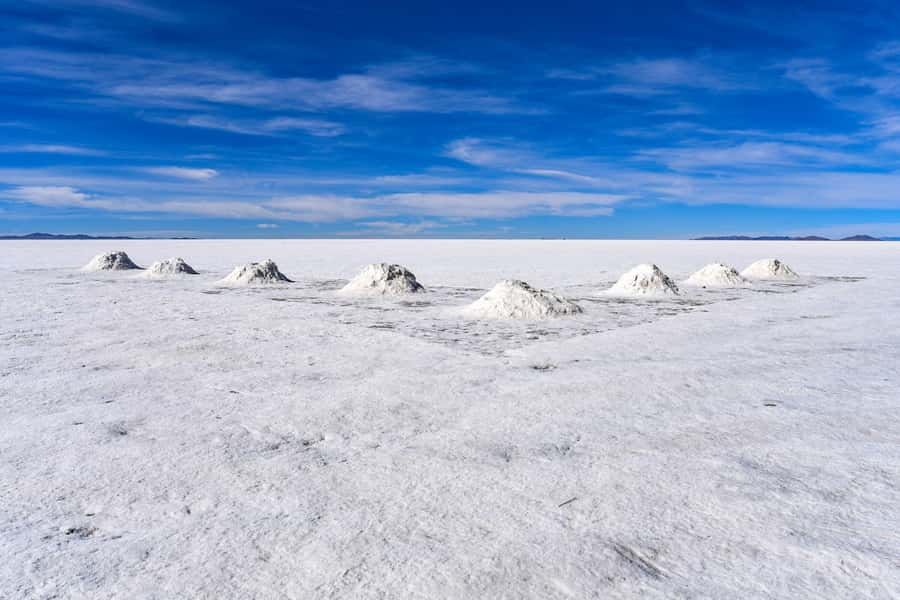
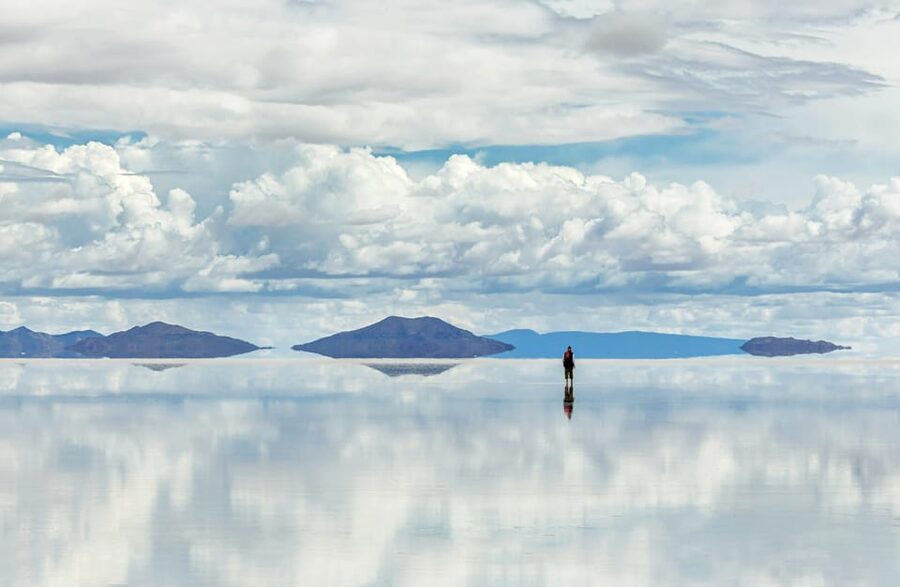
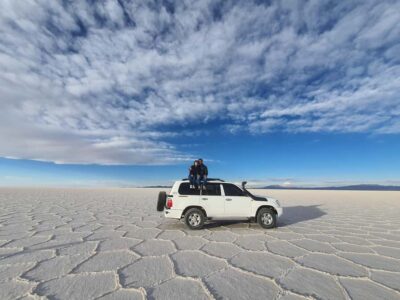
From there, the 4WD heads toward the salt flats. This is where the trip changes scale. The crust spreads so far that the horizon seems to lose its usual rules. In the dry season, the surface is a brilliant field of white polygons. Under a clear sky, the contrast is almost severe: white salt below, deep blue above, and very little in between.
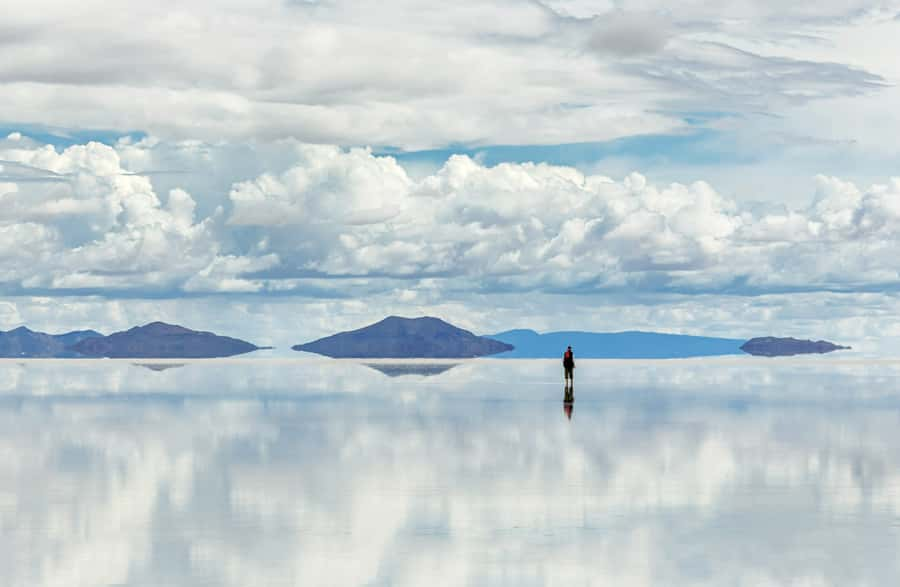
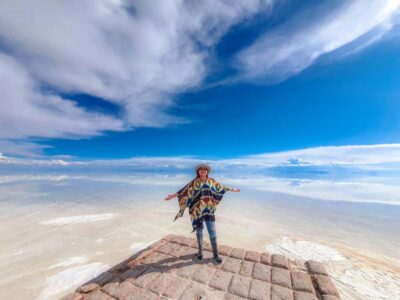
The rainy season can create the famous mirror effect. A thin layer of water turns the flats into a giant reflective surface, making the sky appear beneath your feet. This is one of the great photography moments in South America, but it comes with a catch. Water can flood access roads, and the route to the salt hostels may be changed. Incahuasi Island may also be closed during periods of flooding.
You will have time for photographs and playful perspective shots on the flats. Bring sunglasses and sunscreen, since the white surface throws light back at you. A hat, sturdy shoes, and a camera are also worth packing.
Lunch is included, as are meals for the rest of the tour. Food is described as basic but varied, with a basic vegetarian option available. If you need vegetarian meals, state this clearly when booking and again at pickup. One recent experience with this arrangement included full vegetarian meals with protein, which is encouraging, but dietary communication still matters.
The first night is spent in a salt hostel. Rooms are shared, with double, triple, or quadruple arrangements and a private bathroom. This is not a polished hotel. It is a practical overnight stop that lets you stay near the route, and the salt construction gives the evening a distinctive Uyuni feel.
More salt flat trips running from Uyuni
- Day Trip to Uyuni Salt Flats
★ 4.0 · 602 reviews - 3-Day Tour to Salt Flats and Lagoons
★ 4.5 · 168 reviews - From Uyuni: Red Lagoon & Uyuni Salt Flats 3-Day Guided Tour
★ 4.4 · 160 reviews
Incahuasi Island and giant cacti in an empty sea
Incahuasi Island rises from the middle of the salt flats, covered with giant cacti. The contrast is memorable: a green-brown island of living plants surrounded by miles of white salt.
The island entrance costs 30 Bolivianos, paid separately. Allow for this fee in your cash budget. Walking around the island gives you a change of pace after the broad, flat surface of the salt crust, though the altitude can make even a short uphill stroll feel demanding.
This is one of the stops where the small group size helps. With up to six people, you have a better chance of getting a clear view and taking photographs without a large crowd pressing around you. Still, the experience can become busier at popular photo points, so patience helps.
Clear weather is ideal here. The salt flats look their most sharply defined beneath strong sun, while the rainy season offers the mirror effect. You cannot guarantee both perfect reflections and an open route on the same departure. The weather decides which version of Uyuni you receive.
Day two: colored lagoons, geysers, and the high desert
Day two takes you away from the salt flats and into the remote highlands. The road is rough, unpaved, and bumpy. You spend long stretches inside the 4WD, so comfortable clothing and a willingness to accept road jolts are part of the deal.
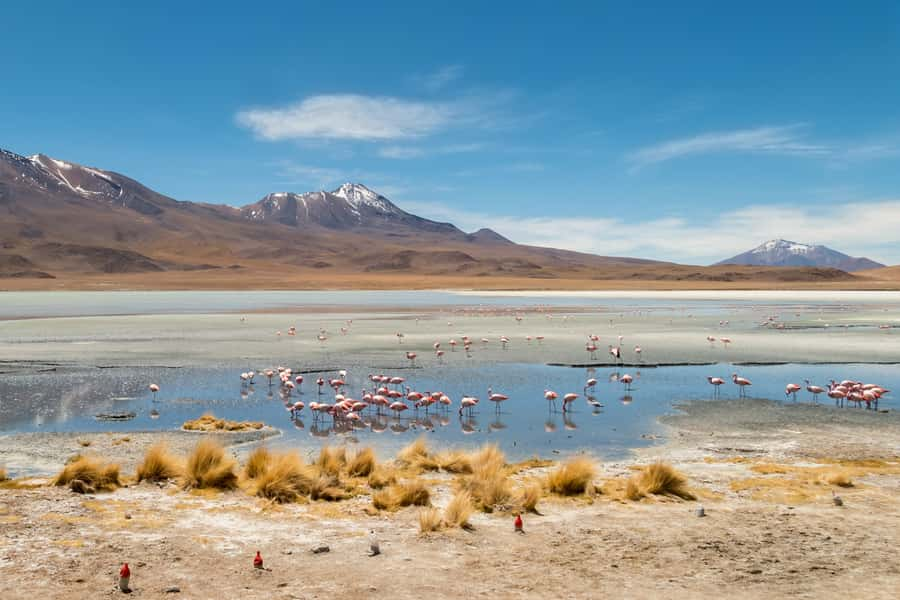
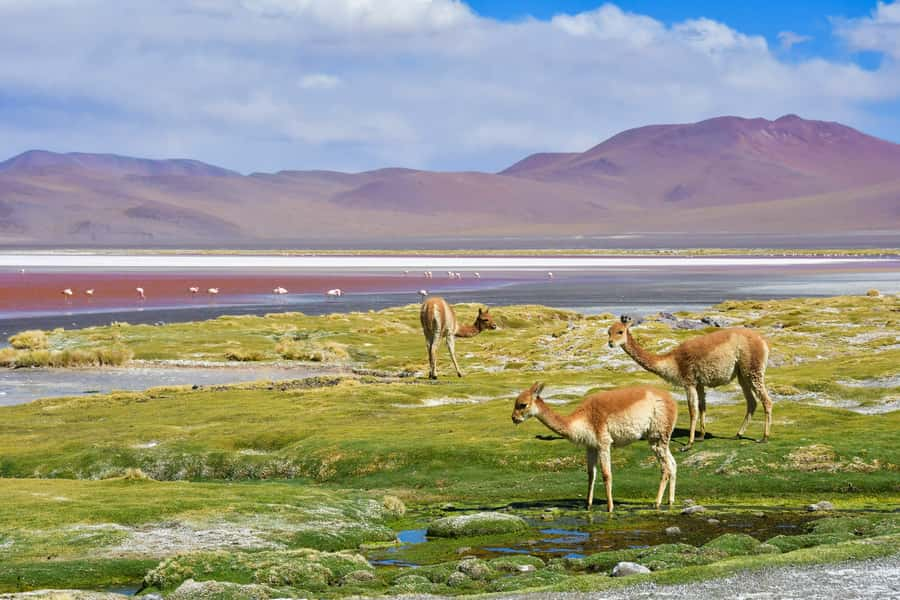
The colored lagoons give the day its strongest visual contrast. The Red Lagoon is known for its reddish water, while the Green Lagoon provides a different, colder-looking tone against the high desert. Water color can vary with weather, light, and conditions, so do not expect a perfectly uniform shade at every visit.
Andean wildlife is another reason to keep your eyes open. The route includes chances to observe high-altitude wildlife around the lagoons, including flamingos. These are not zoo-style encounters. You may see animals at a distance, and binoculars would be useful if you have room to pack them.
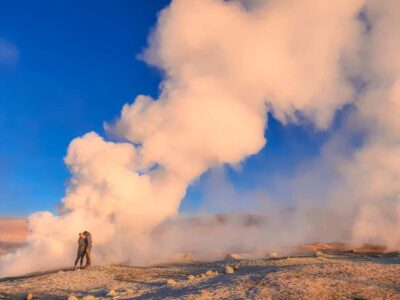
The geysers add a different kind of drama. Steam and geothermal activity make the ground feel alive, especially in the thin mountain air. Stay with the guide and follow safety instructions around hot ground and openings. At these elevations, the cold can be sharp even when the sun feels strong.
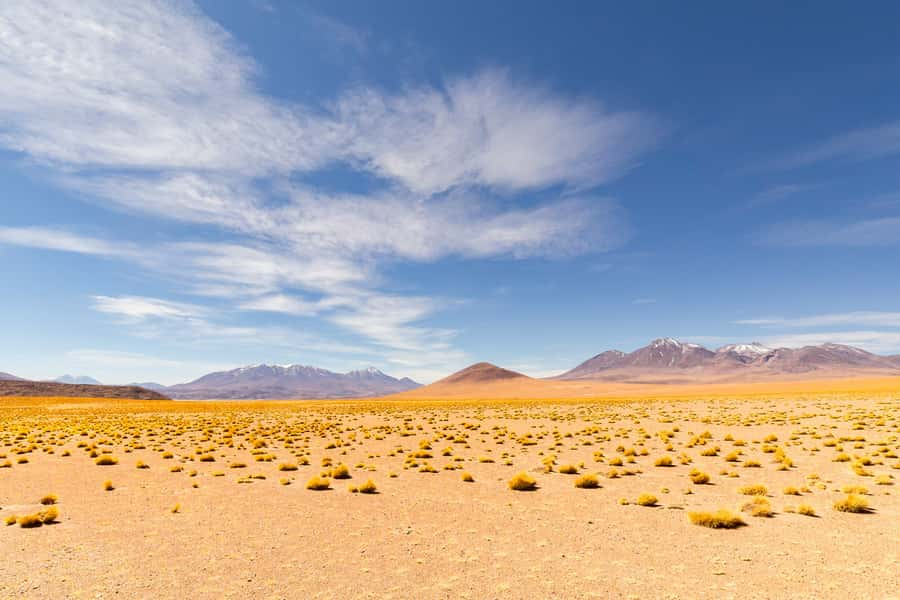
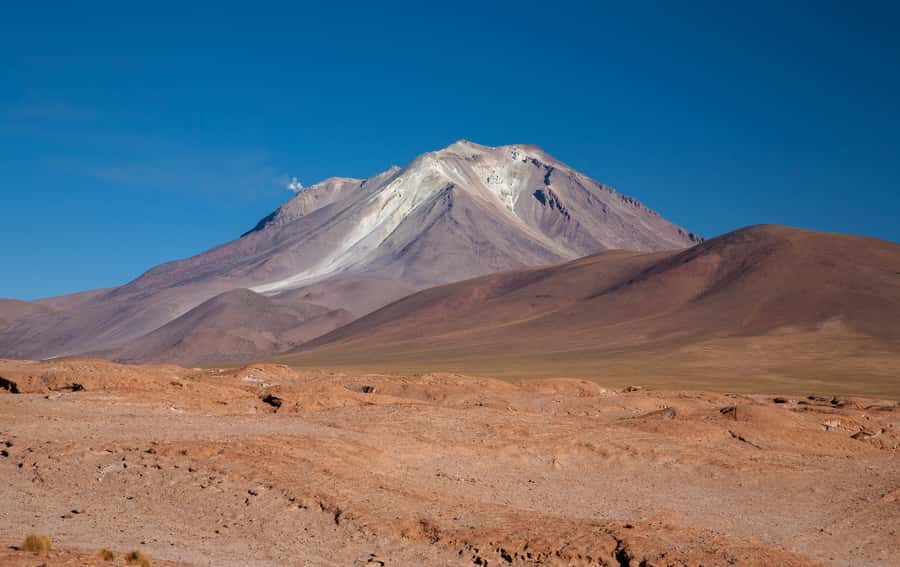
You will also cross surreal desert areas with unusual rock formations and broad empty views. The appeal is not a single landmark. It is the steady change in color and texture as the route moves from white salt to dark volcanic ground, rust-colored earth, pale sand, and mineral-stained water.
The second night is in a very basic refuge. Rooms are shared in double, triple, or quadruple arrangements, with a private bathroom listed, but you should keep expectations low. Heating is limited or absent, and the air is thin and cold. From May through September, a sleeping bag is included. In other months, you can request one at no extra charge.
Internet access is very limited, and day two often has none. I see this as part of the practical reality of the route, but you should download reservations, maps, music, and important documents before departure. Carry cash since bathrooms along the route can cost around 20 Bolivianos.
Hot springs at 4,500 meters
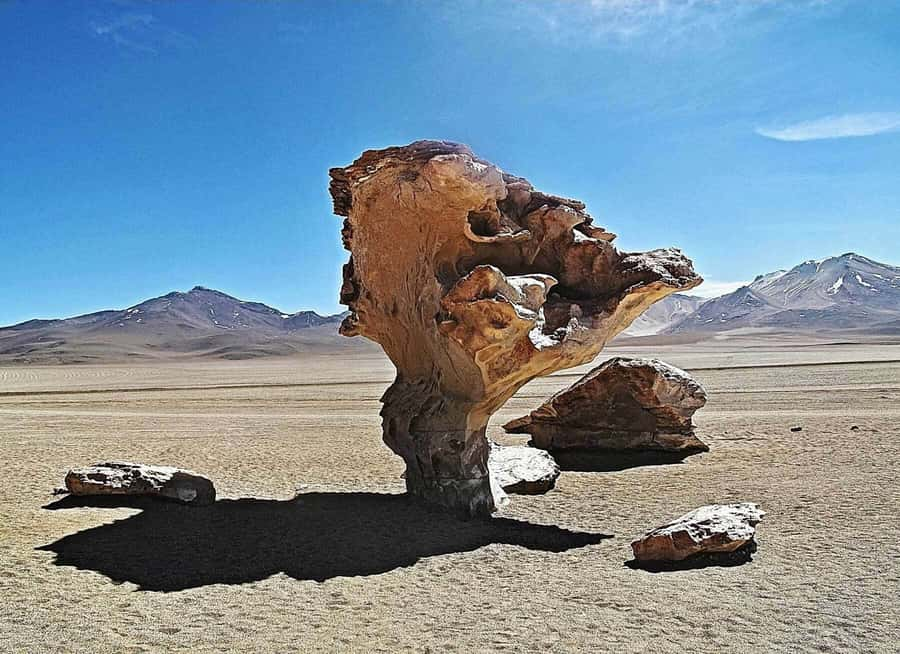
A soak in the Polkes hot springs is one of the tour’s most welcome breaks. After hours on rough roads and in cold highland air, warm water feels especially good.
The hot springs sit at around 4,500 meters above sea level. That height matters. Move slowly, drink water, and pay attention to how you feel. This experience is not suitable for people with certain pre-existing medical conditions, mobility impairments, or pregnancy, according to the tour information.
Entry to Polkes costs 15 Bolivianos and is not included. Bring swimwear, flip-flops, a towel if you have space, and warm clothing for getting out. The contrast between hot water and cold air can be fierce.
Hot showers are included at the accommodations when available, but the supply is not dependable. Drought, gas shortages, or frozen pipes can prevent hot water. You can expect hot water about three quarters of the time, not every time. The springs are the safer bet for warmth, but even there, weather and road conditions can affect the plan.
A few more trips around Uyuni worth a look
- Uyuni: Uyuni Salt Flats and San Pedro de Atacama 3-Day Tour
★ 4.3 · 122 reviews - Uyuni Salt Flats 3 Days/ 2 Nights with English Speaking Guide
★ 4.0 · 91 reviews - 3-Day Uyuni Salt Flat Tour with Sunset and Red Lagoons
★ 5.0 · 83 reviews - Uyuni: 3-Day Salt Flats Tour ending in San Pedro de Atacama
★ 4.7 · 62 reviews
Day three: the long return through Eduardo Avaroa
The final day continues through the high-altitude desert and returns toward Uyuni. The route includes more dramatic scenery and gives you time to absorb how far from ordinary roads this part of Bolivia feels.
The Eduardo Avaroa Reserve requires a separate entrance payment of 150 Bolivianos. This is the largest extra cost on the route, so do not arrive with only the tour price in mind. Add the reserve fee, Incahuasi and hot springs fees, bathroom money, personal water, snacks, and any other personal spending.
Sunset is one of the promised highlights, but it depends on good weather. If clouds or poor conditions move in, the colors may be muted or the timing may change. When the sky cooperates, the open desert gives the sunset an enormous sense of scale. There are no city lights or buildings competing for attention.
The vehicle then makes its way back toward Uyuni unless you have arranged something different. A transfer to San Pedro de Atacama in Chile is not included. If your wider plan is to cross into Chile, ask about that connection before booking rather than assuming it is part of the three-day service.
What the guide and vehicle setup mean
The Spanish-speaking driver-guide is central to the trip. The English and Spanish guide option is available when selected, and that choice can make a real difference for anyone who does not speak Spanish.
The tour may place a larger party across two 4WD vehicles. That arrangement can work well when the English-speaking guide is in your vehicle or stays in close contact at the stops. It can be frustrating if you are a solo English speaker placed in a Spanish-speaking car with a driver who does not speak English.
If you are traveling alone, ask in advance how the group will be divided and which guide will ride with you. This is not a minor detail on a three-day route. You want to understand the timing, safety instructions, meal arrangements, and changes to the plan.
A small group is still a major benefit when it is genuinely limited to six people. You get less crowding in the vehicle and easier communication. Just confirm whether your particular departure includes a larger combined group.
Is $437 a fair price?
At $437 per person, this is not the cheapest way to see Uyuni, but the price covers the parts that add up quickly: three days of 4WD transport, airport, hotel, or bus station pickup, all meals, two nights of accommodation, and guiding.
The value is strongest if you want to see both the salt flats and the colored lagoons, geysers, hot springs, and reserve. A shorter salt-flat outing costs less, but it does not give you the same range of highland scenery or the overnight experience in the desert.
The price does not cover the main entrance fees. Budget at least 195 Bolivianos for Incahuasi Island, Polkes Hot Springs, and Eduardo Avaroa Reserve, plus bathroom fees. Personal water is also excluded, so bring or buy enough for three days.
The accommodations explain why the price is not in the luxury category. You are paying for access and logistics in a remote region, not comfort. If you need reliable heating, strong internet, private rooms, or guaranteed hot showers, this is the wrong trip.
What to pack for the altitude and cold
Pack for sharp changes in temperature. Sun can feel intense during the day, while nights at altitude can be bitterly cold.
Bring:
- Passport or identity card, plus a visa if required
- Warm layers, a hat, sunglasses, sunscreen, and comfortable shoes
- Swimwear and flip-flops for the hot springs
- Toiletries and personal water
- Snacks and cash in Bolivianos
- A camera and spare battery or power bank
- A sleeping bag if you prefer your own, though one is included from May through September
Do not count on regular phone service or internet. Keep digital copies of bookings and important information available offline.
Should you book this Uyuni tour?
You should book it if you want the full three-day version of Uyuni and can accept rough roads, basic rooms, uncertain hot water, and high altitude. The strongest reasons to choose it are the broad route, included meals and transport, small-group format, and the chance to see the salt flats, lagoons, geysers, hot springs, and desert in one trip.
I would be more cautious if you are a solo English speaker. Confirm that an English-speaking guide will be with your vehicle, not simply somewhere in a second car. Also check the rainy-season plan if the mirror effect is your main goal, since water can close roads and Incahuasi Island.
For a prepared, flexible visitor who values strange scenery over comfort, this is a strong use of three days in Bolivia. Bring cash, warm clothing, patience, and realistic expectations about the refuge. The reward is a sequence of places that look almost impossible, from a sky reflected beneath your feet to flamingo lagoons and a sunset over an empty highland desert.
FAQ
How long is the Uyuni tour?
The tour lasts three days and includes two nights of accommodation.
Where can pickup take place?
Pickup is available from your accommodation in Uyuni, the airport, or the bus station. If you arrive early by bus or train, you can wait at the local office until departure.
What time is pickup in Uyuni?
If you are already staying in Uyuni, pickup is generally between 10:30 and 10:45 in the morning. Wait in your accommodation lobby.
Is an English-speaking guide available?
Yes. The tour has Spanish and English language options. The English and Spanish-speaking guide is available when that option is selected.
What accommodation is included?
The first night is in a basic salt hostel with a shared double, triple, or quadruple room and private bathroom. The second night is in a very basic refuge with the same room arrangements and a private bathroom.
Are entrance fees included?
No. Incahuasi Island costs 30 Bolivianos, Polkes Hot Springs costs 15 Bolivianos, and Eduardo Avaroa Reserve costs 150 Bolivianos.
Is hot water guaranteed?
No. Hot water is available about 75 percent of the time, but drought, gas shortages, or frozen pipes can prevent hot showers.
Can the itinerary change?
Yes. Weather and road conditions can change the route, especially from December through April. Flooding may require an overnight stay in a regular hostel in Uyuni, and Incahuasi Island may be closed.
Just added around Uyuni
- UYUNI SALT FLAT: SUNRISE & STARLIGHT EXPERIENCE★ 3.1 · 3 reviews
- Uyuni: Classic Uyuni Salt Flats Tour + Hotel Pickup★ 3.0 · 4 reviews
- Uyuni: Salar de Uyuni Traditional Tour+Sunset Tour★ 4.8 · 3 reviews
- UYUNI SALT FLAT: SUNSET & STARLIGHT EXPERIENCE★ 5.0 · 3 reviews
- Uyuni: Salar de Uyuni and San Pedro de Atacama 3-Day Tour★ 4.2 · 4 reviews
- Uyuni: 3-Days Salt Flats and Desert Adventure Tour with Food★ 3.8 · 4 reviews
- Uyuni: Full-day tour, Salt flats and Sunset experience★ 4.8 · 5 reviews
- Uyuni: 2-day tour to the salt flat and altiplanic lagoons★ 3.3 · 3 reviews
Uyuni Salt Flat Tours, compared.
Uyuni Salt Flat Tour & Overnight Roundtrip Bus
Read our review →
Red Lagoon & Uyuni Salt Flats 3-Day Guided Tour
Read our review →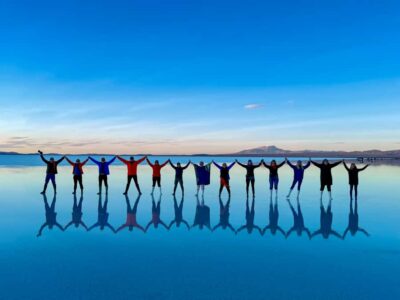
Uyuni Salt Flats & San Pedro de Atacama 3-Day Tour
Read our review →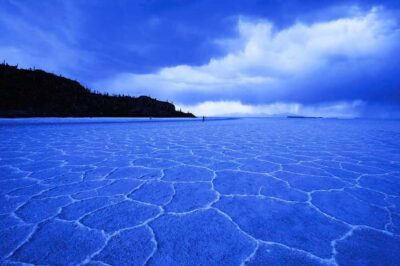
Uyuni Salt Flats and San Pedro de Atacama 3-Day Tour
Read our review →
4-Day Trip to San Pedro de Atacama w/Salt Flats
Read our review →Browse the lists this tour appears in