
Reviewed · SUCRE AND MARAGUA TRIPS
Sucre: Free Walking tour (History, culture and traditions)
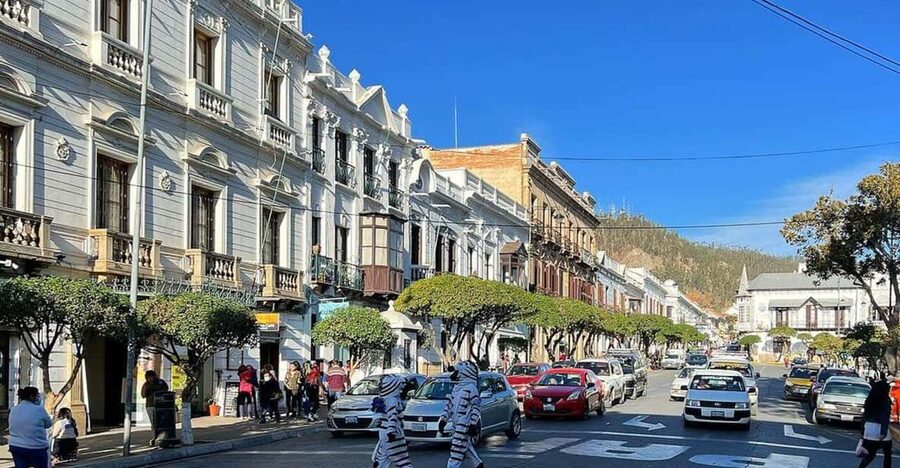
Sucre’s story comes alive on foot, from the Street of Cats, said to mark the city’s beginnings, to an old castle, university courtyards, and a viewpoint above town. This is less a checklist of monuments than a guided walk through the ideas, traditions, and people that shaped Bolivia’s constitutional capital.
I like the way the tour links major sights with smaller cultural details, especially the indigenous art and the old mayor’s office. I also like the chance to ride a local bus for just 2 bolivianos, something Manuel has used to help visitors see an older part of Sucre. The main consideration is that the route is not suitable for wheelchair users or people with mobility impairments.
Key points at a glance
- The Street of Cats connects Sucre’s present to its beginnings, giving the walk a strong sense of place.
- An old castle and the former mayor’s office add unusual historical detail beyond the usual central plaza circuit.
- Indigenous art makes the tour about living culture, not only colonial buildings and political history.
- The 2-boliviano local bus ride adds a practical local experience and reaches an older part of Sucre.
- Manuel and Silvana are noted guides, with clear English and strong knowledge of Bolivian history.
- The tour lasts about 2.5 hours, with some program changes on Sundays and public holidays.
Why this Sucre walking tour works
Sucre is an easy city to explore on foot, but its whitewashed streets and handsome plazas can hide the harder, more complicated story underneath. This tour helps connect the buildings to Sucre’s past as a center of education, government, indigenous culture, and political change.
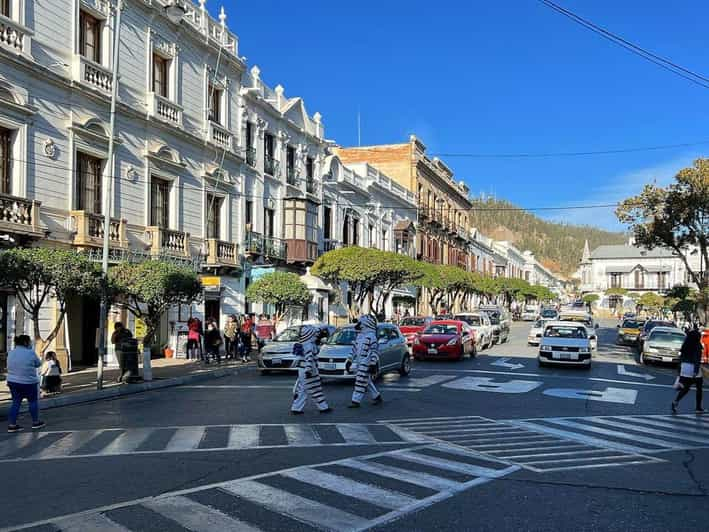
The walk begins at Plaza Cochabamba, in the middle of the square. From there, you move through old streets rather than simply stopping for a few photographs. That matters in Sucre, where the transition from a grand public plaza to a quiet colonial lane can tell you as much as a formal museum visit.
The tour is conducted in English and takes about 2.5 hours. Guides Manuel and Silvana are specifically praised for explaining Bolivian history clearly and answering questions. If you want a quick orientation early in your stay, this is a useful choice. You will finish with a better sense of which parts of Sucre deserve a slower return visit.
The price is listed as $0.50 per person, making it exceptional value if the details remain current at booking. You should also carry cash for the 2 bolivianos needed for local transportation. At this price, the tour is best understood as a low-cost introduction, not a private sightseeing experience with every entrance included.
More Sucre and Maragua trips from Bolivia
- Walking tour in Sucre: History, Culture & Amazing Views
★ 4.8 · 79 reviews - Sucre: 1-Day Trek in the Crater of Maragua and Inca Trails
★ 4.8 · 75 reviews - Sucre: Sunrise, the Crater de Maragua and old Cave Paintings
★ 4.9 · 13 reviews
Starting at Plaza Cochabamba
Meet in the middle of Plaza Cochabamba. The square provides a simple starting point, but you should allow enough time to find the guide and arrive ready to walk. No separate transport is included at the beginning, so you make your own way there.
The opening section sets the tone for the tour. Rather than rushing directly to the most famous plaza, the guide leads you through old streets and explains how Sucre developed. Listen for the links between architecture, public life, and local traditions.
This is also the moment to ask questions. Manuel, in particular, is described as happy to share information and offer tips for making the most of a stay in Sucre. That practical advice can be as useful as the formal commentary, especially if you have only a short time in the city.
Plaza de Armas 25 de Mayo and Sucre’s public story
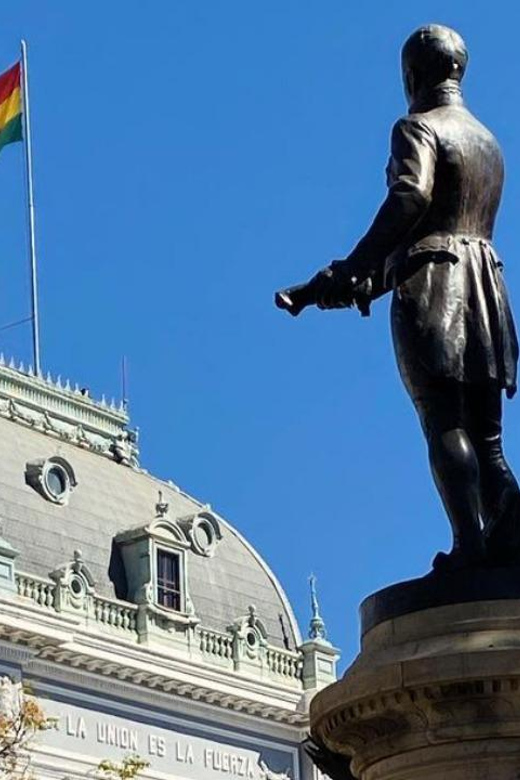
The main square, Plaza de Armas 25 de Mayo, is one of the central stops and receives about 20 minutes. Here, the guide explains Sucre’s political and cultural importance, rather than treating the square as just a pretty place for photographs.
A guided explanation helps you read the space. Public squares in Bolivia often combine government, religion, education, and civic life in a small area. Sucre’s main plaza is a good place to understand how those forces shaped the city and the country.
You may want to take note of nearby buildings and return later at a quieter pace. The tour gives you context, but 20 minutes is not enough for a detailed visit to every surrounding site. One useful point from the experience is that a quick look inside a church or cathedral would be welcome, although this is not part of the stated program.
University courtyards and the old center of learning
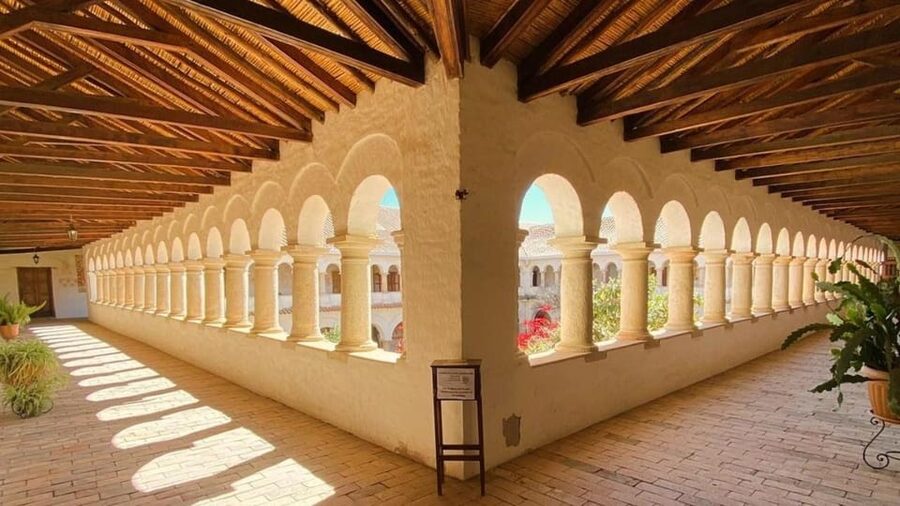
The next major stop is the Universidad Mayor, Real y Pontificia de San Francisco Xavier de Chuquisaca, commonly called USFX. The visit lasts about 15 minutes and focuses on the courtyards of this old public university.
This stop gives the walk a different angle. Sucre is not only a city of colonial streets and religious buildings. Its university has long been part of the city’s intellectual and political identity, and the courtyards offer a calmer setting in which to hear about that role.
You should expect a short visit rather than a full academic or architectural tour. The value lies in the guide’s explanation and in seeing how an institution of learning fits into Sucre’s wider story. If you enjoy history told through institutions, this will likely be one of the more useful stops.
A few more trips around Bolivia worth a look
- Walking tour – A journey through the History of Santa Cruz
★ 4.8 · 61 reviews - Sucre: A Day Spent Exploring the Historic Area of the City
★ 4.8 · 4 reviews
Plaza de la Libertad and the Obelisco
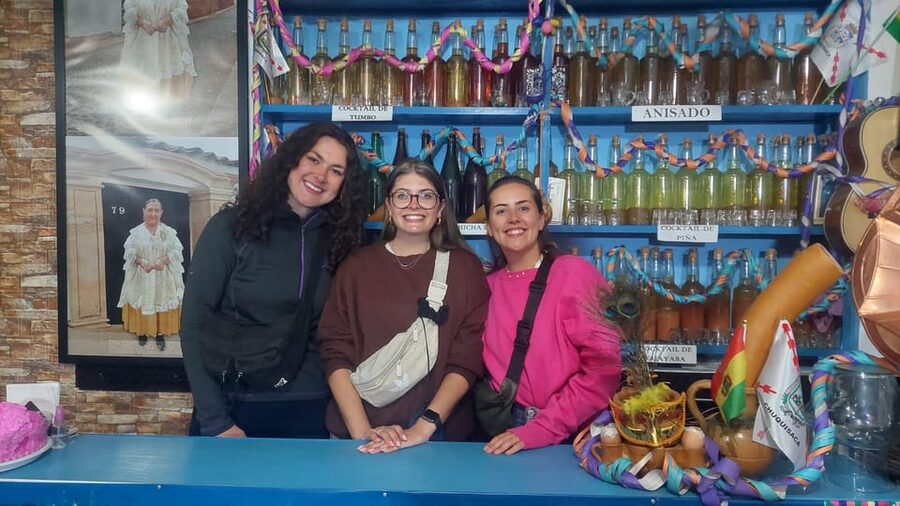
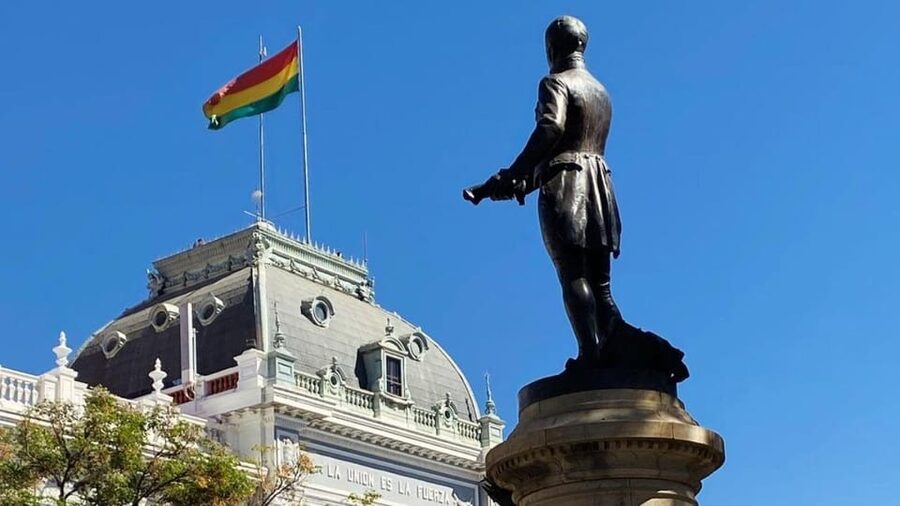
Plaza de la Libertad, with its obelisk, is another 15-minute stop. The guide uses this space to explain more about Sucre’s public memory and changing identity.
An obelisk can look like a simple landmark if you do not know why it is there. The guide’s role is to give the monument a setting within Bolivia’s past. This is one reason I prefer a walking tour to an unguided circuit: the places are not left to speak entirely for themselves.
The stop is short, so use the time well. Take in the layout of the square, listen to the explanation, and ask about anything that connects to places you may visit later. The tour is strongest when you treat it as an introduction to Sucre rather than a complete visit to each site.
The old castle and the mayor’s office
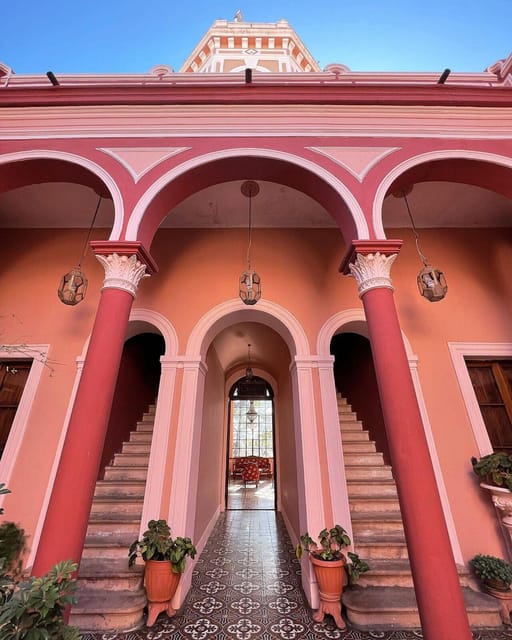
One of the more unusual parts of the route is the visit to an ancient castle and its gardens. Inside, you see the old office of the Mayor of Sucre and have time to look around the grounds.
This stop adds a personal and civic detail to the tour. A former mayor’s office can tell you how local government worked and how authority was displayed. The gardens also provide a break from the steady rhythm of city streets.
The supplied information does not name the castle, so you should check the current meeting details and program if the site is especially important to you. Opening hours can affect the route, particularly on Sundays and public holidays. Even so, the combination of castle grounds and a former mayor’s office is unusual enough to make this part worth noting.
The Street of Cats and the city’s beginnings
The walk along the Street of Cats is one of the tour’s most distinctive features. This is presented as the place where Sucre was born, giving you a direct link to the city’s earliest chapter.
The name alone makes it memorable, but the real value is the story attached to it. You are not simply crossing another old lane. You are standing in a place connected with the founding of the city, then seeing how later streets and institutions grew around it.
This is a good stop for slowing down and looking closely. Notice the scale of the street and how different it feels from the formal main square. The tour’s best moments come from these contrasts: grand civic spaces on one hand, modest historic lanes on the other.
Indigenous art and views toward the mountains
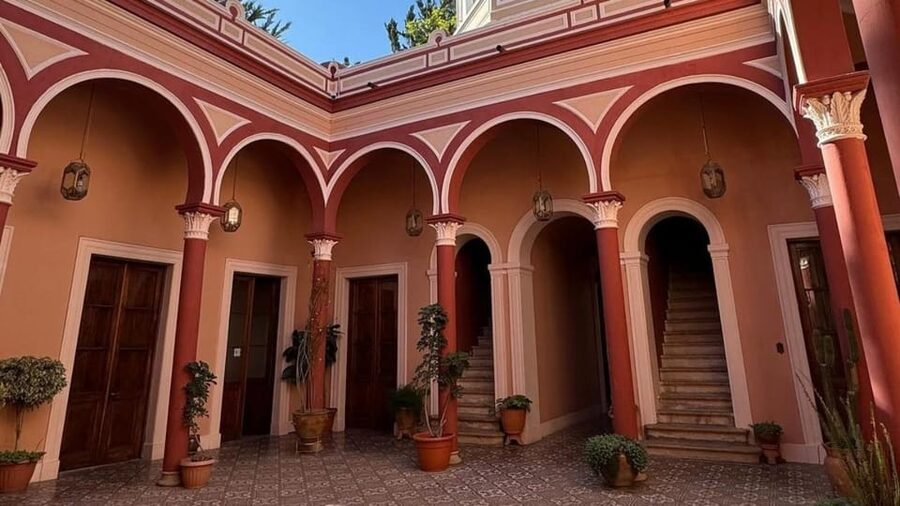
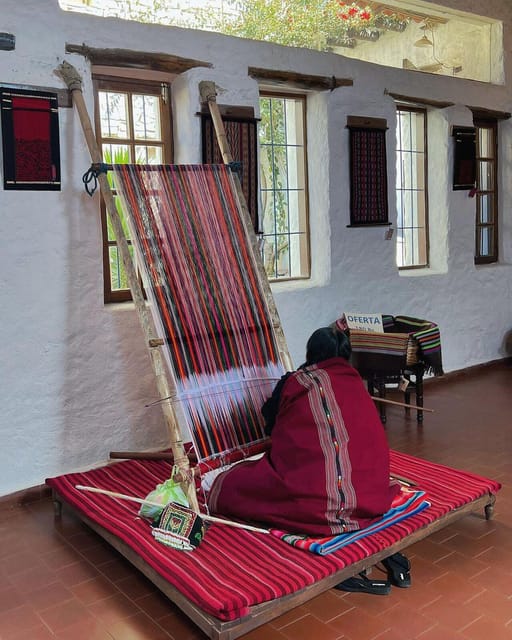
The Museo de Arte Indígena is listed as a 15-minute visit. Here, you see art from indigenous communities living near Sucre and learn about traditions that remain part of the area’s cultural life.
This stop keeps the tour from becoming a purely colonial history walk. Indigenous art gives you another way to understand the region, through design, craft, symbols, and community traditions. A 15-minute visit will be brief, so do not expect to examine every display in detail. The guide’s explanation is important because it helps place the work in its local setting.
After the art, the route continues toward a viewpoint near the city. You take in views of the surrounding mountains and Sucre from a higher position. The viewpoint provides a welcome change in pace and gives you a clearer sense of the city’s setting.
Bring water and wear comfortable shoes. The tour is described as unsuitable for people with mobility impairments, and the mix of old streets, walking, and viewpoints may be tiring for anyone who has difficulty on uneven or sloping routes.
The local bus ride for 2 bolivianos
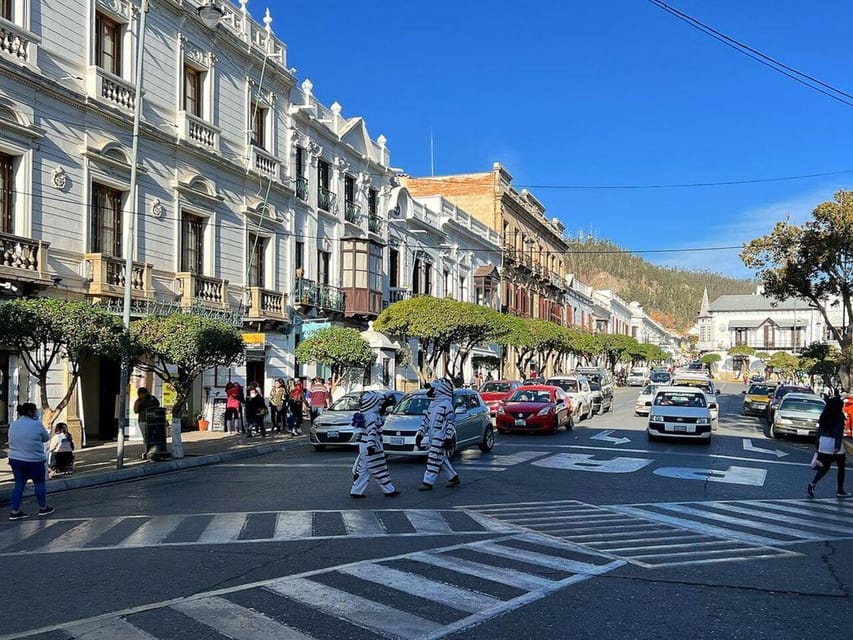
A local bus or colectivo may be part of the route, costing 2 bolivianos per person. This is not included in the tour price, so keep small cash handy.
I like this detail because it turns the transfer into part of the experience. You get a short look at ordinary local transport instead of staying inside a sightseeing bubble. Manuel has used the ride to reach an older part of Sucre, and it can also help you learn how the city works beyond the central walking route.
The bus section depends on the day’s program and opening hours, so treat it as a practical addition rather than the central promise of the tour. If you have never used a Bolivian colectivo, the guide’s help is useful. You will not need to work out the route alone.
The final colonial square and Suipacha 202
The tour ends by exploring an old colonial square with a view over Sucre. This gives the walk a fitting final pause. After seeing the main plaza, narrow historic streets, art, university courtyards, and higher viewpoints, you can look back at the city with a fuller sense of how its parts connect.
The stated finish is Suipacha 202 in Sucre. Elsewhere, the meeting information says the activity ends back at the meeting point, so confirm the exact end point when you reserve. Either way, you should allow a little flexibility after the 2.5-hour duration, especially if the route changes on a Sunday or holiday.
This final section is useful for deciding what to do next. You may want to revisit the main square, spend longer with indigenous art, or explore another colonial street at your own pace.
Guides, timing, and practical value
The strongest part of this experience is the guide-led explanation. Manuel is described as an excellent English-speaking guide who gives useful tips and answers questions. Silvana is also praised for her preparation and clear explanations. The comments point to a tour that is more informative than theatrical.
The schedule is compact. Five listed stops include Plaza de Armas, USFX, Plaza de la Libertad, and the Museo de Arte Indígena, while the broader route also includes the castle, Street of Cats, viewpoint, colonial square, and possible bus ride. That is a lot for 2.5 hours, so expect short visits and steady walking.
The $0.50 price makes this a strong introduction to Sucre, especially for budget-conscious visitors. Remember that transportation costs 2 bolivianos and cash is required. The tour also allows cancellation up to 24 hours in advance for a full refund, and you can reserve while paying later, which helps if your schedule is still shifting.
Sundays and public holidays require extra attention. Some sites have different opening hours, so the program changes slightly. If seeing the castle, museum, or another particular interior is essential, check the day’s arrangements before booking.
Who should book this walk
I would choose this tour if you want a fast, low-cost introduction to Sucre with an English-speaking guide. It suits first-time visitors, people interested in Bolivian history and indigenous culture, and anyone who wants practical orientation before exploring alone.
It is also a good fit if you want to try local transport with guidance. The 2-boliviano bus ride is a small detail, but it adds a more everyday side of Sucre to a route that could otherwise focus only on monuments.
You should think twice if you want a slow museum visit, long stops inside churches, or a fully accessible route. The pace covers many places, and some buildings or program elements may change with opening hours.
Should you book it?
Book this Sucre walking tour if you value clear historical context, local cultural details, and good value more than lengthy visits at individual sights. The old mayor’s office, Street of Cats, indigenous art museum, university courtyards, and mountain viewpoint give the route more variety than a standard central-plaza walk.
The main reason to choose it is the guide. Manuel and Silvana bring strong English and solid preparation, while Manuel’s practical city advice and help with the local bus add real use beyond sightseeing. Just carry cash, wear comfortable shoes, confirm the route on Sundays and holidays, and allow for the listed mobility limits.
FAQ
How long does the Sucre walking tour last?
The tour lasts about 2.5 hours.
Where does the tour start?
The meeting point is in the middle of Plaza Cochabamba in Sucre.
Where does the activity finish?
The listed finish is Suipacha 202, Sucre. The meeting information also says the activity ends back at the meeting point, so confirm the exact end point when booking.
What language is the tour offered in?
The tour is offered in English with a live guide.
How much does the walking tour cost?
The listed price is $0.50 per person.
Is transportation included?
Transportation is not included. A local bus or colectivo costs 2 bolivianos per person when used during the route.
What should I bring?
Bring cash, especially for the local bus fare.
Does the program change on Sundays and holidays?
Yes. The program changes slightly because some places have different opening hours on Sundays and public holidays.
Is the tour suitable for wheelchair users?
No. The activity is not suitable for wheelchair users or people with mobility impairments.
More Walking Tours in Bolivia
- La Paz and El Alto: Cable Car Rides and Walking Tour
★ 4.8 · 790 reviews - La Paz Half-Day Walking Tour
★ 4.8 · 591 reviews - Walking city tour La Paz
★ 3.9 · 25 reviews - Walking tour in Cochabamba not your average
★ 5.0 · 21 reviews
Just added around Bolivia
- Uyuni tour express from Sucre by bus (round trip)★ 4.2 · 4 reviews
- UYUNI SALT FLAT: SUNRISE & STARLIGHT EXPERIENCE★ 3.1 · 3 reviews
- Uyuni: Classic Uyuni Salt Flats Tour + Hotel Pickup★ 3.0 · 4 reviews
- Uyuni: Salar de Uyuni Traditional Tour+Sunset Tour★ 4.8 · 3 reviews
- UYUNI SALT FLAT: SUNSET & STARLIGHT EXPERIENCE★ 5.0 · 3 reviews
- Uyuni: Salar de Uyuni and San Pedro de Atacama 3-Day Tour★ 4.2 · 4 reviews
- Uyuni: 3-Days Salt Flats and Desert Adventure Tour with Food★ 3.8 · 4 reviews
- Uyuni: Full-day tour, Salt flats and Sunset experience★ 4.8 · 5 reviews
Sucre and Maragua Trips, compared.
Walking tour in Sucre: History, Culture & Amazing Views
Read our review →
Sunrise, the Crater de Maragua and old Cave Paintings
Read our review →
2 days trek in Inca Trails and the Crater de Maragua
Read our review →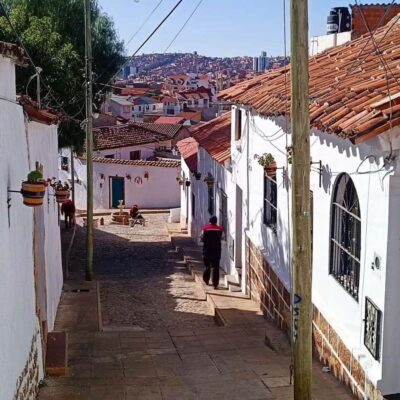
A Day Spent Exploring the Historic Area of the City
Read our review →
Uyuni tour express from Sucre by bus (round trip)
Read our review →Browse the lists this tour appears in