
Reviewed · UYUNI SALT FLAT TOURS
Uyuni Salt Flats 3 Days/ 2 Nights with English Speaking Guide
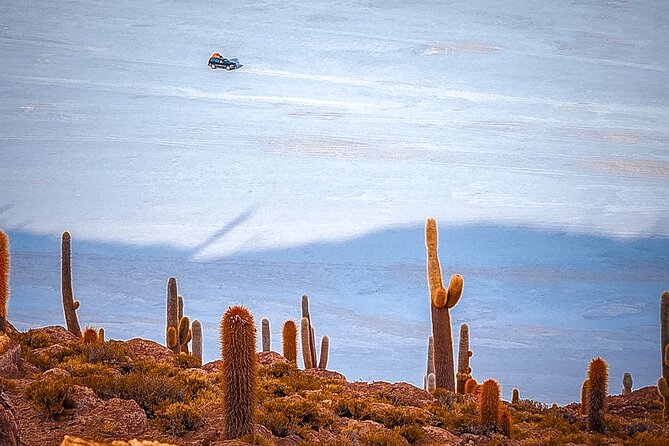
The best part of this trip is that the salt flats are only the beginning. You’ll cross white salt, red desert, volcanic country, and flamingo-filled lagoons before reaching geysers and hot springs. I like the sunset on the flats with wine and the chance to see Incahuasi’s giant cacti, two details that give the first day real character.
I also like that meals, transport, and two nights of lodging are built into the $380 price. The main drawback is comfort: you’ll spend long hours in a shared 4WD, sleep in basic multi-bed rooms, and may face a guide who gives little English explanation. Bring serious warm clothing, especially for the second night.
Key points to know before booking
- Three very different days: Salt flats on day one, flamingo lagoons and desert on day two, then geysers and hot springs on day three.
- Small shared 4WD: The group can reach a maximum of 11 people, with a local driver and English-speaking guide.
- Basic overnight stops: Shared rooms, shared toilets, no Wi-Fi, and no hot water at the second hostel.
- Extra fees are separate: Budget for 30 BOB at Incahuasi, 150 BOB for Eduardo Avaroa National Reserve, 6 BOB for the hot springs, and cash for toilets and personal spending.
- The cold is serious: Electricity at the second hostel runs only from 7:00 p.m. to 10:00 p.m.
- A strong value for scenery: Transport, six meals, and two nights of lodging are included, but this is an outdoor expedition, not a comfortable coach tour.
Why the three-day route works so well
This is a road trip through some of Bolivia’s most unusual country. The famous salt flats fill the first day, but the second and third days carry the real range: volcanoes, high desert, lagoons in startling colors, fumaroles, boiling mud, and a natural hot spring.
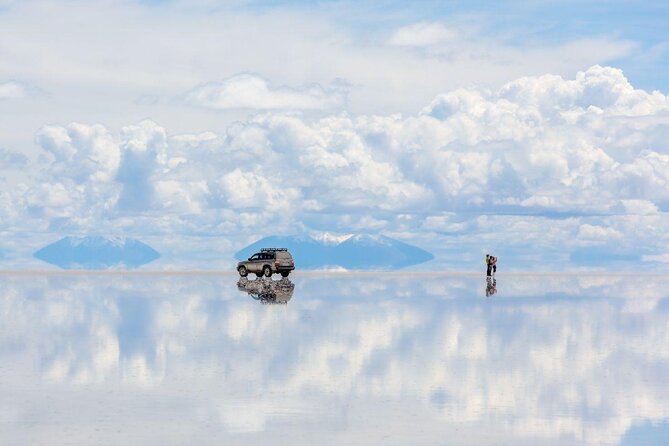
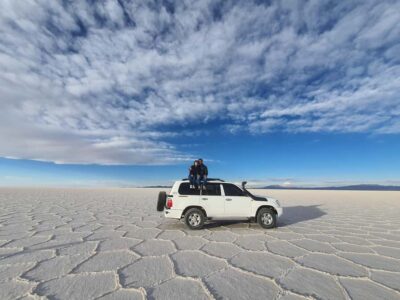
You start at about 10:30 a.m. in Uyuni, which gives you time to arrive in town that morning or finish other plans before departure. From there, a 4WD carries you across rough roads and open country. The vehicle has a rooftop luggage rack, useful because space inside a shared jeep can be tight.
The group limit is 11 people, though the exact vehicle arrangement matters. You may spend many hours beside the same passengers, so this trip suits you best if you can handle a social, close-quarters ride. It is not a private tour, and the shared format helps keep the price down.
The English-speaking guide is intended to explain the sights and help organize the group. One particularly positive experience came with a guide named Orlando and a driver named Gabriel, who were described as helpful and friendly. Another experience raised concerns about poor communication and little assistance from the guide, while praising the Spanish-speaking driver’s warmth and effort. That contrast is worth noting: guide quality may shape your trip as much as the scenery.
More salt flat trips running from Uyuni
- Day Trip to Uyuni Salt Flats
★ 4.0 · 602 reviews - 3-Day Tour to Salt Flats and Lagoons
★ 4.5 · 168 reviews - From Uyuni: Red Lagoon & Uyuni Salt Flats 3-Day Guided Tour
★ 4.4 · 160 reviews
Day one: salt, trains, cacti, and optical tricks
The first stop is Uyuni’s Train Graveyard, just outside town. Rusting railway cars sit in the open desert, a stark introduction to the region’s old mining and transport past. It is a quick stop, but the weathered metal makes for striking photographs.
Next comes Colchani, a small settlement linked to salt mining. Local workshops sell salt handicrafts along with llama and alpaca textiles. I would treat this as a useful chance to buy a small souvenir and see how local craft traditions connect with the salt economy, rather than as a major shopping stop.
Then the white expanse begins. The Uyuni Salt Flats are so broad and bright that distance becomes hard to judge. Your 4WD travels over the salt crust, stopping at features such as the Ojos de Agua Salada, or salty water openings.
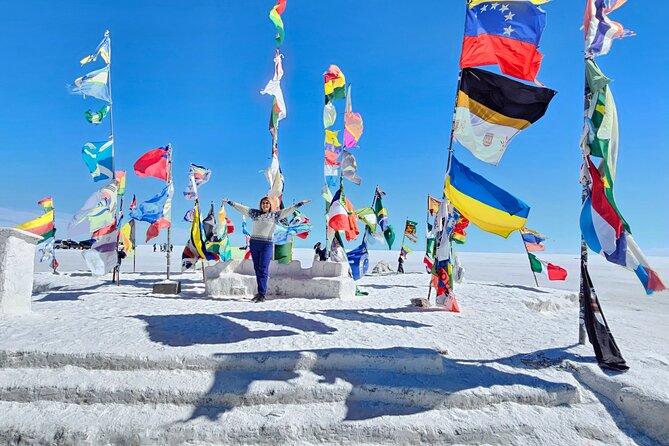
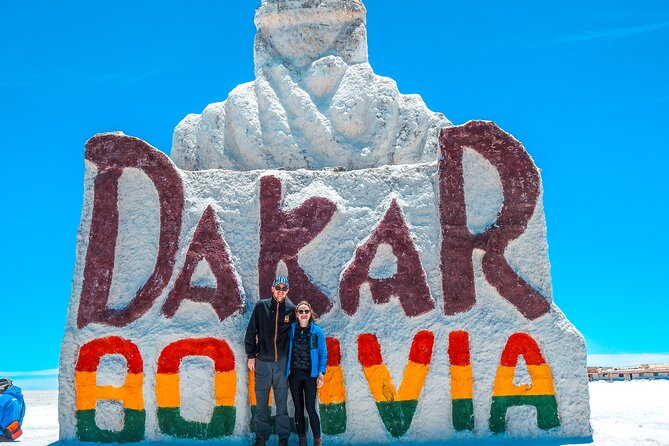
You also visit a former salt hotel, now used as a museum and restaurant. The building is made almost entirely from salt, giving you a practical look at how local materials have been used in this extreme setting. Nearby, you’ll find a display of flags from around the world and a monument connected with the Dakar Rally. You can bring your own flag and place it there at no charge.
Lunch is served during the day, and then you have time at Incahuasi Island. The island rises from the salt and is covered with giant cacti and rock formations made from petrified coral. A hike to the top gives you a wider view across the flat white plain.
The entrance ticket to Incahuasi is not included and costs 30 BOB. The walk is one of the day’s most worthwhile stops, but you should remember that the salt flats are at high altitude. Take the climb at your own pace.
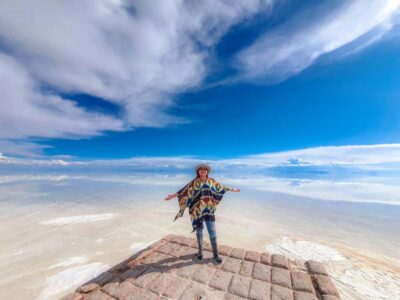
After Incahuasi, the guide organizes perspective photographs. The level surface and lack of nearby scale let you appear to hold a person in your hand, tower over a toy, or create other playful scenes. These photographs are a familiar part of the Uyuni experience, but the effect still works because the setting is so enormous and clean.
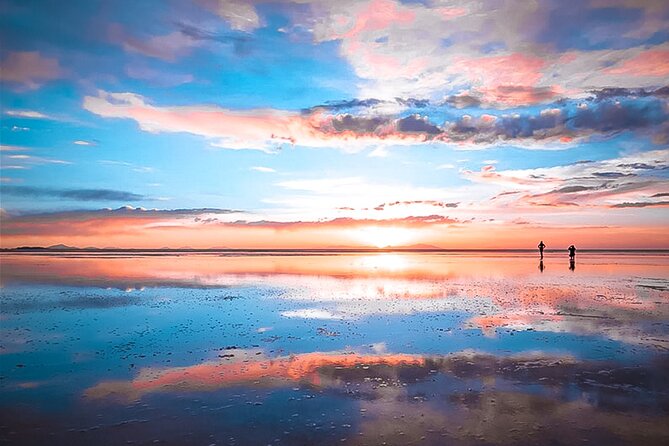
The day ends at a broad section of the flats for sunset. This is one of the tour’s strongest moments. The white salt reflects changing colors, and the included glass of wine gives the stop a relaxed finish after a long day outside.
You spend the night at Agencha Hostel in a three, four, five, or six-bed room with a shared toilet. There is no Wi-Fi. The simple accommodation is manageable for one night, but you should not expect privacy or hotel-style service.
Day two: volcanoes, flamingos, and the Red Lagoon
Day two begins with breakfast at about 6:30 a.m. The early start is necessary because the route into the southern reserve covers a great deal of ground. You first cross the Chiguana Desert on the southern side of the salt flats, with volcanoes around you.
Ollagüe is the key landmark here. It remains active and can be seen from a lookout point. The setting changes quickly from the smooth white salt to rocky, volcanic country, so the second day feels like a new trip rather than a repeat of day one.
The route continues to Cañapa, Hedionda, and Chiarcota Lagoons. Flamingos gather in these high-altitude waters, giving you some of the most memorable wildlife views of the trip. The birds add movement and color to an otherwise severe setting.
You should expect rough roads and long stretches between stops. One detailed account praised the driver’s patience and friendliness but also noted that the hot jeep had no air conditioning. This is important during the warmer parts of the day. Keep water within reach, use sun protection, and expect the vehicle to feel dusty and warm.
After lunch, you enter Eduardo Avaroa National Reserve. The reserve entrance fee is 150 BOB and is not included in the tour price. The reserve is the reason this route feels much larger than a simple salt-flat excursion.
The Siloli Desert is described as one of the highest and driest deserts in the world. Its open, rocky setting leads to the famous Rock Tree, a lava formation shaped by erosion. You stop for photographs rather than a long walk, but the formation is an easy symbol of how wind and volcanic rock shape this region.
The day’s final major stop is the Red Lagoon. Pink flamingos feed in and around the red-colored water, while the surrounding high desert gives the view a stark frame. The color can vary with light and conditions, but the combination of red water, pale ground, and birds is unlike anything on day one.
You sleep at Huayllajara Hostel in a shared six-bed room with a shared bathroom. There is no hot water, specifically to protect the national park, and no Wi-Fi. Power is available only from about 7:00 p.m. to 10:00 p.m., so the room can become extremely cold once the electricity goes off.
Pack thermal layers, a hat, thick socks, and a warm sleeping setup. The supplied information does not list bedding details, so it is sensible to prepare for a cold night rather than count on the room being comfortable. This is the hardest night of the trip for anyone who dislikes basic accommodation.
Day three: geysers at dawn and a 35 C hot spring
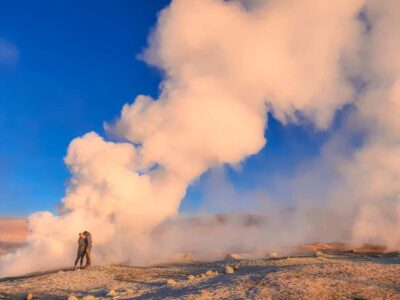
The final day starts around 5:00 a.m. You head to Sol de Mañana Geyser before sunrise, when the cold air makes the steam and fumaroles especially dramatic. You can walk near steaming craters and boiling mud pots, but you should follow the guide’s instructions closely around these features.
After the geysers, the route reaches an open-air hot spring at about 35 C. This is a welcome break after the early start and cold morning. The entrance fee is 6 BOB, also paid separately.
The route then takes you through the Dali Desert, named for rock forms that can suggest the surreal shapes associated with the artist. You continue to the Green Lagoon and White Lagoon, two more high-altitude waters with different colors and surroundings.
The return to Uyuni takes most of the day. Lunch is a picnic beside the road, and the journey includes Rock Valley and a short stop in San Cristobal village to use the toilets. This is not a fast transfer. You’ll spend roughly 10 hours on the road, with arrival in Uyuni expected between 5:45 p.m. and 6:45 p.m.
That timing matters if you have a bus, train, or flight to catch. I would avoid booking a tight onward connection on the same evening. The route is remote, and road conditions, stops, and group pace can affect the arrival time.
A few more trips around Uyuni worth a look
- Uyuni: Uyuni Salt Flats and San Pedro de Atacama 3-Day Tour
★ 4.3 · 122 reviews - 3-Day Uyuni Salt Flat Tour with Sunset and Red Lagoons
★ 5.0 · 83 reviews - Uyuni: 3-Day Salt Flats Tour ending in San Pedro de Atacama
★ 4.7 · 62 reviews - Uyuni Salt Flats (3 Days) English Speaking Guide
★ 4.5 · 45 reviews
What the $380 price really covers
At $380 per person, the tour includes a lot of transport and meals for a remote three-day route. You get a 4WD, local driver, English-speaking guide, two hostel nights, two breakfasts, two dinners, and three lunches.
The price is strongest if you want a straightforward package without arranging separate vehicles, food, and lodging. Hiring transport independently across this region can be complicated, and the included 4WD removes much of that planning work.
Still, $380 is not the complete cash cost. Set aside money for:
- 30 BOB for Incahuasi Island
- 150 BOB for Eduardo Avaroa National Reserve
- 6 BOB for the hot spring
- About 30 BOB for toilets along the route
- About 150 BOB for water, snacks, crafts, and other personal expenses
That listed personal budget brings the recommended extras to roughly 366 BOB, though your actual spending may be lower or higher. Bring local cash, since the tour takes you through remote areas and the stops are not presented as card-friendly.
An optional hostel upgrade is available for an added price. The amount is not specified, so check the final payment details before choosing it.
The guide, driver, and long hours in the jeep
The English-speaking guide is an important part of the booking, especially because much of the trip involves remote sites without printed interpretation. A strong guide can keep the group organized, explain what you are seeing, and help with the timing of meals and stops.
Guide quality may not be perfectly consistent. One experience with Orlando and Gabriel was described as warm, helpful, and well handled. Another account described an English-speaking guide as disorganized and uncomfortable to deal with, while the elderly Spanish-speaking driver was praised for his friendliness, constant smile, and effort to show the flamingos.
You should also prepare for limited vehicle comfort. The ride includes long hours on rough roads, and the 4WD may be hot because it has no air conditioning. Food allergy requests may not be handled reliably, so communicate your needs clearly before departure and carry backup snacks.
The driver and guide are separate roles. The driver may speak only Spanish, while the guide is expected to provide English support. That distinction matters if you depend on English throughout the trip.
Who should book this Uyuni trip
I would recommend it to you if you want the major sights in one efficient circuit and can accept basic conditions. You’ll get much more than a quick salt-flat outing: flamingos, volcanoes, the Red Lagoon, geysers, hot springs, and several unusual deserts.
It is a good fit for photographers, outdoor-minded couples, groups of friends, and independent visitors who do not want to plan remote transport themselves. The small-group format is also more personal than a large coach tour, though up to 11 people still means limited space and shared decisions.
I would hesitate to recommend it if you need private rooms, reliable hot water, strong Wi-Fi, carefully managed special diets, or a predictable driving schedule. It is also a poor choice for anyone who wants to avoid high-altitude walks, rough roads, cold nights, or long stretches in a hot vehicle.
The free cancellation policy allows you to cancel at least 24 hours before the start for a full refund. Weather or minimum-group issues can also lead to a different date, another experience, or a refund. That flexibility helps, but you should still leave room around the tour for delays.
Should you book it?
Book this tour if the scenery matters more to you than comfort. The salt sunset, Incahuasi cacti, flamingos, Red Lagoon, geysers, and hot spring make this a powerful three-day route, and the included meals and transport give the $380 price solid value.
Before paying, confirm the English guide arrangement, ask about the hostel upgrade, and plan for cold weather and separate entrance fees. If you can handle the rough edges, this tour delivers an unusually broad look at southern Bolivia in a short time.
FAQ
How long is the Uyuni Salt Flats tour?
The experience lasts approximately three days and two nights. Day one begins at 10:30 a.m., and the group returns to Uyuni on day three between 5:45 p.m. and 6:45 p.m.
What is included in the price?
The price includes 4WD transportation, a local driver, an English-speaking guide, two hostel nights, two breakfasts, two dinners, and three lunches.
How many people can join the tour?
The maximum group size is 11 people.
Are the entrance fees included?
No. You must pay separately for Incahuasi Island, Eduardo Avaroa National Reserve, the hot springs, toilets along the route, and personal expenses.
What are the hostels like?
The first night is in a three, four, five, or six-bed room with a shared toilet. The second night is in a shared six-bed room with a shared bathroom. Both hostels have no Wi-Fi, and the second hostel has no hot water.
Does the tour visit hot springs?
Yes. On the third day, you can bathe in an open-air hot spring with water at about 35 C. The entrance fee is 6 BOB.
Can I cancel for a full refund?
Yes, if you cancel at least 24 hours before the experience starts. Cancellations made less than 24 hours in advance are not refunded.
Just added around Uyuni
- UYUNI SALT FLAT: SUNRISE & STARLIGHT EXPERIENCE★ 3.1 · 3 reviews
- Uyuni: Classic Uyuni Salt Flats Tour + Hotel Pickup★ 3.0 · 4 reviews
- Uyuni: Salar de Uyuni Traditional Tour+Sunset Tour★ 4.8 · 3 reviews
- UYUNI SALT FLAT: SUNSET & STARLIGHT EXPERIENCE★ 5.0 · 3 reviews
- Uyuni: Salar de Uyuni and San Pedro de Atacama 3-Day Tour★ 4.2 · 4 reviews
- Uyuni: 3-Days Salt Flats and Desert Adventure Tour with Food★ 3.8 · 4 reviews
- Uyuni: Full-day tour, Salt flats and Sunset experience★ 4.8 · 5 reviews
- Salar de Uyuni 1 day + photo session + Sunset (English)★ 4.8 · 3 reviews
Uyuni Salt Flat Tours, compared.

Uyuni Salt Flat Tour & Overnight Roundtrip Bus
Read our review →
Red Lagoon & Uyuni Salt Flats 3-Day Guided Tour
Read our review →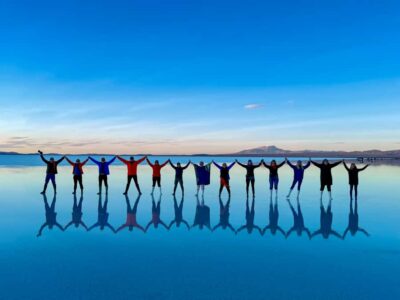
Uyuni Salt Flats & San Pedro de Atacama 3-Day Tour
Read our review →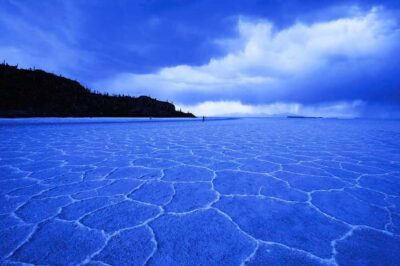
Uyuni Salt Flats and San Pedro de Atacama 3-Day Tour
Read our review →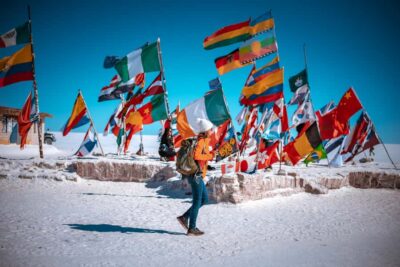
4-Day Trip to San Pedro de Atacama w/Salt Flats
Read our review →Browse the lists this tour appears in