
Reviewed · LA PAZ TOURS
Uyuni tour express from La Paz by bus
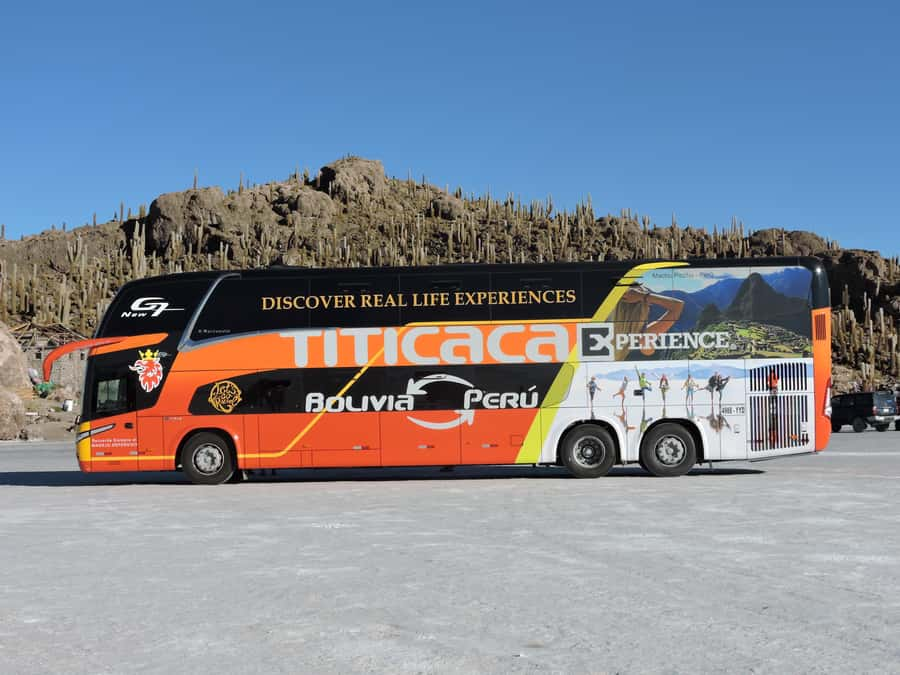
Uyuni is one of Bolivia’s great visual surprises, and this fast trip gets you there with only one full day away from La Paz. You ride overnight in a reclining sleeper bus, then spend the day among white salt polygons, giant cacti, old locomotives, and sunset reflections.
I like the small group of up to six and the helpful local guides, including Beimar, Oscar, Mauricio, Eric, and Nadia, who have been praised for good photos, careful timing, and thoughtful meals. I also like the hotel stop in Uyuni, where you can eat breakfast, freshen up, and wait indoors before the tour begins.
The tradeoff is the schedule. This is a long, tiring push with two overnight bus rides, several hours of waiting in Uyuni, and occasional bus delays or poor communication. It works best when your time is tight and you can handle a demanding day at high altitude.
Key points to know before booking
- Two overnight sleeper-bus rides connect La Paz and Uyuni, saving daytime travel but making the trip physically demanding.
- A full salt-flat day begins around 10:30 a.m. and includes the train cemetery, Colchani, Incahuasi Island, lunch, and sunset.
- Groups are limited to six, usually traveling in a 4×4 with an English or Spanish guide.
- Breakfast, lunch, snacks, and a sunset drink are included, while dinner, entrance fees, and terminal charges are extra.
- The hotel stop in Uyuni matters: you can eat, sit indoors, and sometimes wash up between the bus and tour.
- Bring warm clothing, sunscreen, sunglasses, and cash. The flats are sunny, sunset gets cold, and toilets and some entrances cost extra.
Why this express trip works for a short Bolivia visit
At $269 per person, this is not the cheapest way to see Uyuni. But the price covers the long-distance bus both ways, a small-group day tour, pickup at the Uyuni terminal, breakfast, lunch, and an English or Spanish guide.
For someone with only two days available, the value is easier to see. You do not need to arrange separate bus tickets, find a local operator after arriving, or work out how to reach the salt flats. The main sightseeing day is already organized.
You also avoid spending an extra night in Uyuni. That saves hotel money and keeps your schedule open for La Paz or another part of Bolivia. The cost is comfort and energy: you sleep on a bus, not in a bed, and the day at the salt flats runs from late morning until sunset.
I would not choose this plan for a leisurely Bolivia trip. If you have several free days, a longer Uyuni trip that reaches the distant lagoons and flamingos gives you more time in the region. This express version is for seeing the famous salt flats quickly.
A few more trips around La Paz worth a look
- La Paz and El Alto: Cable Car Rides and Walking Tour
★ 4.8 · 790 reviews - La Paz Half-Day Walking Tour
★ 4.8 · 591 reviews - La Paz: Private City Tour with Cable Car & Moon Valley Visit
★ 4.9 · 508 reviews
Boarding the 9:45 p.m. bus in La Paz
You need to arrive at the Titicaca Experience office at the main bus terminal on Peru Street by about 9 p.m. The bus departs at 9:45 p.m. Bring your voucher and allow time to find the correct office inside the terminal.
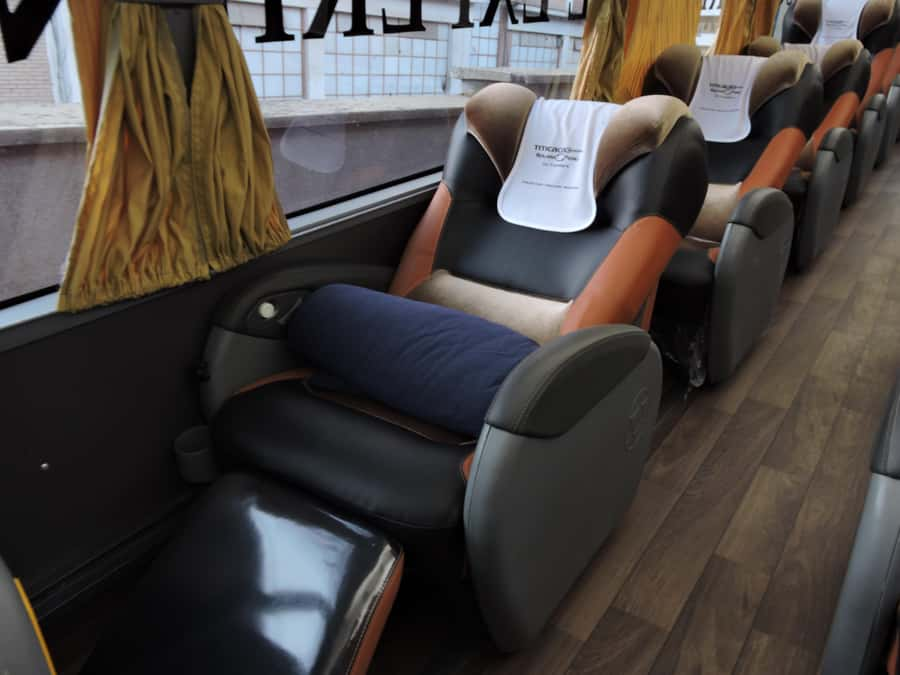
The bus is described as premium sleeper class, with reclining seats, leg support, heating, blankets, and an onboard bathroom. Several passengers found it comfortable enough to sleep, and each person receives a bottle of water.
Still, keep your expectations sensible. Roads can be rough, and the ride may be noisy. The bus has sometimes stopped to pick up additional passengers, which can interrupt sleep. Heating has also been uneven, and some blankets have been reported as less than fresh.
I would wear warm layers rather than depend fully on the bus heating. A fleece, wool hat, and light jacket will serve you better than hoping the cabin temperature stays steady. Check the terminal rules too, since a small terminal-use charge may be collected separately.
The operator has not always communicated clearly about meeting points, terminal fees, or delays. Arrive early, keep your booking details handy, and do not assume the bus is a direct, nonstop service.
Arriving in Uyuni and using the hotel as a base
The bus is scheduled to arrive around 6:30 a.m. in Uyuni. A local driver should meet you at the bus terminal and take you to a hotel, often Hotel Atipax according to the arrangements described by passengers.
This early hotel stop is one of the most useful parts of the package. You can have breakfast, sit in a lounge, and wait until the salt-flat tour begins at about 10:30 a.m. Some arrangements also allow time to wash up, though a shower is not guaranteed.
That gap can last two or three hours. Do not see it as wasted time. After a night bus, a proper breakfast and a chair in a warm hotel are valuable. You can also use the time to organize your sunscreen, camera, water, and extra clothing.
The pickup system has generally worked well, but it is not immune to confusion. One passenger waited for more than an hour without knowing if a driver was coming, and another had to sort out a missing bus ticket. Keep your phone charged and confirm the pickup details before departure if possible.
You will have little time to explore Uyuni town itself. The purpose of the stop is rest and coordination, not a town tour.
The train cemetery, where Uyuni begins with rust
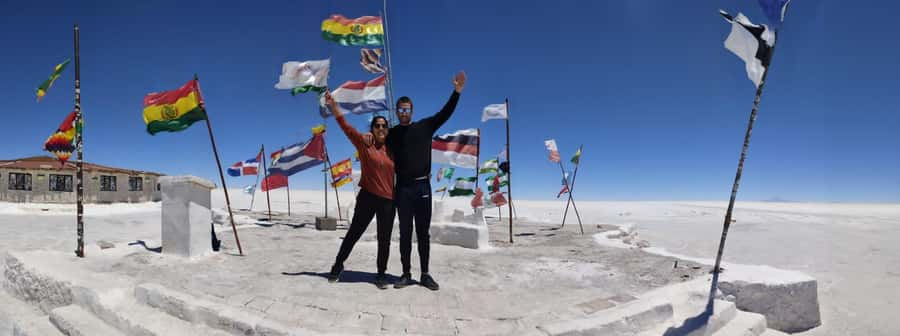
The first major stop is the old train cemetery outside Uyuni. Rusting locomotives sit in the open air, their metal frames exposed to the dry climate.
It is a photogenic place, but it can feel crowded because many Uyuni day tours arrive at roughly the same time. You will probably spend a limited period walking around the engines and taking pictures rather than hearing a long, detailed presentation.
I like this stop as an opening scene because it shows Uyuni’s older industrial side before the salt flats take over. The trains also give you a clear sense that this is not only a place of natural spectacle. Trade, mining, transport, and abandoned infrastructure are part of the story too.
Wear shoes with a firm sole. The ground around the trains can be uneven, and the sun is already strong in the morning.
Same base, a very different day:
- La Paz: Full Day Trip to Copacabana and Isla del Sol
★ 4.5 · 400 reviews - La Paz: Mountain Bike Down the World’s Most Dangerous Road
★ 4.9 · 386 reviews - La Paz: Cholitas Wrestling Tickets and Transfer
★ 4.4 · 338 reviews - From La Paz: Uyuni Salt Flat Tour & Overnight Roundtrip Bus
★ 4.5 · 327 reviews
Colchani and the working side of the salt
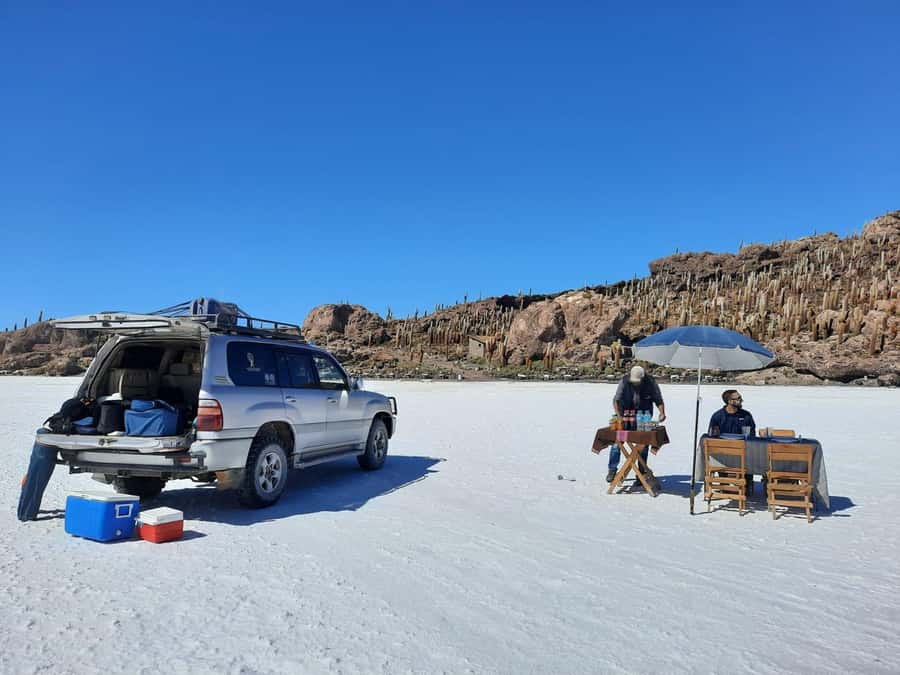
The tour continues to Colchani, a small settlement tied to salt production and local crafts. Here you see salt processors and shops selling handmade goods.
This stop is more practical than scenic. You can learn how salt is gathered and prepared, browse local products, and use facilities before heading farther onto the flats. It also gives you a quick look at the businesses that support daily life around Uyuni.
The town can feel commercial, and some shops are clearly aimed at tour groups. That does not make the stop useless, but I would keep your expectations in check. It is a short cultural and shopping pause, not a major historic site.
The tour also passes the Plaza de las Banderas and salt monuments built from blocks. These are classic photo stops. Your guide may help with group pictures and perspective shots, a real benefit when the horizon is so open that scale becomes hard to judge.
Incahuasi Island and the giant cacti
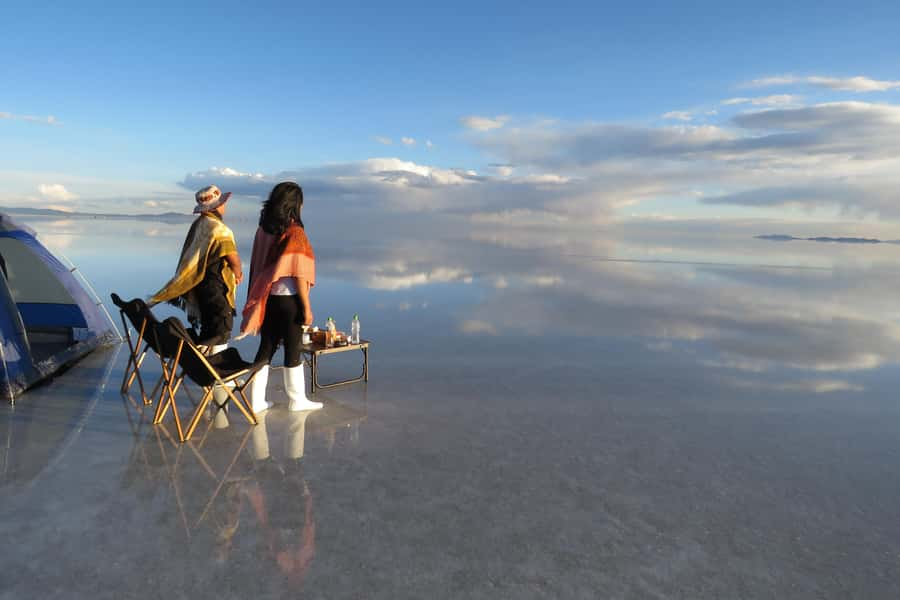
Incahuasi Island rises from the salt flat like a rocky island in a white sea. Its main attraction is the collection of enormous cacti, some of which have grown for many years in this harsh setting.
An entrance fee is not included, and the charge has been reported as 30 bolivianos. Carry small cash. Bathrooms around the salt-flat route can also cost about 5 bolivianos each.
This is one of the day’s more satisfying walks because you get a change from the flat, white surface. You can climb a little, see the salt field from above, and photograph the cactus silhouettes against the horizon.
The walk is not ideal for everyone. Altitude, bright sun, and dry air can make even a modest climb feel harder than expected. If you have altitude sickness or are already struggling, tell your guide early rather than trying to prove something.
Lunch on the salt flat
Lunch is served at the salt flat, often in a sheltered or tented setting. The meal has been described as simple but good, with guides taking food preferences and allergies into account in some cases.
I like this part because it turns the salt flat from a quick photo stop into a place where you spend real time. Eating in such an open setting is memorable, but the wind and cold can change quickly. Keep a warm layer within reach even if the midday sun feels fierce.
Food is included according to the schedule, along with breakfast. Dinner is not included. You may return to the hotel before the evening bus and pay for dinner there, so bring extra Bolivianos rather than budgeting only for bathroom fees and entrance tickets.
Sunset, reflections, and the sudden cold
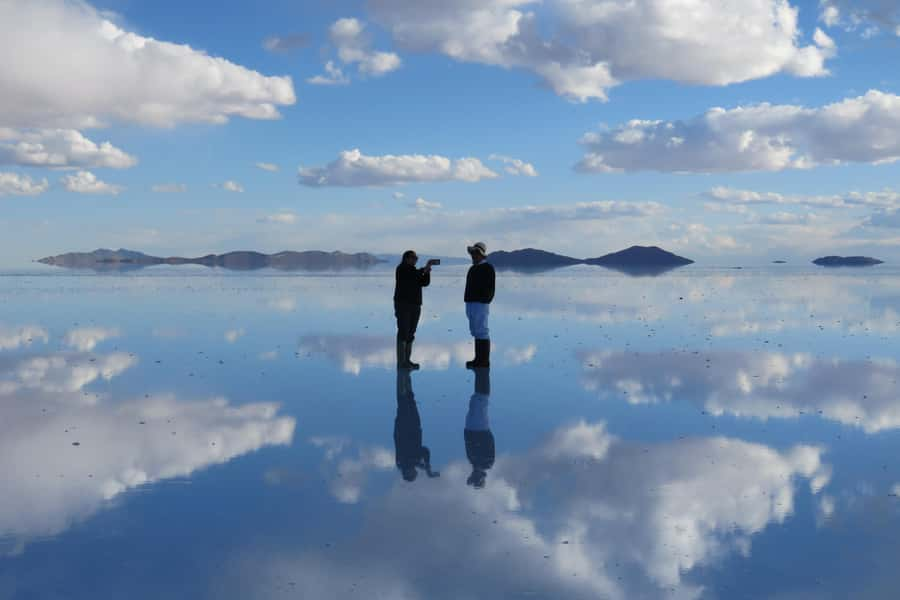
The final major scene is sunset on the world’s largest salt desert. In the wet season, a thin layer of water can create mirror-like reflections. At other times, the dry salt forms geometric patterns and a bright white horizon.
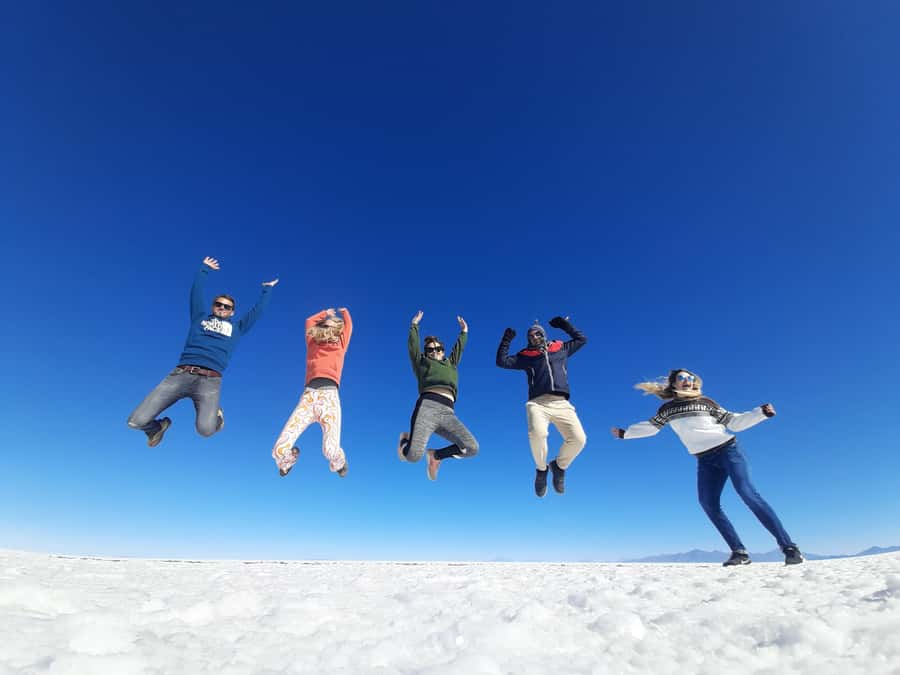
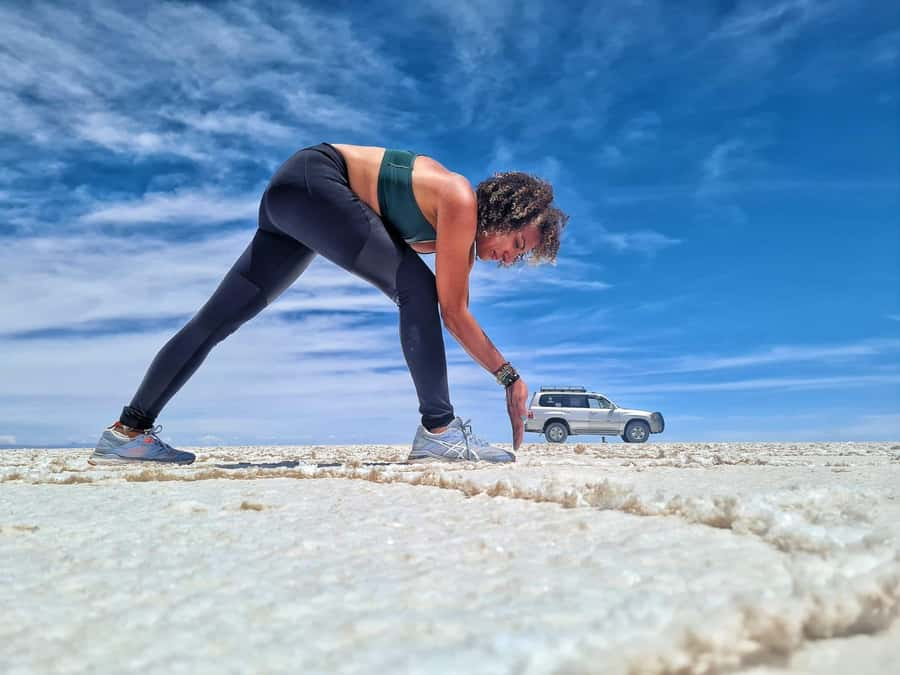
The exact effect depends on conditions. You may see reflections, salt hexagons, or wide-open white ground rather than every famous image you have seen online. The guide can help with perspective photos, and several guides have been particularly good at arranging playful group pictures.
Sunset is also when the temperature drops fast. Bring a heavy jacket, warm hat, and possibly gloves. A sunset snack, wine, or coffee may be served, depending on the local operator and arrangement, but you should not rely on that as a substitute for proper clothing.
The wine and snacks are a nice touch, yet the setting is the real reason to stay. The light changes quickly, so keep your camera ready and do not wander too far from the vehicle.
The return to Uyuni and second night bus
After sunset, you return to Uyuni and have time to rest at the hotel before boarding the night bus back to La Paz. You may be able to sit in the lounge, freshen up, and buy dinner.
The bus back is scheduled to leave around 9 p.m. and arrive in La Paz about 6:30 a.m. The timing can shift. A bus has been delayed for hours after stopping on the road, and driving speed or road conditions can make the ride feel less predictable than the printed schedule.
I would leave a generous buffer after arrival if you have a flight or important connection. Do not schedule something tight immediately after the bus. The return ride may be perfectly manageable, but this is Bolivia, and mountain roads, stops, and bus operations do not always follow a neat timetable.
Guides, group size, and the human side of the day
The tour is limited to six people, though the exact vehicle arrangement can vary. A small 4×4 group is far nicer than a large coach when you are stopping for photos or eating outdoors.
The strongest part of the experience is often the local guide and driver. Beimar has been praised for providing boots, snacks, wine, bicycles, and photo help. Oscar has been singled out for creative pictures and adjusting the schedule for an earlier arrival at the salt flat. Mauricio, Eric, Nadia, Beto, Lily, Alejandro, and Soledad have also been associated with attentive service, clear explanations, and careful support.
That does not mean every departure will feel identical. The Uyuni day tour may be operated by a local partner, while the La Paz bus is handled separately. You meet the salt-flat guide only after reaching Uyuni, so do not expect one escort to accompany you from La Paz.
English and Spanish guiding is available. If you have mobility limits, mention them before departure. One guide made extra efforts to help a passenger recovering from an injury, but the salt flat, Incahuasi Island, and uneven ground still require some walking.
What to pack and what to leave behind
Large bags are not allowed, so pack light. A small day bag should hold the things you need for the bus and the salt flats.
Bring:
- Sunscreen and lip protection
- Sunglasses
- A passport or accepted copy
- Warm layers for both bus rides and sunset
- Cash for entrance fees, toilets, terminal charges, and dinner
- A phone or camera with enough battery for a long day
Sun protection is not optional. The white salt reflects strong light, and several guides make regular reminders about sunscreen and proper clothing.
Rubber boots may be available in wet conditions, but do not assume every departure will use them. Comfortable shoes remain useful for the train cemetery, Incahuasi Island, and the town stops.
Is $269 a fair price?
I see the $269 price as fair for a tight schedule, not a bargain for a relaxed holiday. You are paying for transport over a long distance, coordination across two operators, a small group, hotel access, breakfast, lunch, and a guide.
The value is strongest if you are already in La Paz and have little time. A self-arranged trip may cost less in some cases, but it would require more planning and would not necessarily include the hotel rest period or a small-group 4×4 day.
Budget extra for dinner, entrance fees, toilets, and terminal charges. Also allow for the possibility of a bus delay. The tour includes plenty, but it is not an all-expenses-paid package.
Should you book this Uyuni express tour?
Book it if you want the main Uyuni sights and can spare two nights plus one demanding day. It is a good fit for people who value simple logistics, small groups, helpful guides, and a full day on the salt flat more than comfort and free time.
Skip it if you dislike overnight buses, need a reliable arrival time, or want to see the remote lagoons and flamingos. You should also avoid it if you are dealing with altitude sickness.
For the best chance of a smooth trip, arrive early at the La Paz terminal, pack warm clothes and cash, confirm the Uyuni pickup, and keep your next morning open. With those limits understood, this is an efficient way to see one of Bolivia’s most unusual places without giving up several extra days.
FAQ
How long does the Uyuni express tour take?
The scheduled activity lasts two days, but the full plan uses two overnight bus rides. You leave La Paz at night, spend the next day in Uyuni, return by bus that evening, and arrive in La Paz around 6:30 a.m. on Day 3.
What time does the bus leave La Paz?
You should arrive at the Titicaca Experience office around 9 p.m. The bus is scheduled to leave at 9:45 p.m.
Where do I meet the group in La Paz?
Meet at the Titicaca Experience bus office inside the main bus terminal on Peru Street. Bring your voucher.
Is hotel pickup in La Paz included?
No. Hotel pickup in La Paz is not included. You must make your own way to the bus office.
What happens when I arrive in Uyuni?
A driver is scheduled to collect you at the Uyuni bus terminal and take you to a hotel. You can have breakfast and wait there before the tour begins around 10:30 a.m.
What places are visited during the salt-flat tour?
The route includes the old train cemetery, Colchani, craft shops, salt processors, Plaza de las Banderas, salt monuments, Incahuasi Island, the Uyuni salt flat, and a sunset stop.
Are meals included?
Breakfast and lunch are included. Dinner is not included. A sunset snack, wine, or coffee may be provided depending on the local tour arrangement.
Are entrance fees included?
No. Entrance fees are separate. The Incahuasi Island fee has been reported as 30 bolivianos, and toilets in the Uyuni area may cost about 5 bolivianos.
What languages does the guide speak?
Guiding is available in English and Spanish.
How many people are in the group?
The group is limited to six participants.
Can I cancel the booking?
You can cancel up to 24 hours in advance for a full refund.
Can I reserve without paying immediately?
Yes. The reserve-now, pay-later option lets you hold a place without paying at the time of booking.
Just added around La Paz
- Private Tour of Tiwanaku Ruins from La Paz★ 5.0 · 3 reviews
- From La Paz: Lake Titicaca and Copacabana Private Tour★ 5.0 · 5 reviews
- Private Tiwanaku and Titicaca Day Trip from La Paz★ 4.8 · 3 reviews
- LA PAZ: GUIDED TOUR CHACALTAYA + VALLEY OF THE MOON★ 3.6 · 3 reviews
- La Paz: Uyuni tour ending in Atacama Chile by bus.★ 3.9 · 3 reviews
- Titicaca Lake: Highlights Tour from La Paz by Bus★ 4.0 · 3 reviews
- La Paz: The Feminist Tour★ 5.0 · 3 reviews
- From La Paz: Trip to Uyuni Salt Flats with Wine at Sunset★ 4.4 · 4 reviews
La Paz Tours, compared.
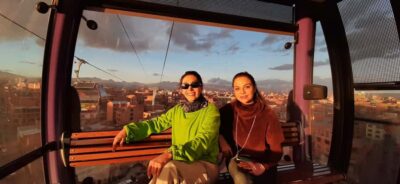
La Paz and El Alto: Cable Car Rides and Walking Tour
Read our review →

Mountain Bike Down the World’s Most Dangerous Road
Read our review →

Uyuni Salt Flat Tour & Overnight Roundtrip Bus
Read our review →
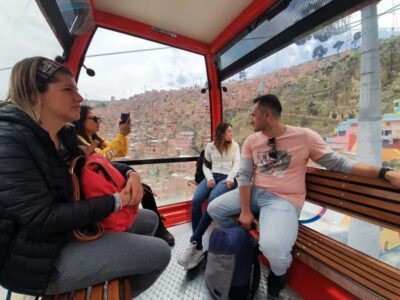
Valle de las Animas, Moon Valley, & Killi Killi Tour
Read our review →Browse the lists this tour appears in