
Reviewed · LA PAZ CITY TOURS
La Paz: Cable Car, Cemetery, Shaman, and El Alto Tour
La Paz is best understood from above and at street level. This three-hour tour gives you both: a cable-car ride over the steep city and a close look at the cemetery, El Alto, local transport, and Andean spiritual traditions. It is less polished than a standard city circuit, which is exactly its appeal.
I like the way the tour uses public minibuses and teleféricos rather than keeping you inside a private vehicle. I also like the guides’ local knowledge, especially guides such as Max, Christian, Daniel, and Chris, who explain Aymara customs and daily life in clear English. The main caution is time: if several people choose a coca-leaf reading, the tour can run well past three hours.
Key points at a glance
- Ride La Paz’s teleférico: See the city’s steep streets, brick neighborhoods, and surrounding mountains from several cable-car lines.
- Visit the cemetery art gallery: Look beyond the graves to the large open-air murals and the customs surrounding death in Bolivia.
- Cross into El Alto: Experience a high-altitude city known for its mix of Aymara tradition, commerce, and modern urban life.
- Meet a local Yatiri: If time allows, a shaman may read your fortune in coca leaves and explain Andean healing practices.
- Travel like a local: Minibuses and cable cars are part of the lesson, not just a way to get from one stop to the next.
- Expect a small-group feel: Past departures have included groups of around six and even private outings, though group size can vary.
Why this La Paz tour feels different

Many introductions to La Paz stay around the central streets, churches, markets, and old colonial buildings. This outing moves outward, first to the cemetery and then toward El Alto, giving you a look at parts of the city that can be difficult to interpret on your own.
The most useful part is the guide’s running explanation. Max, who was born and raised in El Alto, has led groups through the area and can connect what you see with local folklore and modern life. Christian has also been praised for excellent English and for answering questions throughout the afternoon. Daniel, Chris, Matt, and other guides have led departures too, so the exact personality of the tour will depend on your assigned guide.
You should not expect a quiet museum visit or a fully scripted bus tour. You walk, wait for public transport, board crowded vehicles, and adjust to the pace of a real afternoon in La Paz. That gives the tour its character, but it also means comfortable shoes, patience, and a jacket are useful.
More city walks and cable car rides in La Paz
- La Paz and El Alto: Cable Car Rides and Walking Tour
★ 4.8 · 790 reviews - La Paz: Private City Tour with Cable Car & Moon Valley Visit
★ 4.9 · 508 reviews - Cholet Tour – Andean Architecture and Culture – El Alto
★ 5.0 · 72 reviews
Meeting the guide on Calle Murillo
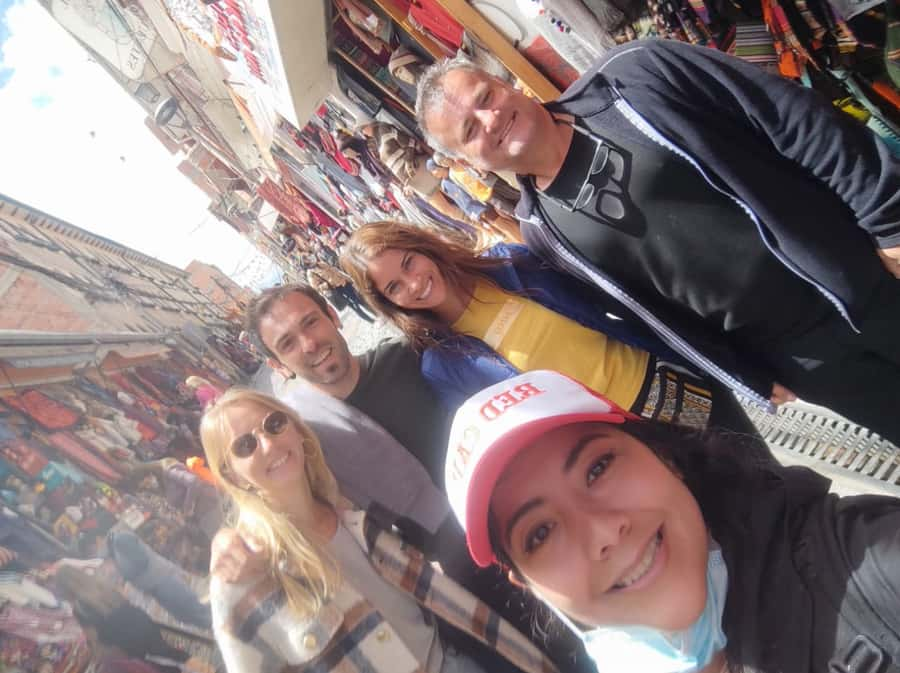
The meeting point is inside The SteakHouse restaurant at 2 PM, at the corner of Calle Murillo and Tarija Street. The guide wears a red cap and waits for a maximum of seven minutes, so arrive early and allow time to find the restaurant.
The starting point can be a little hard to spot, particularly if you are still getting used to La Paz’s steep streets and busy center. I would save the location on your phone and arrive at least ten minutes ahead. Bring your passport or another ID card, some cash, a sun hat, a jacket, and sturdy shoes.
The clothing advice is practical. La Paz can feel sunny and warm in direct light, then cool quickly when clouds move in or the cable car rises. You may also spend time standing at stations, walking through the cemetery, or moving around El Alto.
The cemetery and its open-air art
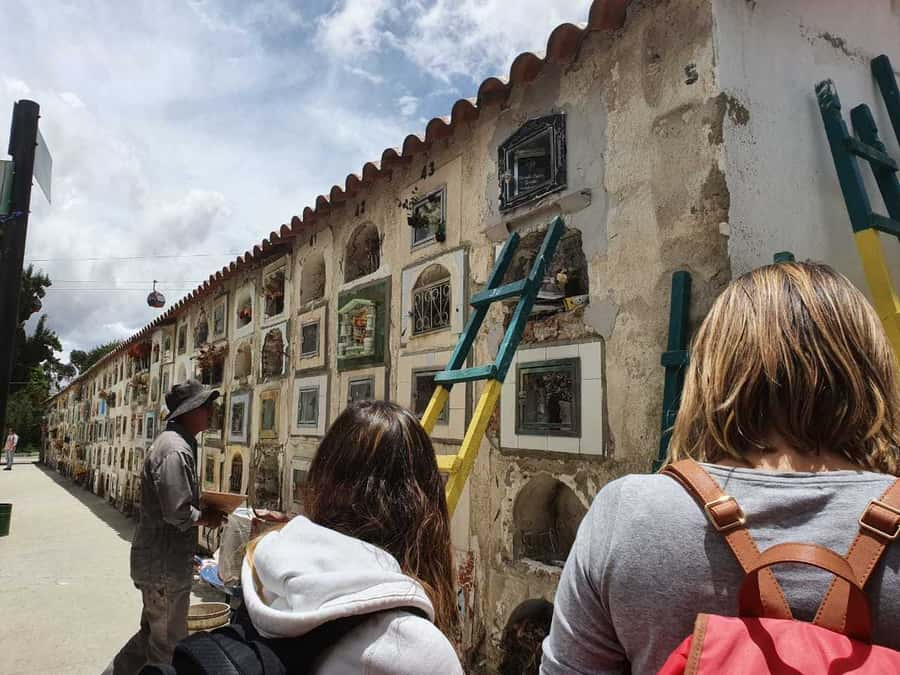
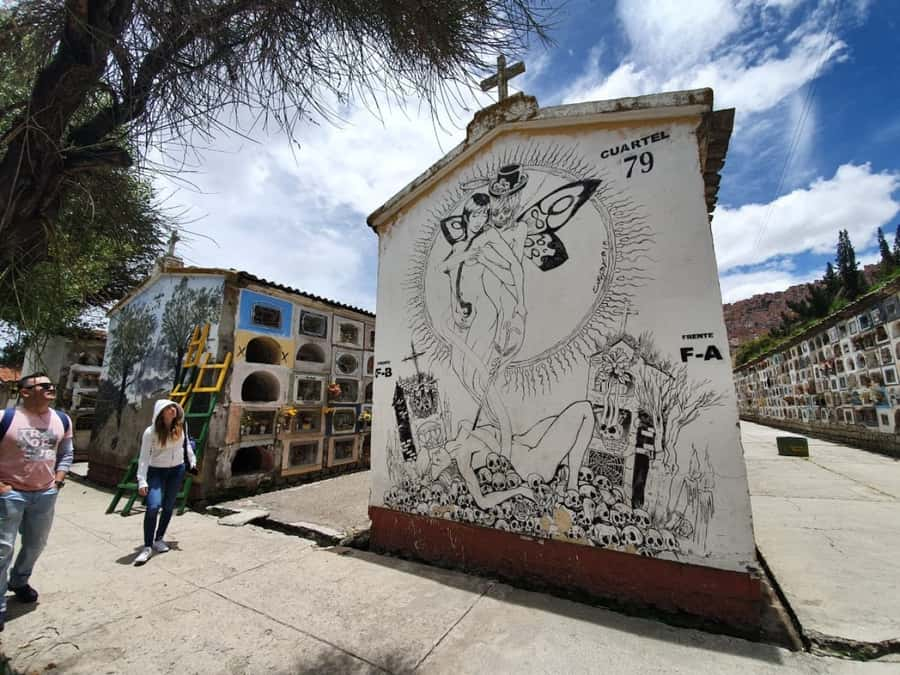
The cemetery visit is more than a quick stop for photographs. With a guide, you get an explanation of how Bolivian ideas about death and remembrance appear in daily life. One important benefit of having local help is knowing where to look and how to behave respectfully.
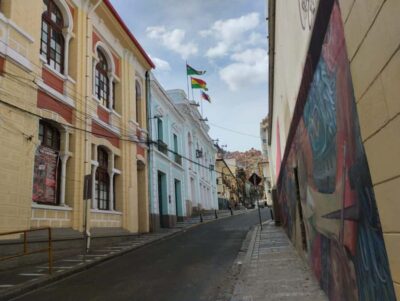
The cemetery also contains an open-air street art gallery. Large murals bring color and public commentary into a place that many people might otherwise see only as a formal burial ground. The art is an unexpected highlight, especially if you assume the stop will focus only on graves and religious customs.
The visit can change depending on the day. One past departure took place during Todos Santos, when shamans were not available, so the group spent extra time at the cemetery instead. That is worth keeping in mind: the shaman visit is not guaranteed, and the guide may adapt the schedule when local circumstances change.
Cable cars over La Paz and El Alto
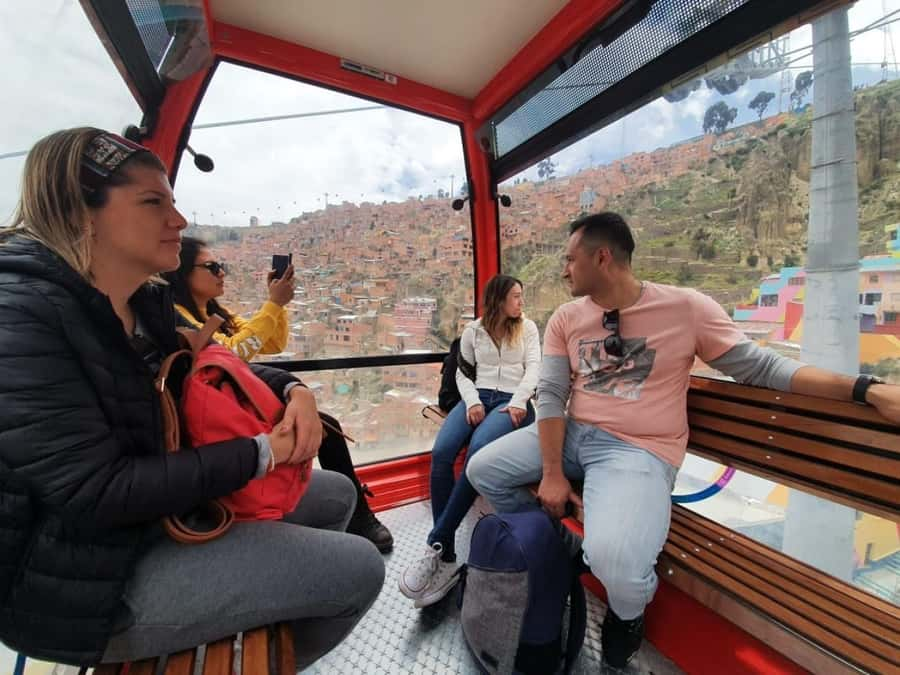
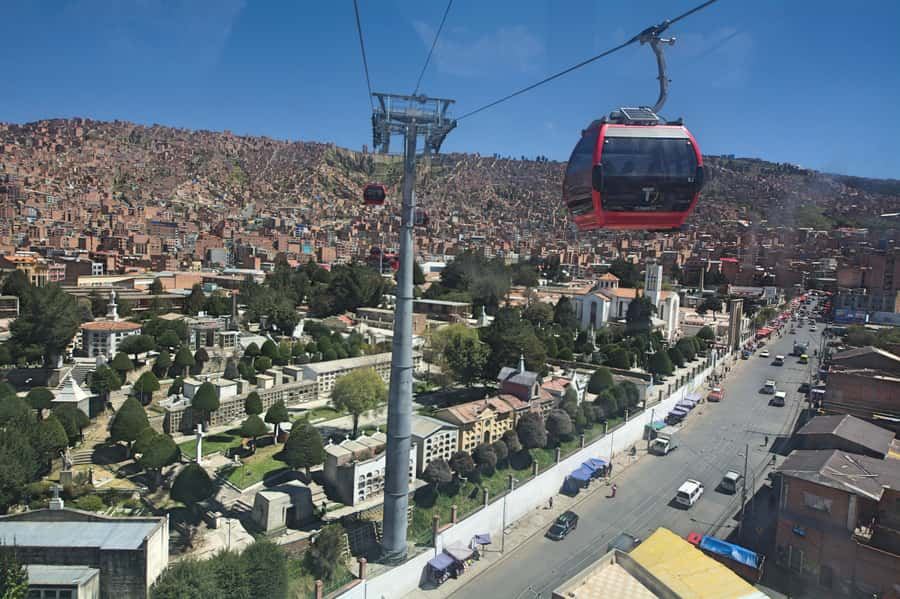
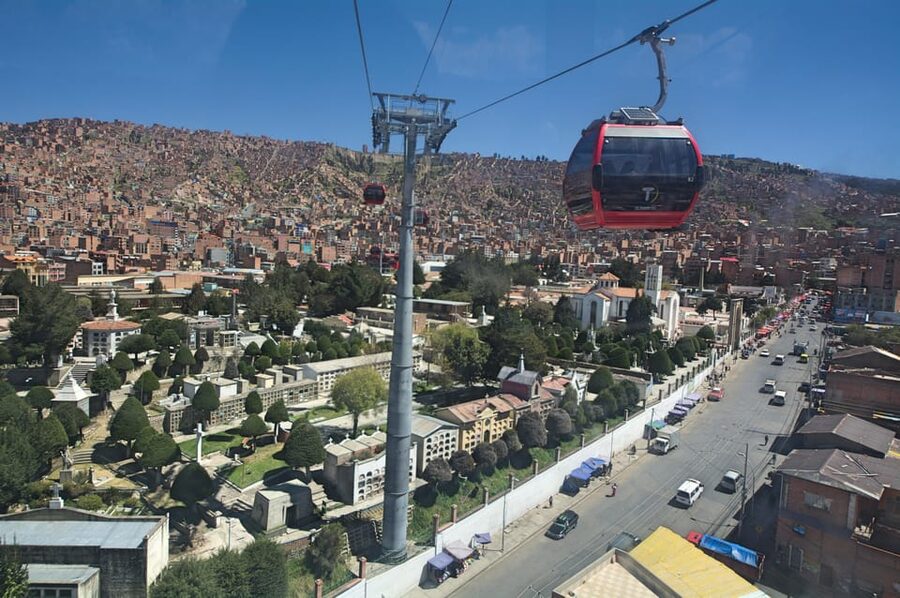
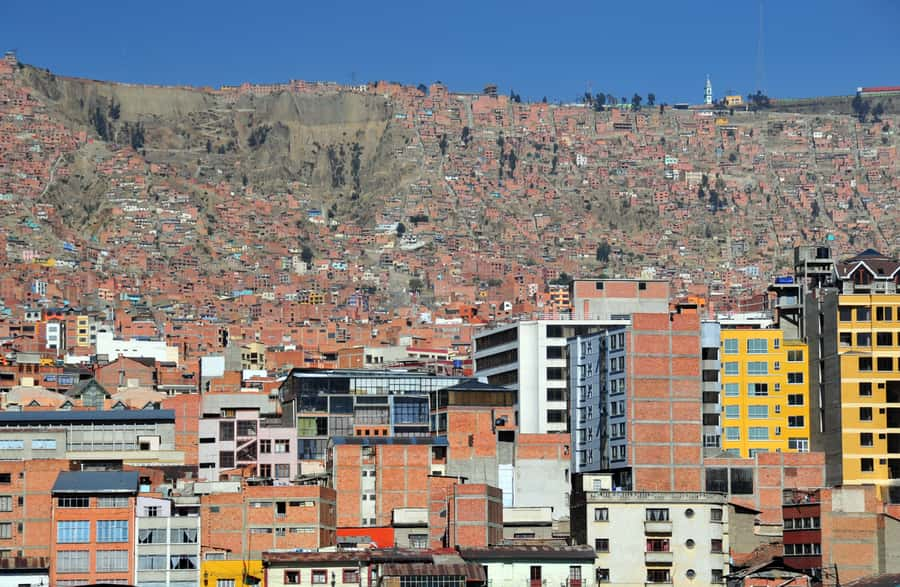
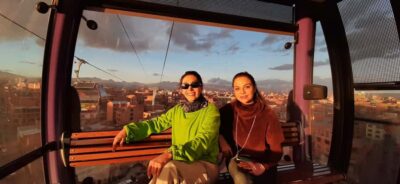
The teleférico is one of the clearest ways to understand La Paz. From the cabins, you see how the city climbs sharply from the lower center toward the high plateau. Roads, rooftops, brick buildings, and distant mountains form a view that is difficult to grasp from street level.
The published route describes taking the red cable car toward El Alto and returning on another line. In practice, the exact sequence may include several cable-car lines, along with a local minibus to the cemetery. That variety is part of the fun. You are not simply riding one scenic attraction and going home. You are learning how the city’s transport network links different heights and districts.
The views are the strongest reason to choose this tour. The cable car gives you time to look across La Paz without the usual traffic blocking your view. You also get a sense of the city’s scale and steep setting, which can make the central streets seem less confusing when you explore them later.
Still, weather matters. Cloud, rain, or bright glare can affect what you see. A jacket and sun protection are both sensible. The cable car is a public transport system, not a private sightseeing cabin, so the ride may feel more like daily city travel than a special scenic excursion.
A few more trips around La Paz worth a look
- La Paz Half-Day Walking Tour
★ 4.8 · 591 reviews - La Paz: Full Day Trip to Copacabana and Isla del Sol
★ 4.5 · 400 reviews - La Paz: Mountain Bike Down the World’s Most Dangerous Road
★ 4.9 · 386 reviews - La Paz: Cholitas Wrestling Tickets and Transfer
★ 4.4 · 338 reviews
Entering El Alto with a local guide
El Alto is often treated as an afterthought by people staying in central La Paz. This tour gives it proper time, and that is one of its main strengths. You see a large urban district shaped by Aymara traditions, commerce, migration, and modern city life.
The value here is interpretation. Without Spanish or a local connection, it can be hard to understand what you are seeing in side streets, stalls, markets, and transport hubs. An English-speaking guide can explain local customs, answer questions, and help you move through the area with more confidence.
Thursdays and Sundays add another reason to consider this outing. One of the world’s largest open-air markets takes place in El Alto on those days. The market can add a lot of activity and color, but it may also mean more crowds and slower movement. Cholitas Wrestling is also held on Thursdays and Sundays, but it is not included in this tour and requires a separate ticket or arrangement.
Do not book this experience expecting a tidy, quiet walk. El Alto is a working city, and the public-transport sections may be crowded. That is precisely why a guide is useful, particularly if you want to see more than central La Paz without trying to manage the route alone.
The Yatiri and the coca-leaf reading
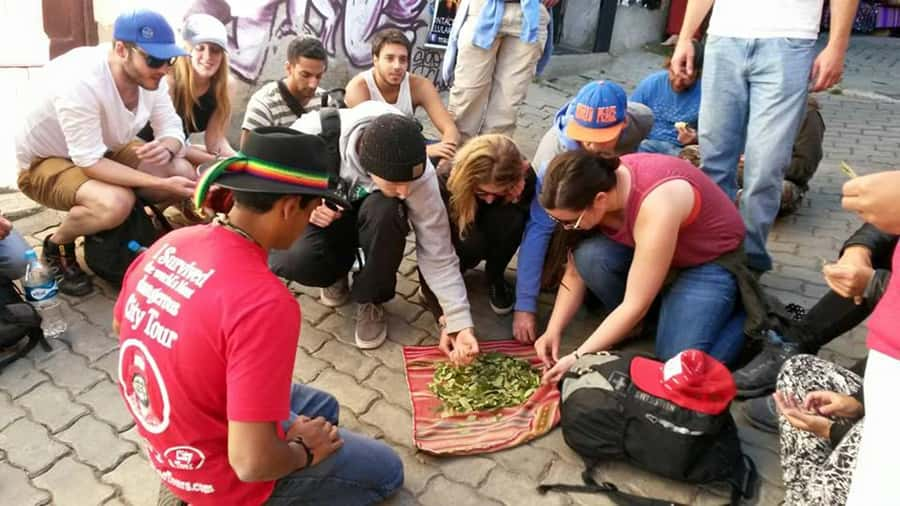
The shaman visit is the tour’s most unusual element. In El Alto, you may meet a local Yatiri, learn about Andean spirituality and healing herbs, and have your fortune read in coca leaves. The reading generally allows three questions, based on the experience described by past participants.
This is not presented as a theatrical show. It is a chance to ask about a living spiritual practice and to see how coca leaves are used in a cultural setting. Approach it with curiosity and respect rather than treating it as a novelty.
The wording if time allows matters. The reading is not guaranteed, and the group may wait while other people take their turn. One past outing became considerably longer because several members wanted a reading. If you are not interested in participating, you may prefer that the shaman stop be optional at the end, but the schedule may not always work that way.
The visit can also be affected by holidays or availability. On Todos Santos, no shaman was available for one group, and the guide expanded the cemetery portion instead. That kind of change is normal on a cultural tour built around local contacts.
Public transport is part of the lesson
You will use public transportation, including local minibuses and cable cars. Some people will find this more memorable than riding in a private van, since the transport itself shows how people move around La Paz and El Alto.
A minibus ride may feel less comfortable than a tourist vehicle. You may need to board quickly, stand, or keep track of your belongings in a crowded area. The guides are there to manage the route and help the group, but you should still keep your passport, phone, and cash secure.
The transport also makes the price easier to understand. At $20 per person, the tour is not charging you for a private vehicle or a luxury setting. Your money buys a local guide, included public transport, cemetery admission, and a structured route that would be difficult to repeat alone without Spanish or local contacts.
Guide quality makes the difference
The most consistently praised part of this experience is the guiding. A good guide turns a cable-car ride into a lesson about the city’s shape, turns a cemetery into a place of cultural meaning, and helps you understand why El Alto matters.
Max is frequently noted for his humor, English, and detailed explanations of La Paz and El Alto. Christian is praised for his care, clear English, and ability to answer questions. Daniel has led groups through the cemetery, local transport, and El Alto, while Chris has been valued for his relaxed manner and strong grasp of La Paz’s history and customs.
You may also meet Matt, Roberto, or another Red Cap Walking Tours guide. The exact guide is not promised, but the repeated pattern is clear: the tour depends heavily on the person leading it. If your guide invites questions, take advantage of that. The best information often comes during a short walk or while waiting for transport, not at a formal stop.
How much time and energy you need
The scheduled duration is three hours, beginning at 2 PM. Plan for more time if several people want coca-leaf readings or if public transport is slow. The route includes walking, standing, transfers, and time at high altitude.
This is not suitable for pregnant women or people experiencing altitude sickness. La Paz and El Alto sit at very high elevations, and the combination of walking, sun, cold, and stairs may feel demanding. If you have just arrived in Bolivia and are still adjusting, consider how you feel before booking.
You do not need to bring food or drinks as part of the tour, since neither is included. Carry cash if you want to buy something independently, and bring water for your own comfort. The tour information specifically recommends a sun hat, jacket, comfortable shoes, and ID.
Is $20 a good value?
For $20, this is a strong-value afternoon if you want transport, guiding, and cultural context rather than a polished attraction. The fee includes public transportation, an English-speaking guide, and tourist admission to the cemetery. Food, drinks, and Cholitas Wrestling are extra.
The value is especially good for first-time visitors who would not feel ready to find El Alto, the cemetery, and a Yatiri on their own. A private outing can offer even more attention, while a small group keeps questions and conversation manageable. The tradeoff is that you give up some control over timing.
Free cancellation up to 24 hours before the activity and the option to reserve now and pay later make it easier to fit into a changing Bolivia itinerary. Check the available start times when booking, since the stated meeting time is 2 PM but availability can vary.
Who should book this experience?
I would choose this tour if you want to understand La Paz beyond its central streets. It suits you if you enjoy public transport, local customs, street art, big views, and a guide who can explain what you are seeing in English.
It is also a good match if you are curious about Andean spirituality but prefer to encounter it through a local introduction rather than a staged attraction. The coca-leaf reading is optional in practice and depends on time and availability, so do not book solely for that one feature.
You may want a different outing if you need a fixed end time, dislike crowded public transport, or want a calm sightseeing route with few changes. The tour’s charm comes from its rough edges, and those same details can make it longer or less predictable.
Should you book the Cable Car, Cemetery, Shaman, and El Alto Tour?
Book it if you want a three-hour introduction to La Paz’s less familiar side, especially El Alto and the city’s public transport system. The cable-car views are excellent, the cemetery art is memorable, and a strong guide can add meaning to customs you would otherwise miss.
Go in with sensible expectations. The shaman visit may not happen, the meeting point needs care, and the tour may run long. If those conditions suit you, $20 buys an unusually broad look at La Paz, with the added benefit of local guides such as Max, Christian, Daniel, or Chris to help you make sense of it.
FAQ
How long does the tour last?
The scheduled duration is three hours, starting at 2 PM. It may last longer if several people choose a coca-leaf reading or if public transport takes extra time.
How much does the tour cost?
The listed price is $20 per person.
Where does the tour meet?
The meeting point is inside The SteakHouse restaurant on Calle Murillo, at the corner of Tarija Street.
How can I identify the guide?
The guide wears a red cap. The maximum waiting time at the meeting point is seven minutes.
Is the tour conducted in English?
Yes. The tour includes a live English-speaking guide.
What transportation is included?
Public transportation is included. The route uses local minibuses and La Paz’s cable cars, also called teleféricos.
Is the cemetery entrance included?
Yes. Tourist entrance to the cemetery is included.
Is a coca-leaf fortune reading guaranteed?
No. The reading takes place if time allows, and local availability can change. On one occasion, no shaman was available because of the Todos Santos holiday.
What should I bring?
Bring a passport or ID card, comfortable shoes, a sun hat, a jacket, and cash. Food and drinks are not included.
Just added around La Paz
- Private Tour of Tiwanaku Ruins from La Paz★ 5.0 · 3 reviews
- Private Tiwanaku and Titicaca Day Trip from La Paz★ 4.8 · 3 reviews
- From La Paz: Lake Titicaca and Copacabana Private Tour★ 5.0 · 5 reviews
- LA PAZ: GUIDED TOUR CHACALTAYA + VALLEY OF THE MOON★ 3.6 · 3 reviews
- La Paz: Uyuni tour ending in Atacama Chile by bus.★ 3.9 · 3 reviews
- La Paz: The Feminist Tour★ 5.0 · 3 reviews
- Titicaca Lake: Highlights Tour from La Paz by Bus★ 4.0 · 3 reviews
- From La Paz: Trip to Uyuni Salt Flats with Wine at Sunset★ 4.4 · 4 reviews
La Paz City Tours, compared.
La Paz and El Alto: Cable Car Rides and Walking Tour
Read our review →
Private Salt Flat Full-Day Tour Including The Cemetery of Trains and Lunch from Uyuni
Read our review →
Cholet Tour – Andean Architecture and Culture – El Alto
Read our review →

Private Vehicle & Guide. City Tour + Moon Valley
Read our review →
Browse the lists this tour appears in