
Reviewed · CYCLING TOURS
From La Paz: The World’s Most Dangerous Road Biking Tour
Bolivia’s Death Road is a 64-kilometer downhill ride from cold, snowy La Cumbre to hot Yolosita, dropping from 4,700 meters to 1,200. I like the sharp change in scenery, from bare high-altitude peaks to misty forest and small waterfalls, and I like that the day ends with a buffet lunch, shower, and swimming pool, not a damp ride back to town. The main caution is simple: this is a real mountain-bike day, not a gentle sightseeing outing.
I also like the serious support on the road. Guides such as Victor, Freddy, Chris, Maury, Javier, and Eddy have been singled out for patience, bike checks, safety help, and friendly company. You should still expect an early start, a long return drive, wet clothes, and a rough dirt road where good brakes matter more than a shiny bike.
Key points before you book
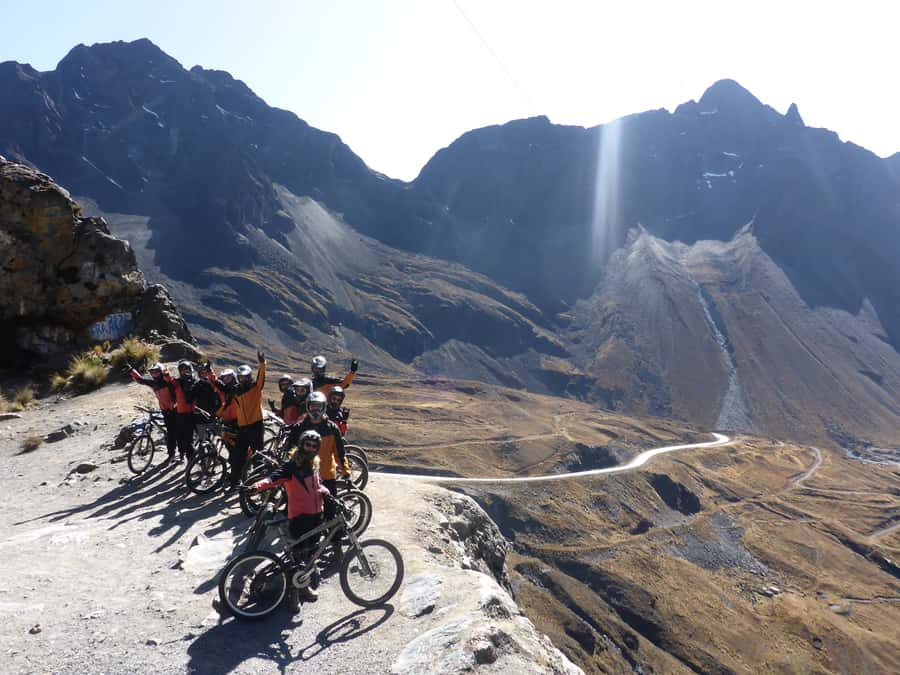
- A 3,700-meter descent: Start among snow-covered peaks at La Cumbre and finish in warm Yolosita near the Bolivian Amazon.
- Two very different rides: The opening section uses paved road to help you get comfortable, while the actual Death Road is narrow, wet, rough, and lined with thick vegetation.
- A strong equipment package: Full-suspension downhill bikes, hydraulic disc brakes, full-face helmets, gloves, jackets, trousers, and elbow and knee pads are included.
- Guides stay involved: English and Spanish-speaking guides give safety briefings, check bikes, take photos, and help you manage your pace.
- A comfortable finish: Buffet lunch, showers, swimming pool time, snacks, and unlimited water are included after the ride.
- Budget for extras: The $129 price does not include the 50 boliviano Death Road tax or the optional zipline.
From La Paz to the high pass at 4,700 meters
The day begins at the Vertigo Biking office, where the tour bus should be parked outside. From there, private transport takes you toward La Cumbre. The ride takes about 45 minutes, giving you time to leave La Paz’s high plateau and prepare for a day of downhill cycling.
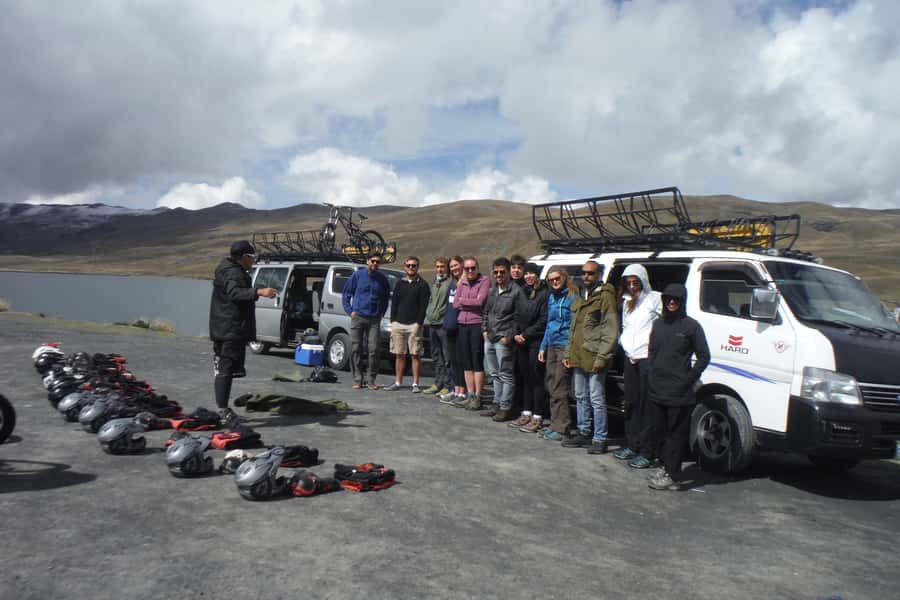
La Cumbre sits at roughly 4,700 meters, so the first thing you notice is the cold and thin air. Snow-covered peaks provide the opening view, and the setting feels stark compared with the warm valley waiting below. Bring warm layers even if the forecast in La Paz looks mild. You will not want to begin the day shivering beside your bike.
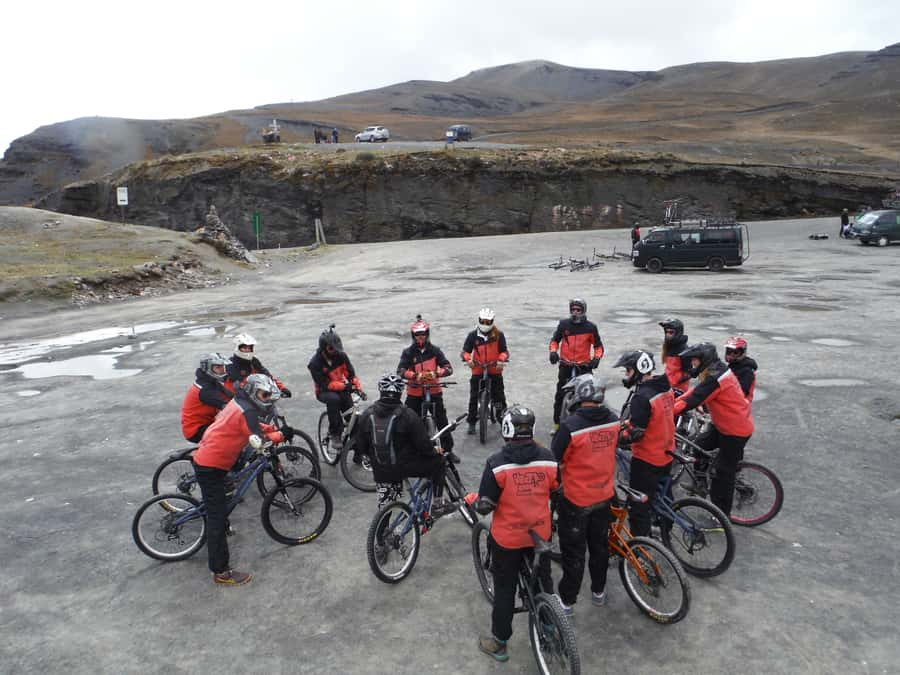
At Cristo de la Cumbre, the guides give a safety briefing of about 30 minutes. This is useful time, not filler. You learn how the bikes work, how to use the brakes, how to position yourself on descents, and what to expect from the road. The staff also check the bikes before you start.
The equipment includes full-suspension downhill mountain bikes with hydraulic disc brakes. You receive a full-face helmet, gloves, jacket, trousers, and elbow and knee protection. The gear may not look brand new, but the important parts are the brakes and suspension. One rider specifically noted that the bikes did their job well despite not looking like the latest high-tech models.
More Death Road rides from Bolivia
- La Paz: Mountain Bike Down the World’s Most Dangerous Road
★ 4.9 · 386 reviews - World’s Most Dangerous Road “Private” Mountain Biking Trip
★ 5.0 · 7 reviews - From La Paz: 3-Day Biking Tour Death Road & Uyuni Salt Flats
★ 4.7 · 4 reviews
The paved opening gives you time to settle in
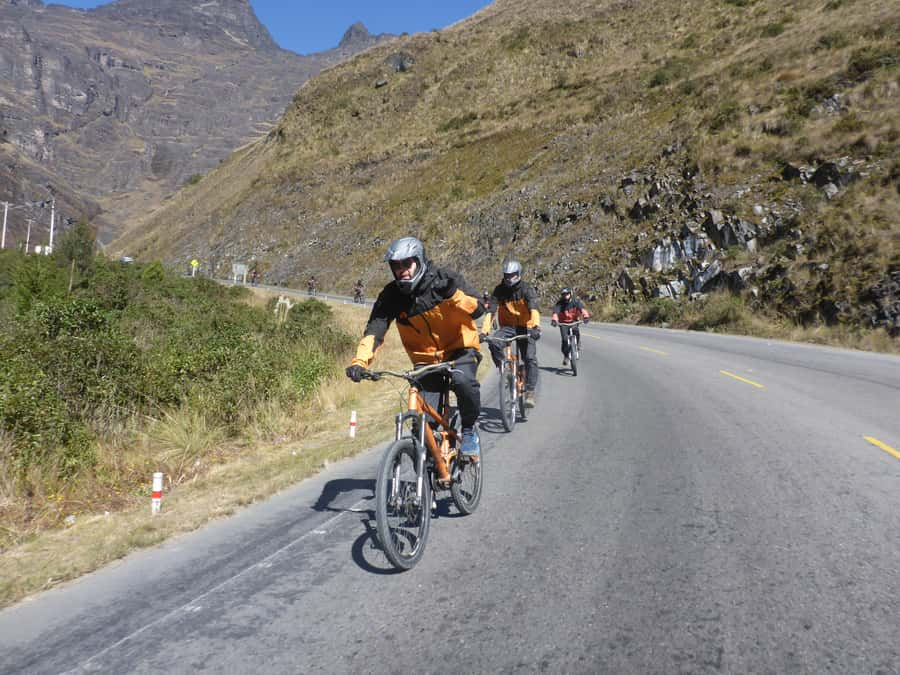
The first riding section follows a paved mountain road and takes about an hour. This is a smart introduction. You can learn the feel of the bike, test your braking, and find a comfortable position before the rougher section begins.
The road passes small villages and gives you broad mountain views. It is still a fast descent, so you need to stay alert, but the surface is easier than the dirt track ahead. Guides make regular stops for photographs, bike checks, and instructions. Riders who want to go faster may have chances to move ahead in suitable sections, but you should follow the guide’s directions and ride at a speed you can control.
This part also shows why the day is not simply four hours of nonstop downhill action. Stops break up the ride and give you time to catch your breath, adjust clothing, and take in the changing surroundings. If you are hoping for a pure adrenaline sprint with no pauses, the regular stops may feel slow. If you want help and a chance to ride with confidence, they are welcome.
Chuspipata marks the real Death Road
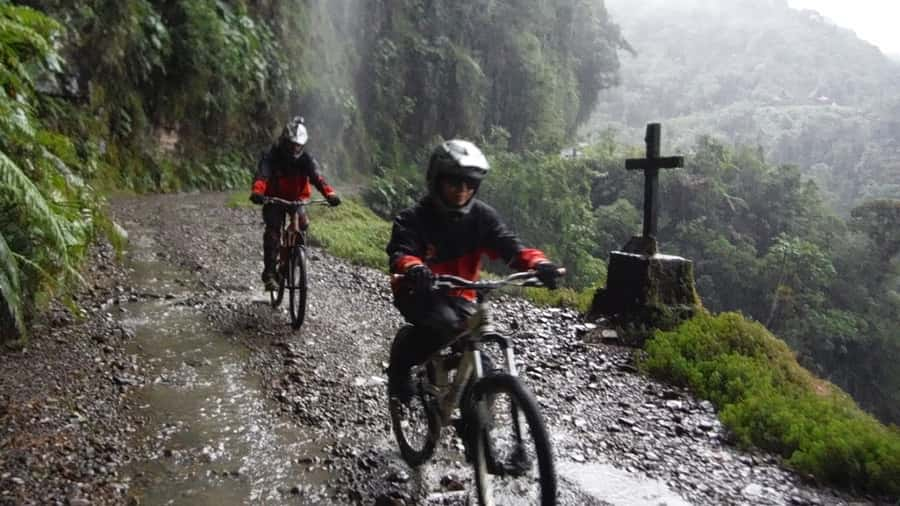
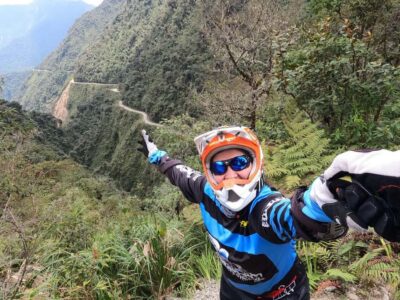
After the opening ride, a short 15-minute bus transfer takes you toward Chuspipata. This is where the actual Death Road section begins. The change is immediate. Pavement gives way to dirt, the air becomes warmer, and trees and thick vegetation replace the exposed high-altitude slopes.
You ride through mist and low cloud on a rough road. Small waterfalls cross the route, and tiny rivers can leave you wet before the day is over. The road surface can change after rain or landslides, so your focus belongs on the line ahead, not just the view to the side.
The route is often described as 95 percent downhill, but downhill does not mean effortless. You still need to steer, brake, absorb bumps, and stay balanced for hours. Wet dirt, loose stones, puddles, and narrow sections demand care. You do not need to be an expert mountain biker, but you must be able to ride a bike and remain comfortable with sustained downhill cycling.
The guides remain close and provide help throughout the four-hour Death Road block. They stop for photos, safety reminders, and bike checks. The strongest part of the operation is the human support: Freddy has been praised for safe driving, Victor for calm and attentive guidance, and guides including Chris, Maury, Javier, and Eddy for keeping the group informed and in good spirits.
The route also offers room for different riding styles. The guides can let confident riders move ahead in appropriate sections, while less confident riders can take a more measured pace. That flexibility matters because a mixed group rarely has one shared comfort level.
Water, snacks, and the practical side of the ride
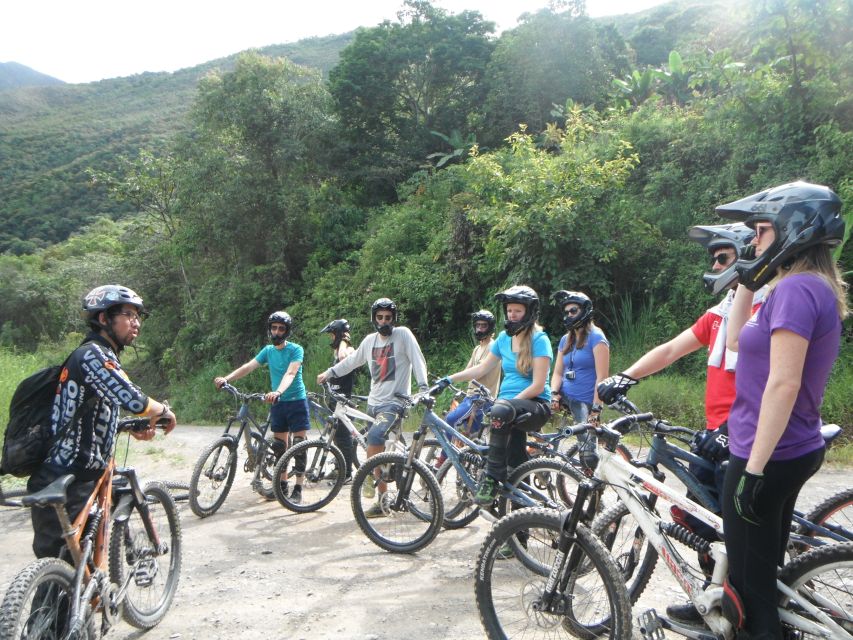
The tour includes unlimited water and snacks along the road. This is more important than it sounds. A long downhill ride still takes energy, especially when you are concentrating hard and stopping often to manage rough sections.
Carry a small daypack with sunscreen, insect repellent, sunglasses, and a change of clothes. You should also bring swimwear because the day ends with pool time. Cash is needed for the 50 boliviano Death Road tax and for the optional zipline if you decide to add it.
The organizers advise bringing a passport or identity card, though a copy is accepted. Keep it protected from water and mud. A waterproof bag for electronics is also sensible, since the route includes waterfalls, rivers, mist, and wet road conditions. That suggestion follows directly from the conditions described, not from any promise that you will stay dry.
Photos and short videos from the day are uploaded to Dropbox. This is a useful inclusion because stopping to take your own phone pictures on a wet, rough road is not always practical. The guides handle much of the photo work while you concentrate on riding.
A few more trips around Bolivia worth a look
- La Paz | Death by Bike Route | Lunch
★ 3.4 · 7 reviews
The view changes from cold peaks to tropical heat
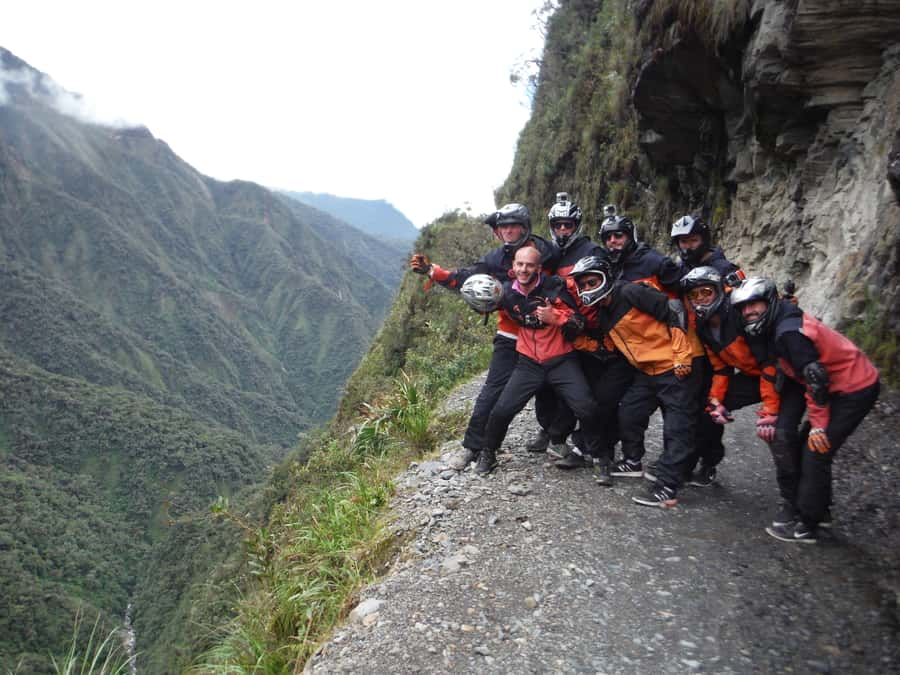
One of the best features of the route is the speed of the climate change. You begin in cold mountain air at 4,700 meters and finish around 1,200 meters, where the weather is hot and the vegetation is much thicker.
At a viewpoint, the group has about 15 minutes for photographs and sightseeing. This is a good chance to look back at the scale of the descent and let the setting sink in. The route gives you more than a single famous road. It shows the transition between Bolivia’s high mountains and the warmer lowlands.
A later stop at a traditional village lasts about 30 minutes and includes time for photographs and a guided visit. The supplied schedule does not promise a formal cultural program, so you should treat this as a short local stop rather than a long village tour. It adds a human touch to a day that might otherwise be all rocks, trees, and speed.
By the time you reach Yolosita, you will probably be hot, dirty, and ready for a proper wash. That is exactly why the finish is planned at a hotel or resort rather than beside the road.
Lunch, showers, and pool time make the finish work
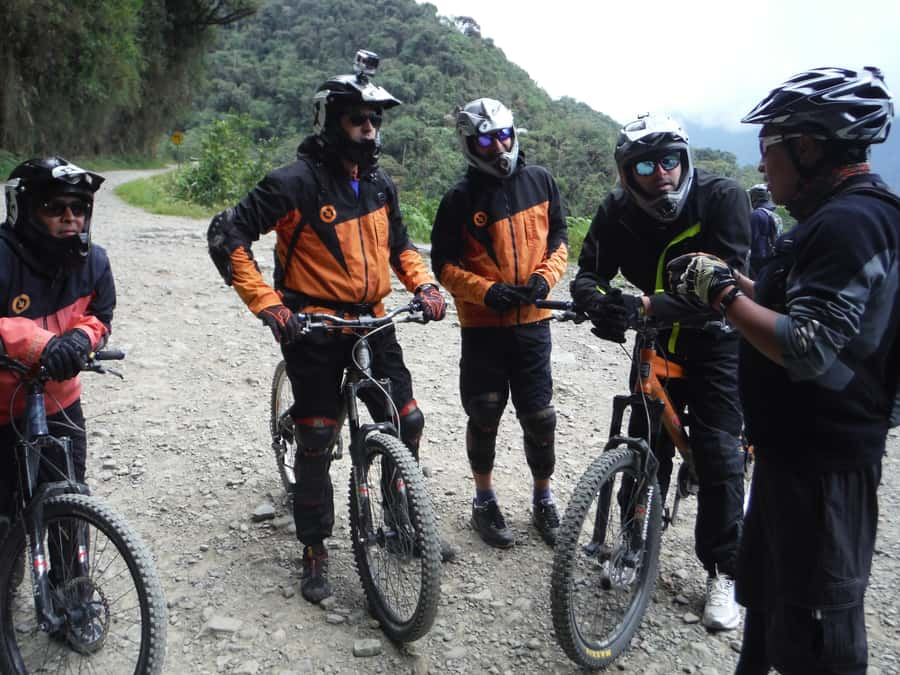
A short bus transfer takes you to the final restaurant and hotel stop. You have about 105 minutes for free time, buffet lunch, shower facilities, and pool use.
This ending adds real value to the $129 cost. A basic Death Road outing could leave you sitting in dirty clothes during the return trip. Here, you can eat, wash off the mud, cool down, and change before facing the long drive back.
The buffet is included, as are the showers and pool access. Several riders have specifically praised the food and pool, and that makes sense after hours on a bike. Do not expect the final stop to be a major resort holiday, though. It is a useful recovery break built into an adventure day.
Afterward, the bus returns to La Paz. The listed return drive takes about three hours, so the total day is long. If you have evening plans, leave plenty of space. Fatigue can arrive after the ride, and the winding return journey may feel longer than it did in the morning.
What the $129 price really covers
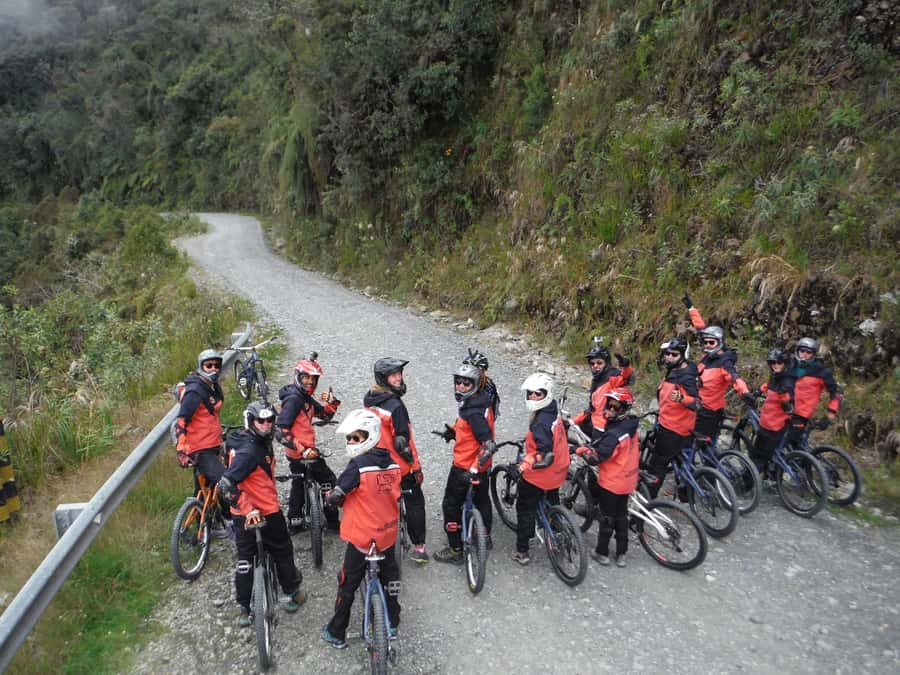
At $129 per person, the tour is not the cheapest way to see the Death Road. It does, however, include the main items that can make a full-day adventure easier and safer:
- Private transportation from the meeting point and back
- Full-suspension downhill bike with hydraulic disc brakes
- Full-face helmet and protective clothing
- Gloves, elbow pads, and knee pads
- Bilingual guides trained in first aid
- Qualified mechanics and bike checks
- Unlimited water and snacks
- Buffet lunch
- Shower and pool access
- Photos and short videos uploaded to Dropbox
You still pay the 50 boliviano road tax, and the zipline costs extra if you choose it. Those additional charges are small compared with the main price, but you should carry cash.
The value is strongest if you would otherwise need to arrange your own transport, bike rental, safety gear, food, and post-ride facilities. It is less attractive if you already have a suitable bike and want a minimalist ride with no organized stops.
Who should ride, and who should skip it
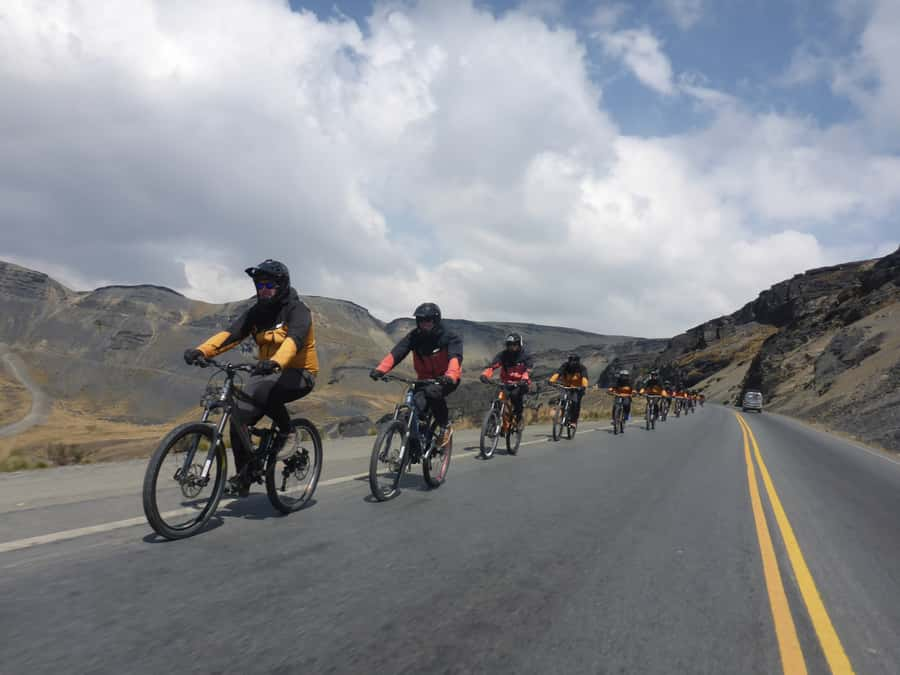
This tour suits you if you can ride a bike confidently and want a guided adventure with a clear support system. It is a good match for active visitors who enjoy long descents, changing weather, rough roads, and a bit of mud.
You do not need to race. The guides can explain each part, help with safety, and allow riders to manage their own pace. Several guides have been praised for patience and reassurance, which matters if you are nervous at the start.
You should skip it if you cannot ride a bike, have limited mobility, use a wheelchair, or are pregnant. The tour also has a minimum height of 155 centimeters. It is not suitable for anyone under that height.
You should also think carefully if you dislike long vehicle transfers. The ride itself is only one part of the day. There is a 45-minute outbound bus ride, short transfers during the route, and about three hours back to La Paz.
The group leaves with at least two people, so confirm that a group is scheduled for your chosen date. English and Spanish are available, and the tour can be canceled up to 24 hours ahead for a full refund. Reserve-now, pay-later booking is also offered.
Should you book Vertigo Biking’s Death Road ride?
Book it if you want the classic Death Road route with proper protective gear, active guide support, and a comfortable finish. The sharp change from snow-level mountains to hot forest makes the day more than a bike ride, and the lunch, shower, pool, water, snacks, and transport justify much of the price.
I would be cautious only if you want a short activity, dislike dirt and wet conditions, or are not comfortable braking on a rough downhill road. For everyone else, this is a demanding but well-supported way to see one of Bolivia’s most unusual routes. Bring warm clothes for the start, swimwear for the finish, and enough energy for a long day.
FAQ
How long is the Death Road biking tour?
It lasts one full day. The listed schedule includes the ride, stops, transfers, lunch, pool and shower time, and the return to Vertigo Biking in La Paz.
How far do you ride?
The route covers 64 kilometers from La Cumbre toward Yolosita.
How high and low does the route go?
You start at La Cumbre at about 4,700 meters and finish at Yolosita at about 1,200 meters.
Is the tour suitable for beginners?
You must be able to ride a bike, but the first section is on a paved road so you can get used to the bike. Guides provide safety instructions and support throughout the ride.
What equipment is included?
You receive a full-face helmet, trousers, jacket, elbow and knee pads, gloves, and a full-suspension downhill mountain bike with hydraulic disc brakes.
Are food and drinks included?
Yes. Unlimited water, snacks during the ride, and a buffet lunch are included.
Can I shower after riding?
Yes. The final hotel or resort stop includes shower access and use of a swimming pool.
Is the zipline included?
No. The zipline is optional and available to pay for on the day.
What should I bring?
Bring warm clothing, sunglasses, swimwear, a change of clothes, sunscreen, insect repellent, cash, a daypack, and a passport or identity card. A copy of your identification is accepted.
Just added around Bolivia
- Uyuni tour express from Sucre by bus (round trip)★ 4.2 · 4 reviews
- UYUNI SALT FLAT: SUNRISE & STARLIGHT EXPERIENCE★ 3.1 · 3 reviews
- Uyuni: Classic Uyuni Salt Flats Tour + Hotel Pickup★ 3.0 · 4 reviews
- UYUNI SALT FLAT: SUNSET & STARLIGHT EXPERIENCE★ 5.0 · 3 reviews
- Uyuni: Salar de Uyuni Traditional Tour+Sunset Tour★ 4.8 · 3 reviews
- Uyuni: Salar de Uyuni and San Pedro de Atacama 3-Day Tour★ 4.2 · 4 reviews
- Uyuni: 3-Days Salt Flats and Desert Adventure Tour with Food★ 3.8 · 4 reviews
- Uyuni: Full-day tour, Salt flats and Sunset experience★ 4.8 · 5 reviews
Cycling Tours, compared.
Mountain Bike Down the World’s Most Dangerous Road
Read our review →
World’s Most Dangerous Road “Private” Mountain Biking Trip
Read our review →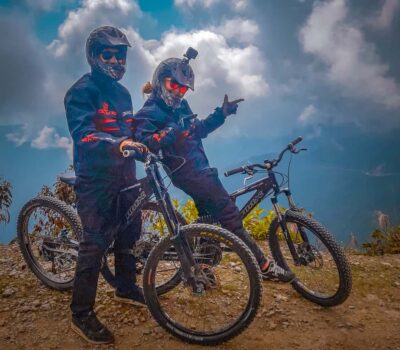
Browse the lists this tour appears in