
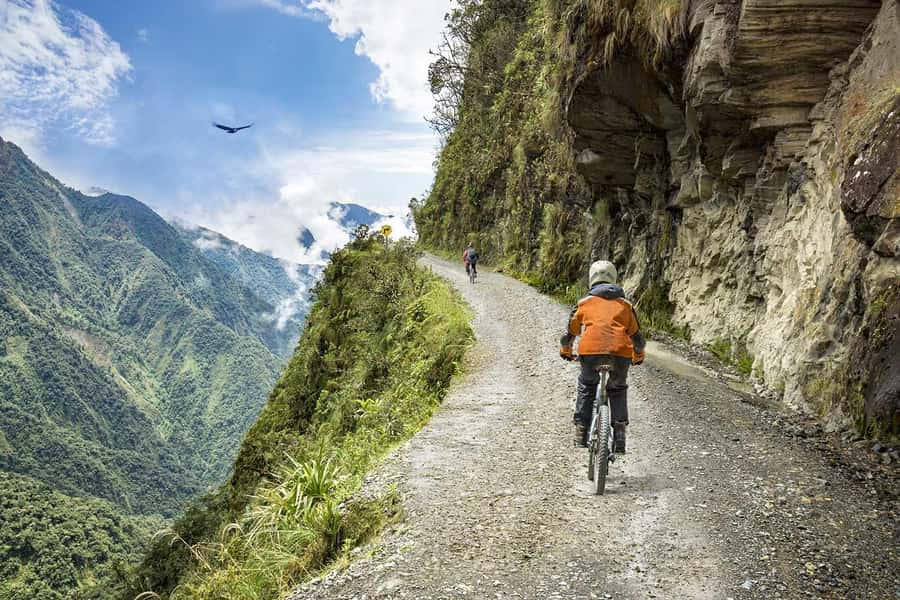
Reviewed · CYCLING TOURS
La Paz | Death by Bike Route | Lunch
Bolivia’s Death Road is not a casual bike ride. It is a long, high-altitude descent from La Cumbre to the warm valley near Coroico, with a rough 10-kilometer section at its center. I like that the tour uses full-suspension Rocky Mountain bikes with hydraulic brakes, a useful upgrade when the road turns rocky, wet, and uneven.
I also like the small group of seven riders and one guide, plus the support van that follows behind. You get regular stops for water, photographs, and bike checks, and snacks are served before the final stretch. The main concern is reliability: one verified booking review describes waiting more than 30 minutes at the meeting point with no guide or contact, so confirm the pickup details and WhatsApp number before departure.
Key points to know before you book
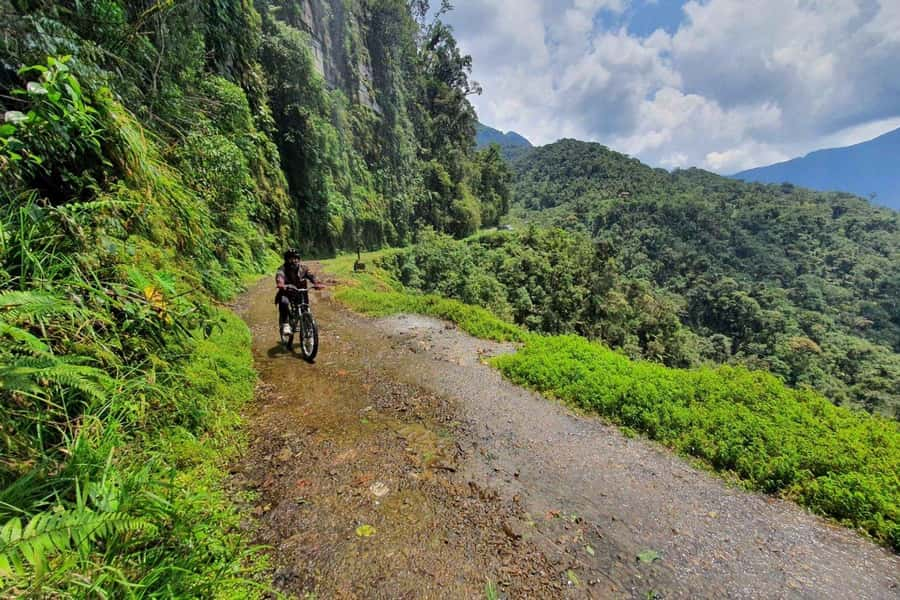
- The ride begins at 4,700 meters: The first descent starts at La Cumbre, about one hour from La Paz.
- The famous section is 10 kilometers: Stage 2 takes place on Death Road, ridden in a compact group with safety as the priority.
- You cover about 64 kilometers in three stages: The route includes paved road, the historic rough section, and a final 32-kilometer stretch to Yolosa.
- A support van stays behind the group: It carries support and gives the guide a way to respond if a rider has trouble.
- Lunch comes after the riding: The finish includes a hotel stop with showers and a swimming pool, followed by lunch.
- Budget for the park fee: The Bs. 50 entrance charge is not included, and extra drinks at lunch cost more.
From La Paz to La Cumbre at 4,700 meters
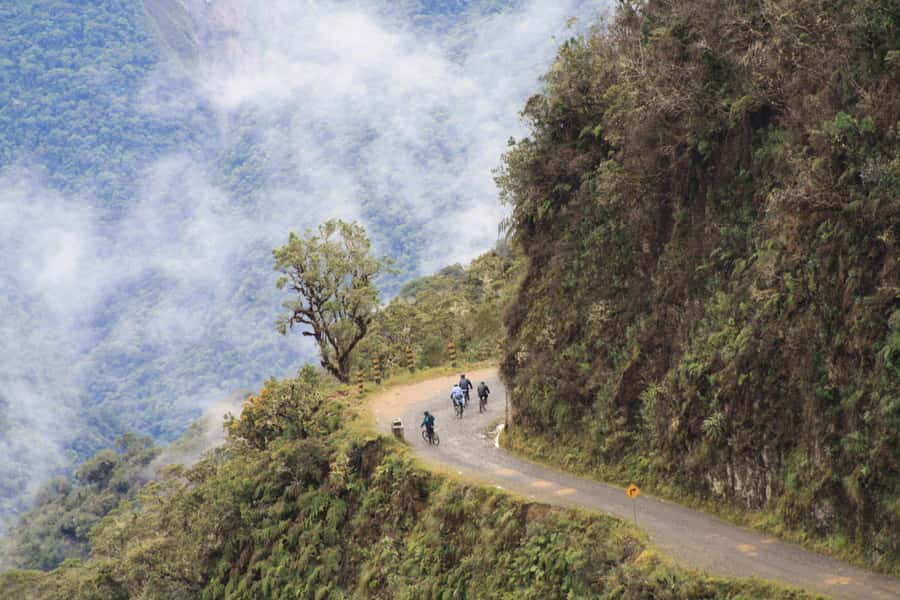
The day starts early at the Vicuña Travel office, office 144, in La Paz. Round-trip transport is included, so you do not need to arrange a separate vehicle to the mountain start.
The drive to La Cumbre takes about an hour. This is not just a transfer between two points. You rise sharply from La Paz into a high, cold mountain setting, and the starting altitude matters. At 4,700 meters, even standing around with a bike can feel demanding if you have not adjusted to the elevation.
You receive a full helmet, gloves, jacket, and pants. The clothing is especially useful at the beginning, when conditions at La Cumbre can be cold. The tour also provides water, though you should still treat the day as a serious physical outing rather than a sightseeing ride with a little pedaling.
The bikes are full suspension and fitted with hydraulic disc brakes. That combination gives you better control than a basic hardtail bike, especially once the road becomes stony or wet. Still, good equipment does not remove the need to follow instructions. Stay within the group, listen to the guide, and use the early paved section to learn how the bike handles.
A few more trips around La Paz worth a look
- La Paz: Mountain Bike Down the World’s Most Dangerous Road
★ 4.9 · 386 reviews - World’s Most Dangerous Road “Private” Mountain Biking Trip
★ 5.0 · 7 reviews - From La Paz: 3-Day Biking Tour Death Road & Uyuni Salt Flats
★ 4.7 · 4 reviews
Stage 1: 22 kilometers of paved descent
The first stage covers about 22 kilometers on asphalt. It is designed to help you build confidence before the route becomes rougher.
That order makes sense. You can get used to the brakes, saddle, gears, and steering while riding on a smoother surface. The guide can check the bikes, and you can settle into the pace without immediately facing the most difficult section.
After about 45 minutes, the group reaches a police checkpoint. You pay the national park entrance fee there, which is Bs. 50 and not part of the tour price. Carry the correct amount in Bolivianos if possible, since this is a required extra rather than an optional purchase.
The support van follows behind the cyclists. That is a practical feature, not just a comfort item. It gives the group a safety backup and means the guide does not have to manage every problem alone on the road. There are planned stops for water, photos, and bike checks.
You should use this stage to ask for help with the bike. If the brakes feel too sharp, the saddle position is wrong, or the suspension feels unfamiliar, sort it out before Death Road. A short check at the start is worth more than trying to fix a problem while riding a rough downhill section.
Stage 2: The 10-kilometer Death Road section
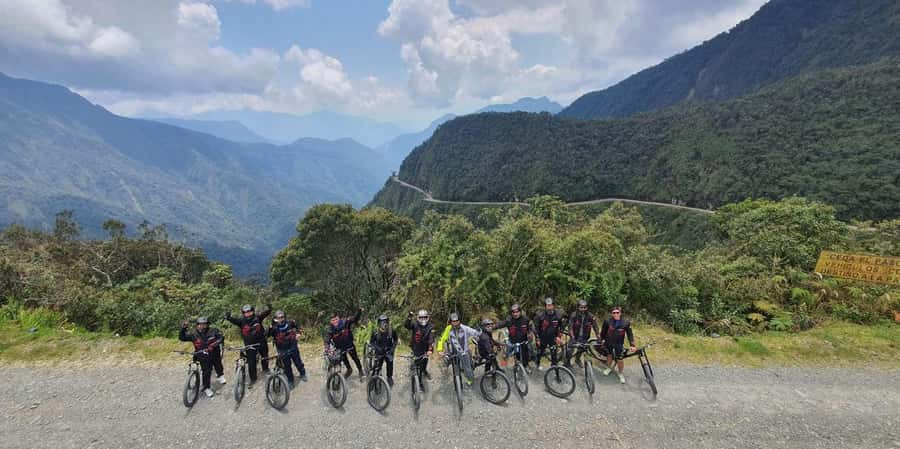
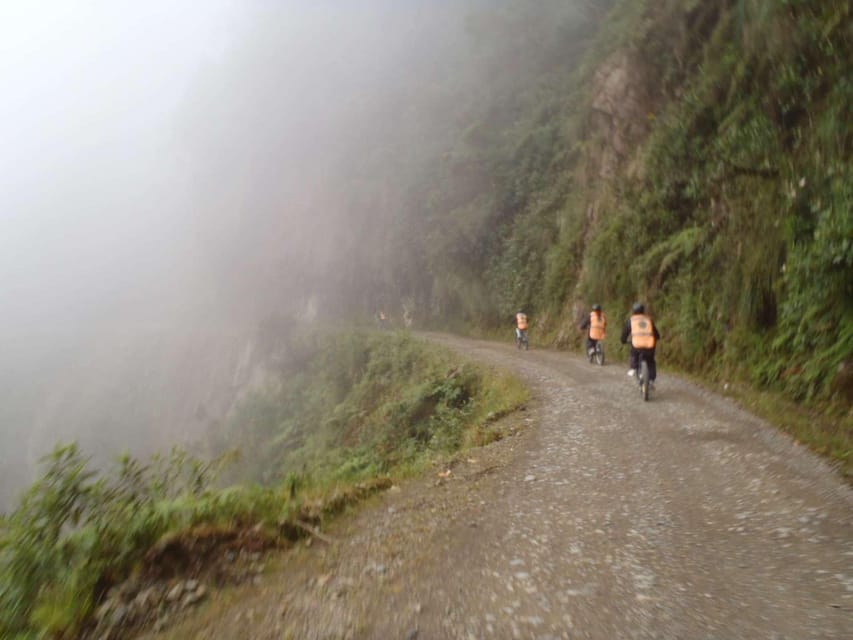
The central section covers about 10 kilometers of the road that gives the tour its name. This is the part most people have in mind when they book the experience, but it is also where you need the most discipline.
The group rides in a compact formation. That limits passing and keeps riders close to the guide, which is important on a narrow mountain road. You are not free to race ahead or set your own route. The point is controlled riding, not a downhill competition.
The road surface is described as compact, but conditions can change with weather. One verified review from Italy praised the experience during a rainy, cloudy day, and specifically credited the accompanying staff for handling the outing very well. Rain can make the day more atmospheric, but it can also affect grip and visibility, so the guide’s instructions matter even more.
You stop for snacks during this stage. Chocolate, fruit, and other appetizers are included, along with water. These breaks give your legs a rest and help you keep your energy up during a long day of repeated braking and descending.
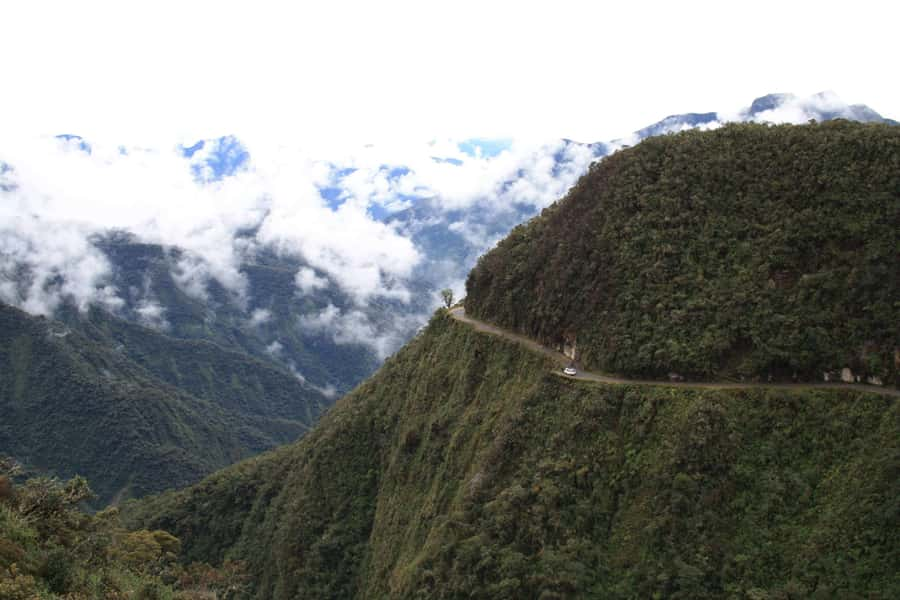
The views are a major part of the appeal. You move from the high starting zone toward a lower, warmer valley, with the road tracing a dramatic mountain route. The experience is active first and scenic second, so you should not expect a bus tour with long, relaxed viewing stops. You see the route from the saddle of a bicycle, at the speed of a controlled descent.
Stage 3: Another 32 kilometers to Yolosa
The final stage covers about 32 kilometers. It is longer than the named Death Road section, and that detail is easy to overlook when you focus only on the famous middle part.
The ride begins with a splash through a waterfall. That makes for a memorable moment, but it also confirms that this is not a polished, dry-road cycling excursion. Your supplied jacket and pants should help, though you may still get wet. Protect anything you carry, since the tour information does not promise waterproof storage for personal items.
By this point, you have already completed the paved descent and the 10-kilometer Death Road section. Fatigue becomes part of the calculation. A long final stage can feel easier because the road leads toward the lower valley, but your concentration may be lower after several hours on the bike.
The finish is in Yolosa. From there, the group goes to a hotel with showers and a swimming pool. This is a welcome finish to a dusty, wet ride. You can clean up, change clothes, and use the facilities before lunch.
The tour does not specify how long you spend at the hotel or whether pool use is guaranteed under every condition, so regard the showers and pool as part of the planned stop rather than the main reason to book. The main value is having a place to wash off and recover before the return trip.
Same base, a very different day:
- La Paz and El Alto: Cable Car Rides and Walking Tour
★ 4.8 · 790 reviews - La Paz Half-Day Walking Tour
★ 4.8 · 591 reviews - La Paz: Private City Tour with Cable Car & Moon Valley Visit
★ 4.9 · 508 reviews - La Paz: Full Day Trip to Copacabana and Isla del Sol
★ 4.5 · 400 reviews
Lunch, transport, and the long day
Lunch is included after the ride. Extra drinks at lunch are not included, so keep some money aside if you want something beyond the provided meal and water.
After the hotel stop and lunch, the group returns to La Paz along the new road. The stated return time is about 5:00 pm, though the overall day can feel longer because of the early start, mountain transfer, riding, meal, and drive back.
Round-trip transportation is part of the $140 price. That matters because the route begins at high altitude and ends in Yolosa, so organizing independent transport would be awkward. The included vehicle also gives the tour a clear structure: you start together in La Paz, ride the route, then return by road rather than trying to arrange your own pickup at the finish.
The itinerary is not a quick half-day activity. You should keep the rest of the evening light. If you have a late flight, a fixed dinner reservation, or another demanding activity planned, leave plenty of room for delays.
What the $140 price really covers
At $140 per person, this is not the cheapest way to see the route. But the price includes several costs that are easy to miss when comparing tours:
- Round-trip transport from La Paz
- A bilingual Spanish and English guide
- Full-suspension mountain bike
- Hydraulic disc brakes
- Helmet, gloves, jacket, and pants
- Water and snacks
- Lunch
- Hotel showers and pool stop
- A support van following the group
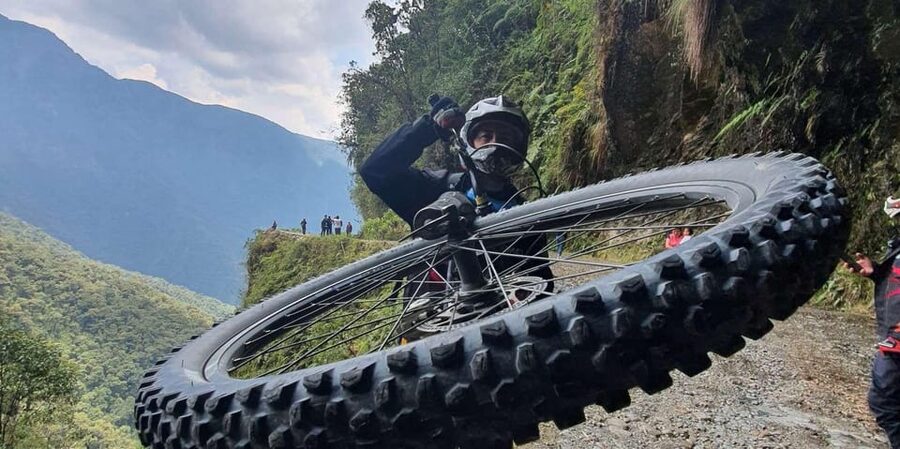
The equipment is important here. A basic bicycle could make the rough section uncomfortable and less controlled. The Rocky Mountain RMX with hydraulic brakes is a meaningful part of the value, particularly for riders who are used to modern mountain bikes and want proper braking power.
The small group also helps justify the price. Seven riders with one guide is easier to manage than a large convoy. You should get clearer instructions, less waiting at stops, and closer supervision on the most technical section.
There are two extra costs to remember. The national park fee is Bs. 50, and lunch drinks are extra. These charges are modest compared with the tour price, but including them in your budget prevents surprises.
The mixed rating, 3.4 from seven reviews, deserves attention. One verified booking from Italy rated the day five out of five and praised the guides, especially during wet and cloudy conditions. Another verified booking from the United Kingdom rated it one out of five after no one appeared at the meeting point and no contact arrived for more than 30 minutes. That is a serious service problem, especially because it was the person’s last day in La Paz.
This does not tell you that the ride itself is poor. It does tell you that confirmation is essential. Leave your WhatsApp number when booking, check messages before bed, and confirm the office location and departure time directly before the morning of the trip.
Who will enjoy this ride most
I would choose this tour if you want an active way to experience the road and are comfortable with a full day outdoors. You do not need to be an elite cyclist based on the information provided, but you should be prepared for a long ride with repeated downhill sections and a rough central road.
The tour suits you if:
- You want proper mountain-bike equipment rather than a basic bicycle
- You prefer a small group
- You value transport, food, safety gear, and a support van in one package
- You want an English-speaking guide
- You are willing to follow a controlled group pace
- You want the famous road as an active experience, not just a viewpoint
It may not suit you if you want a relaxed sightseeing day, dislike wet or dusty conditions, or are uncomfortable riding on rough mountain roads. The name is not just marketing theater. Even with a guide and safety van, you need to pay attention throughout the ride.
Practical advice for the morning
Wear comfortable clothing under the provided gear. The starting point is high and cold, while the finish is lower and warmer, so conditions change during the day.
Bring money for the Bs. 50 park entrance fee and extra lunch drinks. Keep your phone secure for the photo stops, and use protection against water if you carry electronics. The waterfall and possible rain make this a poor day for leaving a phone loose in an outer pocket.
Give yourself time at the meeting point. The office is Vicuña Travel, office 144, and the tour starts early. Since one booking had a serious no-show problem, I would not simply arrive without checking your WhatsApp messages and confirming the meeting details.
Listen closely during the first paved stage. Learn how firmly the hydraulic brakes respond, check your riding position, and ask questions before the road becomes rough. The early 22 kilometers are your practice period.
The guide speaks Spanish and English. The group is meant to stay compact, so do not treat the route as a private downhill run. Your safety depends partly on keeping the group together and following the guide’s directions.
Should you book the Death Road bicycle tour?
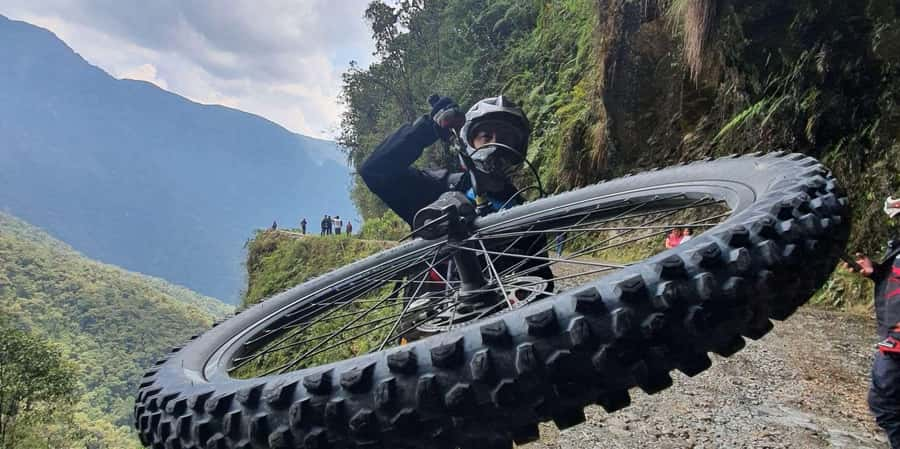
Book it if the combination of a famous mountain route, quality bikes, a small group, included lunch, and full transport matches what you want from your day in La Paz. The support van, proper brakes, safety clothing, snacks, and hotel stop make the $140 price easier to justify than a bare-bones bike rental.
I would book only after confirming the meeting arrangements. The positive experience during rainy conditions shows that the staff can deliver a memorable day, but the reported no-show is too serious to ignore.
For an active rider who wants to see Death Road from behind the handlebars, this is a practical package with a strong route and useful inclusions. For anyone seeking a gentle excursion or a guaranteed smooth start, choose carefully and make confirmation part of your plan.
FAQ
Where does the tour begin?
The meeting point is the Vicuña Travel office, office 144, in La Paz. The group then travels by transport to La Cumbre.
How high is the starting point?
The ride starts at La Cumbre, at approximately 4,700 meters above sea level.
How long is the tour?
It is a one-day activity. The return to La Paz is scheduled for approximately 5:00 pm after the ride, hotel stop, and lunch.
How far do you ride?
The route includes about 22 kilometers on paved road, 10 kilometers on Death Road, and another 32 kilometers to Yolosa.
Is lunch included?
Yes. Lunch is included after the ride at the hotel stop. Extra drinks during lunch are not included.
Is the national park entrance fee included?
No. You pay Bs. 50 at the police checkpoint after about 45 minutes of riding.
What equipment is provided?
The tour provides a full-suspension bicycle with hydraulic disc brakes, a helmet, gloves, jacket, and pants. Water and snacks are also included.
Is the tour available in English?
Yes. The live guide service is available in English and Spanish.
Just added around La Paz
- Private Tour of Tiwanaku Ruins from La Paz★ 5.0 · 3 reviews
- From La Paz: Lake Titicaca and Copacabana Private Tour★ 5.0 · 5 reviews
- Private Tiwanaku and Titicaca Day Trip from La Paz★ 4.8 · 3 reviews
- LA PAZ: GUIDED TOUR CHACALTAYA + VALLEY OF THE MOON★ 3.6 · 3 reviews
- La Paz: Uyuni tour ending in Atacama Chile by bus.★ 3.9 · 3 reviews
- La Paz: The Feminist Tour★ 5.0 · 3 reviews
- Titicaca Lake: Highlights Tour from La Paz by Bus★ 4.0 · 3 reviews
- La Paz: Uyuni Salt Flats & Lagoon Share Trip (private room)★ 4.7 · 4 reviews
Cycling Tours, compared.
Mountain Bike Down the World’s Most Dangerous Road
Read our review →
World’s Most Dangerous Road “Private” Mountain Biking Trip
Read our review →
Browse the lists this tour appears in