
Reviewed · UYUNI SALT FLAT TOURS
From La Paz: 3-Day Biking Tour Death Road & Uyuni Salt Flats
The unusual appeal here is the sheer amount packed into three days: you ride Bolivia’s famous Death Road in the morning, board a night bus to Uyuni, then cross the world’s largest salt flat by 4×4 before another overnight ride back to La Paz. It is an ambitious trip, not a slow holiday.
I like the full-suspension bike and complete safety equipment, which make the rougher sections more manageable. I also like the small group limit of 11 people and the chance to see Uyuni at sunset, a quieter and more beautiful finish than a quick daytime visit.
The main drawback is the timing. You go straight from the biking day to the night bus, and a tight transfer has already caused trouble for at least one participant. You need to carry your bags all day, keep cash handy, and pay close attention to every meeting point.
Key points at a glance
- Death Road begins gently: The first 22 kilometers are on asphalt, giving you time to gain confidence before the rougher road.
- Safety support follows the bikes: A support van stays behind the group, with stops for water, photos, snacks, and bike checks.
- Uyuni’s full-day route is packed: You visit the train cemetery, Colchani, the salt hotel, Dakar Monument, Flags of the World, and Incahuasi Island.
- The tour runs on overnight buses: You leave La Paz at 9:00 p.m. after biking and return from Uyuni at 9:00 p.m. the next night.
- Rain can change the Uyuni route: From January through April, Incahuasi Island may be inaccessible.
- Budget extra cash: The listed additional costs include Bs. 50 for Death Road, Bs. 30 for the salt flats, Bs. 10 for toilets, and about Bs. 150 for personal expenses.
Why this three-day route is worth considering
This tour links two of Bolivia’s biggest outdoor attractions without making you arrange separate transport. For $429 per person, you get the Death Road excursion, a full-suspension bicycle, safety gear, two English-speaking guide services, round-trip bus travel between La Paz and Uyuni, 4×4 transport on the salt flats, and meals listed for both touring days.
That is useful if you have limited time. You do not need to find a bike operator in La Paz, book a separate Uyuni vehicle, or work out the bus connection yourself. The trade-off is that the schedule leaves little room for delays, rest, or changes of plan.
I would view the price as reasonable for the amount of transport and equipment included, but not as an all-inclusive fare. You still need to pay entrance fees, buy drinks and snacks, cover toilet stops, and allow around Bs. 150 for personal spending. Bring cash in bolivianos rather than expecting every stop to accept cards.
The trip has a 4.7 rating from four reviews, with the strongest praise directed at the activities themselves. That matches the plan: the riding and salt-flat sightseeing are the main rewards. The weak point is communication around the buses, so I would treat the transport handoffs as something you must actively manage.
More salt flat trips running from La Paz
- From La Paz: Uyuni Salt Flat Tour & Overnight Roundtrip Bus
★ 4.5 · 327 reviews - La Paz: Uyuni Salt Flats & San Pedro de Atacama 3-Day Tour
★ 4.1 · 145 reviews - From La Paz: 4-Day Trip to San Pedro de Atacama w/Salt Flats
★ 4.2 · 109 reviews
7:30 a.m. at Maria Auxiliadora Church
The first morning begins at Maria Auxiliadora Church on 16 de Julio Avenue, in the El Prado area of La Paz. The meeting time is 7:30 a.m., and you should provide a working WhatsApp number for coordination.
Bring your passport and cash. You also need to bring your bags because you will not return to your La Paz hotel after the bike ride. That detail matters. Pack only what you need for three days, and keep valuables and travel documents in a small day bag that stays with you.
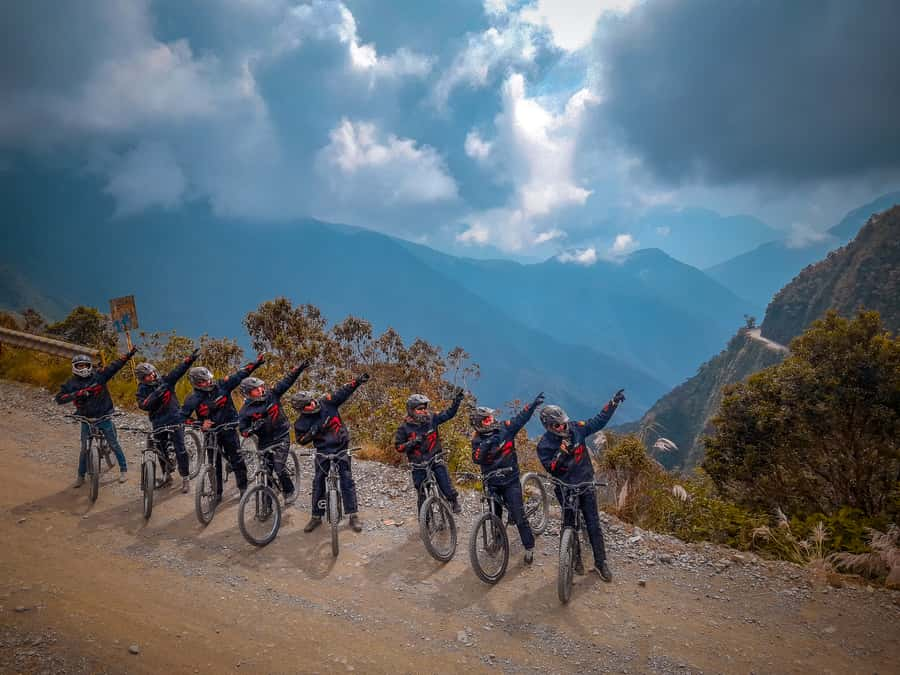
The group is limited to 11 people, which should make instructions and bike checks easier than on a large coach-style outing. The guides speak English and Spanish. No guide names are provided, so do not book this expecting a particular individual.
The first 22 kilometers build your confidence
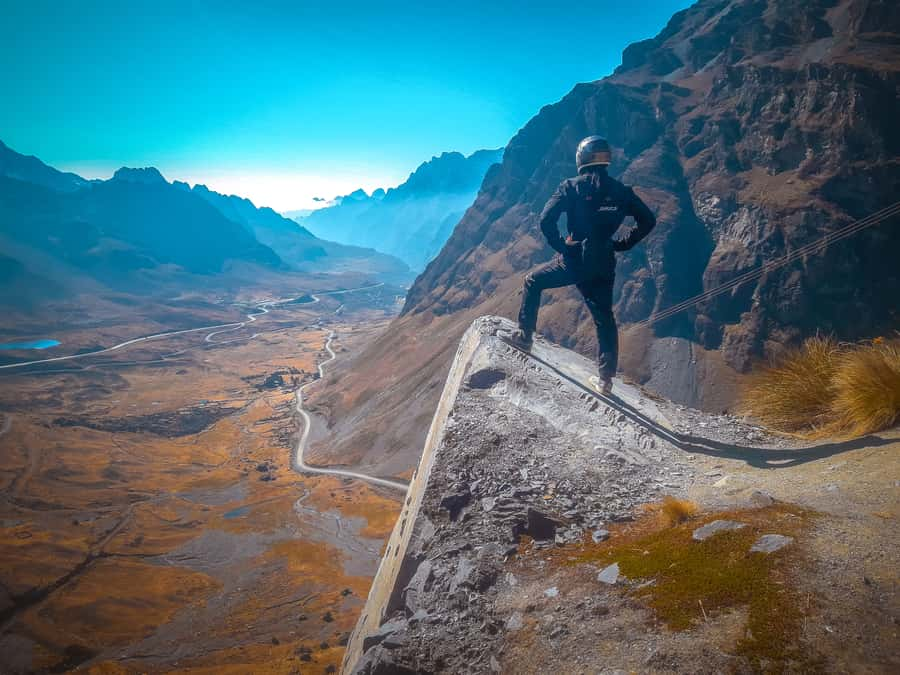
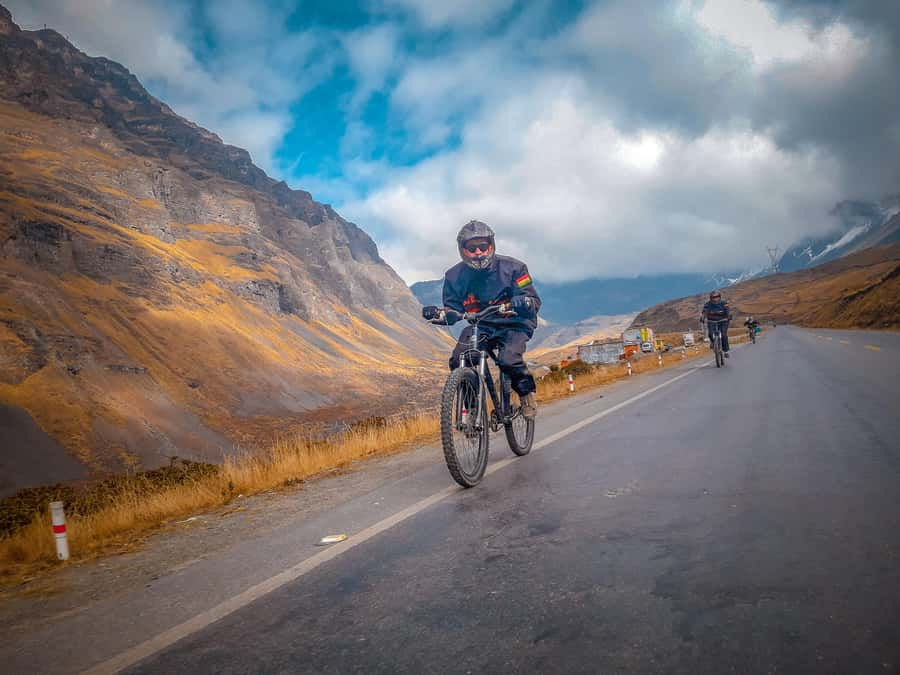
The biking begins with a 22-kilometer downhill run on asphalt. This is not yet the roughest section, and that is a good design choice. You have time to get comfortable with the bike, braking, steering, and the pace of the group before the more famous road begins.
At the police checkpoint, after roughly 45 minutes, you pay the Death Road national park entrance fee of Bs. 50 in cash. This fee is not included in the tour price.
The support van follows behind the cyclists. Stops are built in for water, photographs, and bike checks, so you are not expected to ride continuously without a pause. I would use the early section to check that your helmet sits firmly and that the bike feels right before the road becomes more demanding.
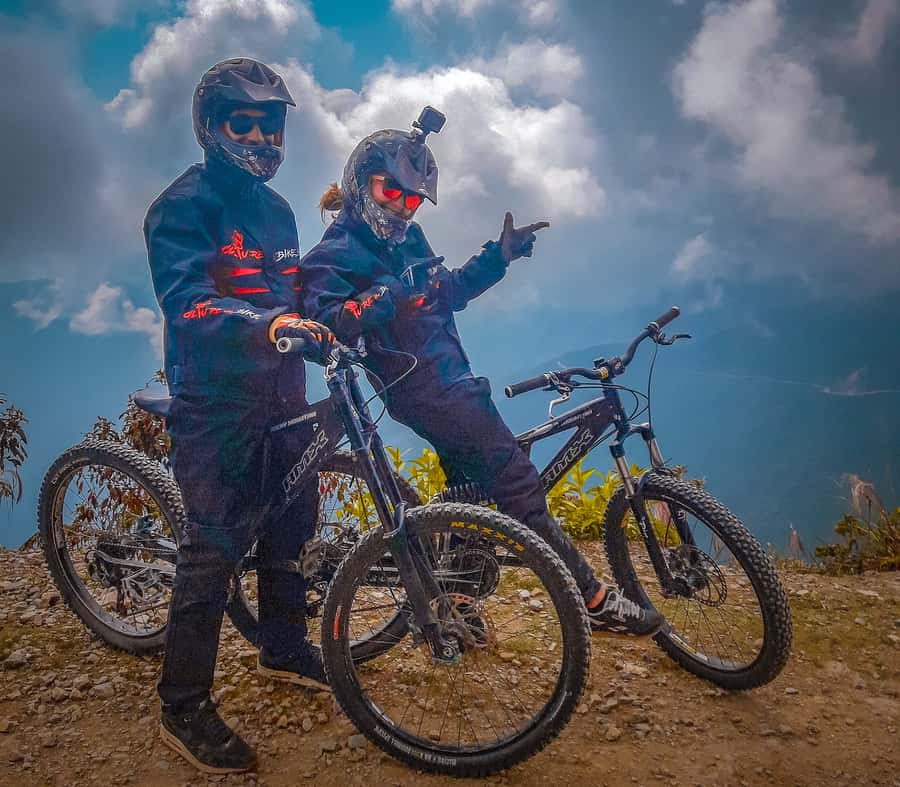
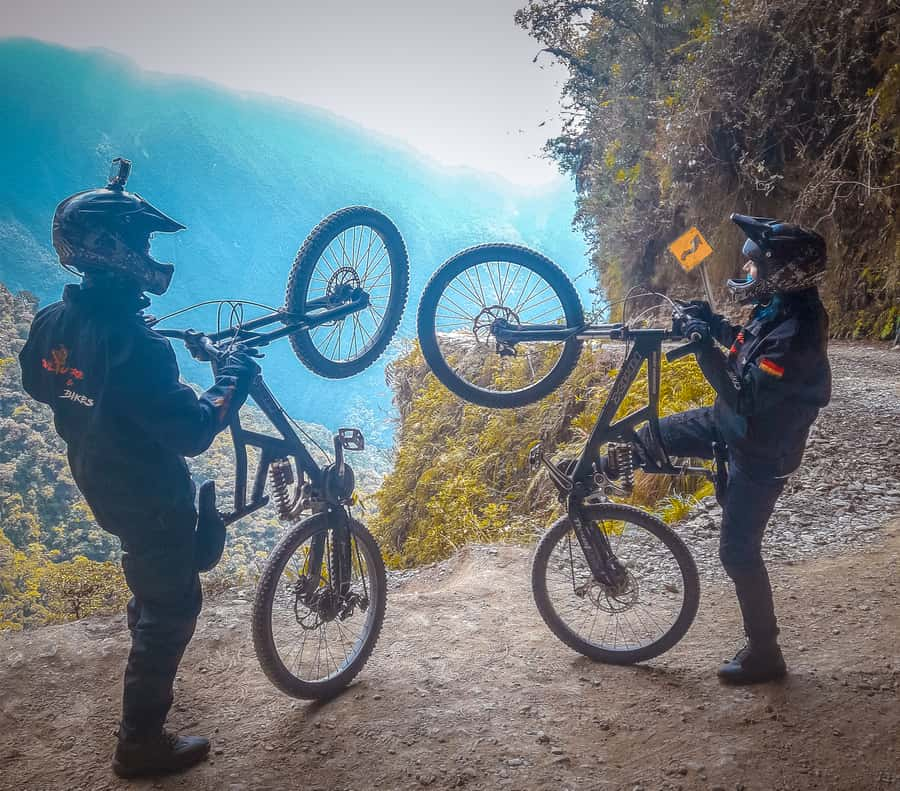
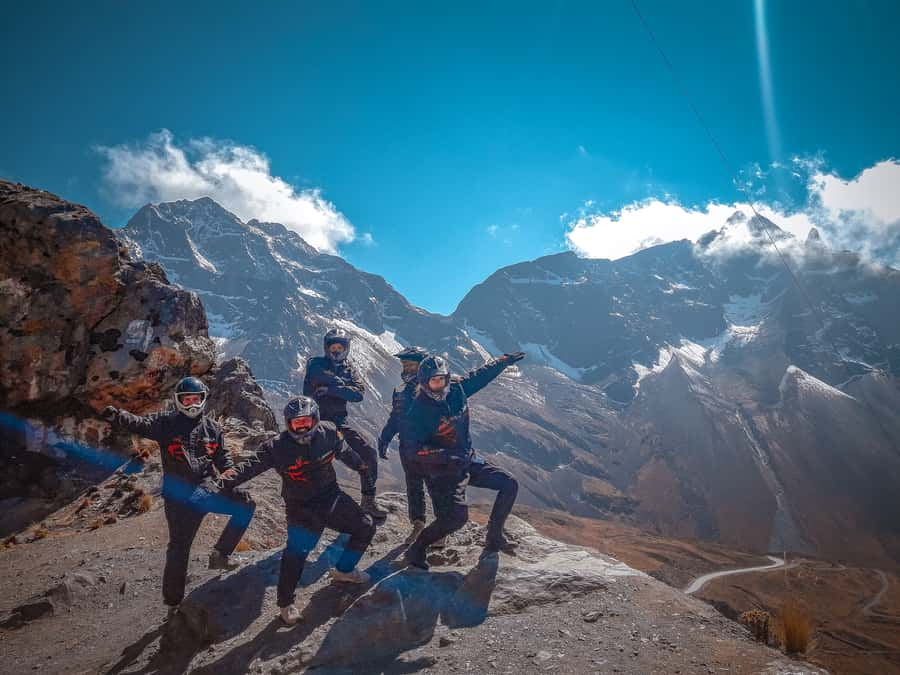
The full-suspension bike is important here. It will not remove every bump, but it is better suited to the changing surface than a basic road bicycle. The included full-face helmet, gloves, jacket, and trousers also reduce the amount of specialist gear you need to pack.
The roughly 10-kilometer Death Road section
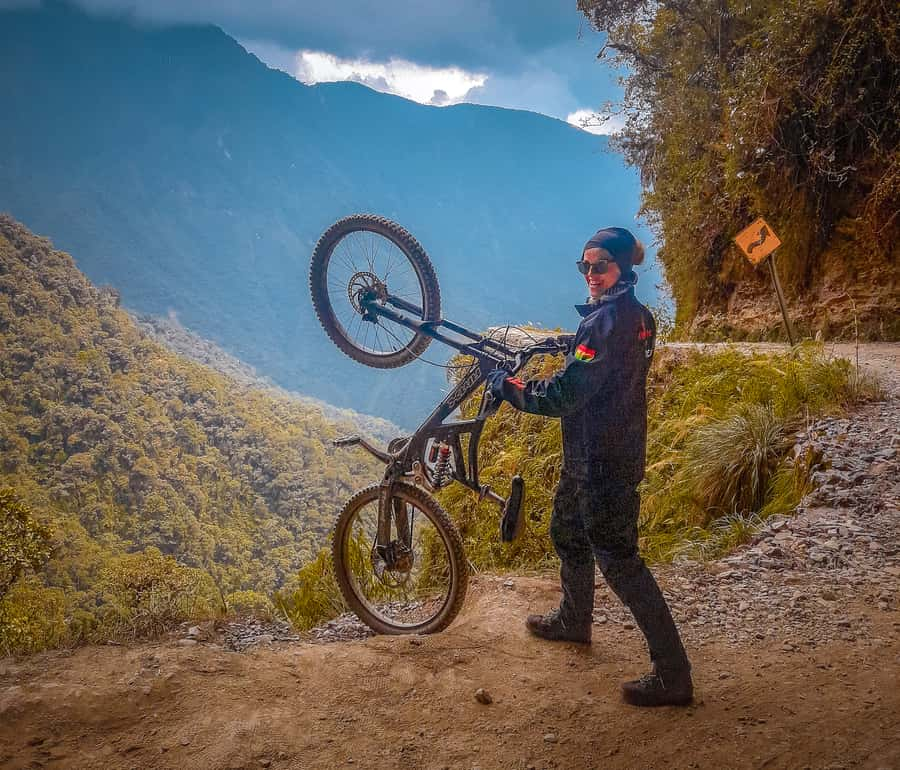
The central section is about 10 kilometers and is ridden in a compact group. The emphasis is on safety rather than racing. That suits this road, where keeping a steady line and leaving room for the cyclist ahead matters more than setting a fast time.
The guide keeps the group together, and the support vehicle remains behind. You also get a snack break. I like that the day is structured around controlled progress instead of treating Death Road as a contest.
Still, this is an active ride with rough surfaces and exposure to the elements. The tour specifically says it is not suitable for pregnant women or people with back problems. If you are uncertain about your fitness or comfort on a bicycle, this is a point to consider before booking.
The name draws attention, but the practical question is simple: can you manage a long downhill ride while following group instructions? You should be prepared for a full day outdoors and for the possibility that the road feels tiring even though much of the route is downhill.
More Death Road rides from La Paz
- La Paz: Mountain Bike Down the World’s Most Dangerous Road
★ 4.9 · 386 reviews - World’s Most Dangerous Road “Private” Mountain Biking Trip
★ 5.0 · 7 reviews - From La Paz: The World’s Most Dangerous Road Biking Tour
★ 4.7 · 68 reviews
Waterfall splash, lunch, and Yolosa
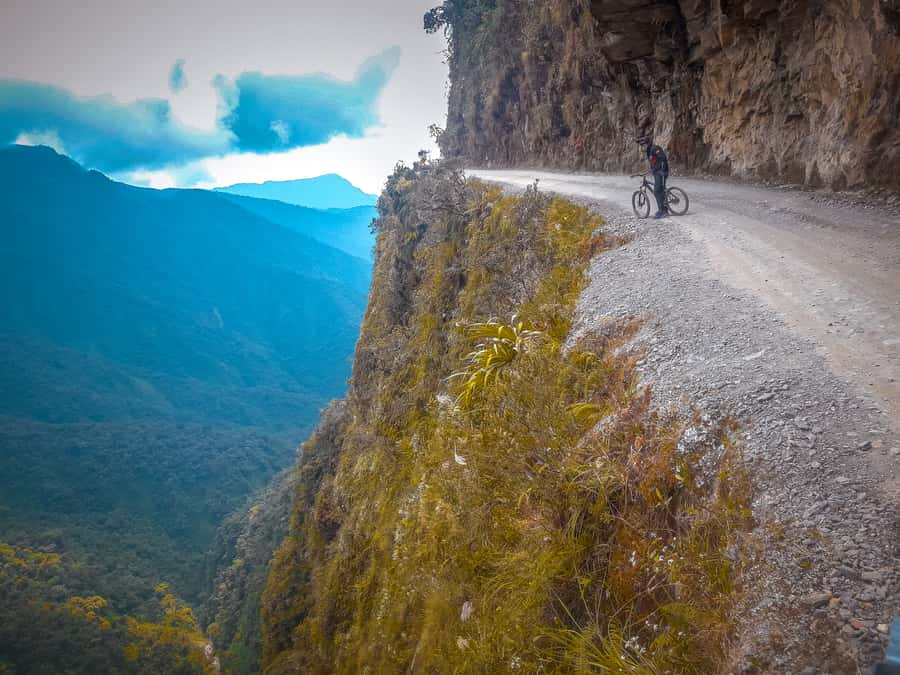
The final stretch covers about 32 kilometers and includes a waterfall splash. This is one of the memorable physical moments of the ride, but it also means your clothing may get wet or muddy. The included jacket and trousers are useful here, though you should still protect anything electronic in your bag.
The tour ends in Yolosa. From there, you go to a hotel with showers, a swimming pool, and a buffet lunch. This is an excellent practical finish to a demanding ride. A shower gives you a chance to change before the long bus connection, and the meal removes the need to search for food while tired.
Drinks during the Death Road lunch are not included. Snacks are also listed as an extra, apart from the snack provided during the ride. Carry some small cash so you can buy what you need without slowing down the group.
At about 5:00 p.m., you return toward La Paz by the newer road. The guide then takes you to the bus office for Uyuni. This is when the schedule becomes tight. You need to have your luggage with you and be ready to transfer directly.
The 9:00 p.m. bus to Uyuni
The bus to Uyuni leaves at 9:00 p.m. The gap between finishing the road tour, returning to La Paz, reaching the bus office, and boarding is not a generous one.
One participant reported having only three minutes to catch the bus after biking. That is a serious warning, even if the exact timing can vary. Keep your bags organized, do not wander away from the group, and ask the guide to confirm the bus office, departure time, and boarding procedure before you leave Yolosa.
This is also the least relaxing part of the trip. After a full day on a bike, you spend the night on a bus rather than in a bed. The reward is saving a full day of travel, but you should choose this tour because you value efficiency, not comfort.
A morning arrival and a 10:30 a.m. 4×4 departure
The bus is scheduled to reach Uyuni at about 7:30 a.m. You have free time, then walk to the tour office near the bus station. The 4×4 leaves at 10:30 a.m. for the salt flats.
The timing gives you a short window to eat, use the restroom, and orient yourself. It is not a full morning for sightseeing. One useful warning comes from the transport setup: a participant was directed the wrong way to the bus station in Uyuni. Confirm directions carefully and allow time to reach the correct office.
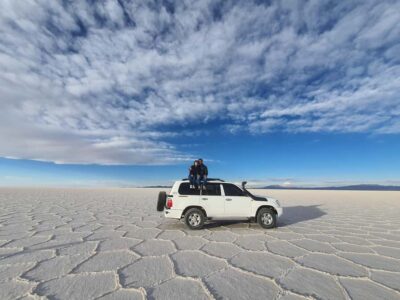
The salt-flat portion uses 4×4 transport with a rooftop luggage rack. This is the right type of vehicle for a route that moves between several widely spaced stops. You should still keep essential items with you rather than placing everything on the roof.
Train cemetery and Colchani
The first stops provide context before the wide white expanse of the salt flats. At the train cemetery, you see 19th-century locomotives left in the open. The rusting engines make a strong subject for photographs and give the day a link to Bolivia’s earlier railway era.
Colchani sits at the edge of the salt flats. Here, you can see the Rosario Cooperative’s salt iodization plant and learn how salt is extracted and processed. There is also a small market selling llama clothing and salt handicrafts, along with a small salt museum.
These stops are practical as well as scenic. They show that Uyuni is not just a photo backdrop. Salt production and local handicrafts remain part of the visit, and Colchani gives you a chance to buy a small item if you want a physical reminder of the region.
The salt flats at 3,665 meters
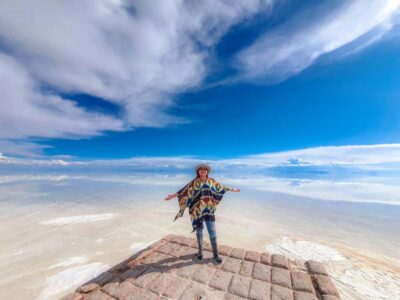
The main salt flats cover about 12,000 square kilometers and sit at an altitude of 3,665 meters. The scale is difficult to grasp from a description. Once the vehicle moves onto the broad white surface, the horizon can feel unusually open, and ordinary distances become hard to judge.
The route includes salt eyes, where water appears through the salt crust, along with places to stop for photographs. The famous visual trick photographs are possible here because the flat surface and open space distort your sense of distance. Bring a camera or phone with enough storage and battery, since photography is one of the main pleasures of the day.
The altitude also deserves respect. The tour data does not promise acclimatization help or medical support, so pace yourself and carry water. The day includes several stops, but the combination of height, heat, glare, and a long drive can be tiring.
Salt hotel, Dakar Monument, and the flags
The salt hotel is an unusual construction made entirely from salt blocks. It gives you a close look at how the region turns its defining material into architecture, rather than simply seeing salt under the wheels of the 4×4.
Next come the Dakar Monument and the Flags of the World. The monument marks the connection with the Dakar racing event, while the flag area offers a playful photo stop. You can bring your own flag and place it there for free, so pack one if that appeals to you.
These stops are brief, image-friendly additions to a day already centered on the salt flats. They may matter less to you if you prefer natural scenery over monuments and souvenir stops, but they break up the long drive and give you different subjects to photograph.
Incahuasi Island and its giant cactus
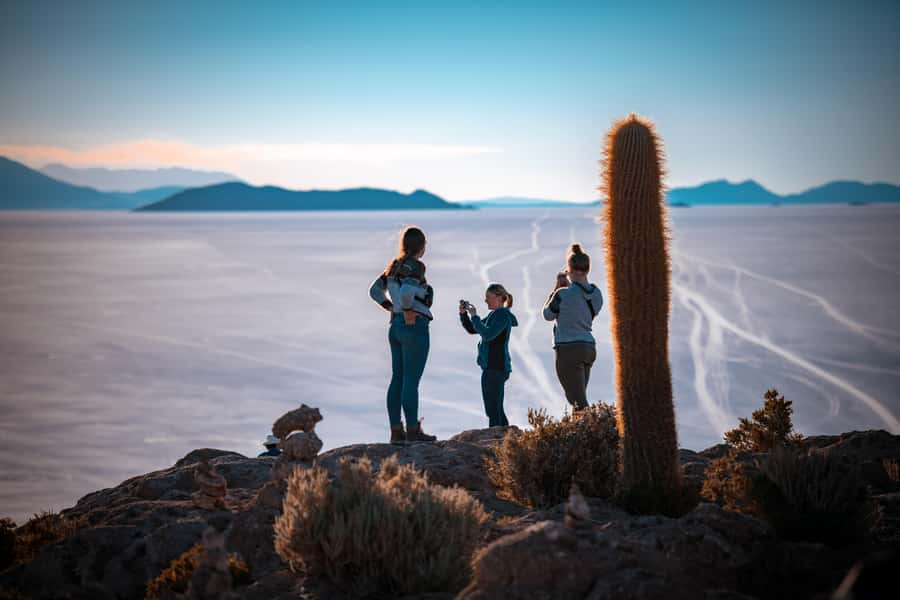
Incahuasi Island rises from the center of the salt flats like an isolated outcrop. It supports a separate ecosystem, including cacti from one to four meters high. After hours of white salt and open sky, the dark rock and tall cactus shapes create a sharp change of scene.
The island is also a good rest point, with broad views back across the salt flats. Access is not guaranteed in the rainy season, from January through April. The tour specifically warns that Incahuasi may be unavailable then, so do not book during those months with the expectation that this stop is certain.
The island visit is one of the reasons the full-day 4×4 route feels worthwhile. You are not simply driven to one viewpoint and returned. You see the salt production area, old trains, human-made monuments, salt structures, and an unusual cactus habitat in one long circuit.
Sunset, return bus, and arrival in La Paz
The day ends with sunset on the salt flats and a glass of wine. This is a generous finish to a packed schedule. The changing light should make the white surface look different from the bright daytime views, and the drink gives you a brief pause before the return journey.
You are scheduled back in Uyuni at about 7:30 p.m. The bus to La Paz leaves at 9:00 p.m., with arrival at the bus office listed at about 8:30 p.m. Again, confirm the exact meeting point and remain close to the guide. The earlier bus confusion makes this more than a minor suggestion.
You arrive in La Paz at about 6:30 a.m. on Day 3, finishing at the La Paz city bus station. There is no hotel night included at the end, and the tour does not provide a recovery day. Plan your next activity with the overnight ride and early arrival in mind.
What to pack and who should book
Pack light, since you carry your bags from the first morning through the bus transfers. Your passport and cash are required, and a valid WhatsApp number helps the operator coordinate with you.
I would also bring:
- A change of clothes after the bike ride
- Water and extra snacks
- Sun protection for the salt flats
- A small waterproof bag for electronics during the waterfall section
- A personal flag if you want to add one at the Flags of the World
- Basic medication or personal items you may need during the bus rides
This suits you if you want two major Bolivian sights in a short time and can handle a packed schedule. It is especially useful for people who prefer one organized arrangement over separate bookings.
I would not choose it if you want long hotel nights, flexible timing, or a relaxed Death Road ride. Pregnant women and people with back problems should not book, according to the stated restrictions. Pets are not allowed.
Cancellation is free up to 24 hours before the tour, and you can reserve now and pay later. Those terms help if your plans are still shifting, but they do not solve the central issue: you must be ready for a demanding three-day run.
Should you book this Death Road and Uyuni tour?
Book it if your priority is coverage. For $429, you combine a guided bike descent, safety gear, meals, two overnight bus journeys, a full-day 4×4 route, and a Uyuni sunset. That is a lot of Bolivia in a short window.
Before paying, accept the hard parts: the first night follows a full bike day, the second bus leaves soon after sunset, and transfer instructions need your attention. Ask the guide to confirm every bus detail, carry cash, and keep your luggage ready.
If you can manage that pace, this is a strong time-saving choice with two genuinely different experiences. If you have extra days, separate tours would give you more breathing room. For a tightly scheduled trip, this package makes sense, provided you treat the logistics as seriously as the scenery.
FAQ
How long is the tour?
The tour lasts three days. It begins and ends in La Paz, with overnight bus travel between La Paz and Uyuni.
Where does the tour begin?
The meeting point is Maria Auxiliadora Church on 16 de Julio Avenue in the El Prado area of La Paz. The meeting time is 7:30 a.m.
What equipment is provided for Death Road?
You receive a full-suspension bike, full-face helmet, gloves, jacket, and trousers.
Are the Death Road and salt-flat entrance fees included?
No. The Death Road entrance fee is Bs. 50, and the Uyuni Salt Flats entrance fee is Bs. 30. Both should be paid in cash.
Can I visit Incahuasi Island during the rainy season?
From January through April, access to Incahuasi Island is not possible according to the tour information.
What languages do the guides speak?
The guides speak English and Spanish.
Who should not take this tour?
The tour is not suitable for pregnant women or people with back problems. Pets are also not allowed.
More 3-Day Experiences in La Paz
- From La Paz: Huayna Potosí Mountain 3-Day Ice-Climbing Trip
★ 4.9 · 21 reviews - From La Paz: 3-Day Uyuni Salt Flat and Incahuasi Island Tour
★ 4.4 · 8 reviews - 3-Day Tour to Salt Flats and Lagoons
★ 4.5 · 168 reviews - From Uyuni: Red Lagoon & Uyuni Salt Flats 3-Day Guided Tour
★ 4.4 · 160 reviews
More Cycling Tours in La Paz
- La Paz | Death by Bike Route | Lunch
★ 3.4 · 7 reviews
Just added around La Paz
- Private Tour of Tiwanaku Ruins from La Paz★ 5.0 · 3 reviews
- Private Tiwanaku and Titicaca Day Trip from La Paz★ 4.8 · 3 reviews
- From La Paz: Lake Titicaca and Copacabana Private Tour★ 5.0 · 5 reviews
- LA PAZ: GUIDED TOUR CHACALTAYA + VALLEY OF THE MOON★ 3.6 · 3 reviews
- La Paz: Uyuni tour ending in Atacama Chile by bus.★ 3.9 · 3 reviews
- La Paz: The Feminist Tour★ 5.0 · 3 reviews
- Titicaca Lake: Highlights Tour from La Paz by Bus★ 4.0 · 3 reviews
- From La Paz: Trip to Uyuni Salt Flats with Wine at Sunset★ 4.4 · 4 reviews
Uyuni Salt Flat Tours, compared.

Uyuni Salt Flat Tour & Overnight Roundtrip Bus
Read our review →
Red Lagoon & Uyuni Salt Flats 3-Day Guided Tour
Read our review →
Uyuni Salt Flats & San Pedro de Atacama 3-Day Tour
Read our review →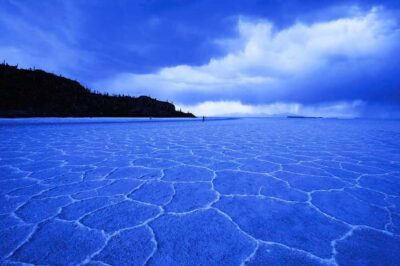
Uyuni Salt Flats and San Pedro de Atacama 3-Day Tour
Read our review →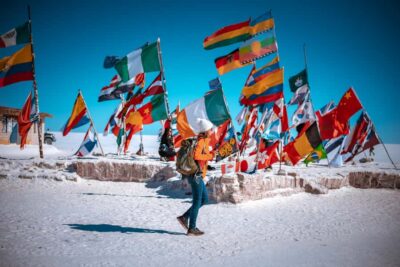
4-Day Trip to San Pedro de Atacama w/Salt Flats
Read our review →Browse the lists this tour appears in