
Reviewed · HUAYNA POTOSI AND ANDEAN CLIMBS
Climbing Huayna Potosí
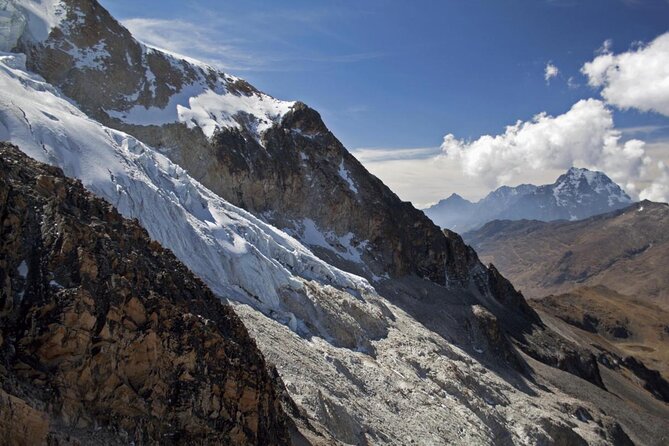
Huayna Potosí gives you a real high-altitude climb in just three days, with glacier training on the first day and a midnight start for the 6,088-meter summit. From the top, you can watch sunrise over the Cordillera Real, Bolivia’s great chain of snow peaks.
I like the sensible progression from La Paz to base camp, then high camp. I also like that the price includes transport, meals, shelter, and major climbing gear. The catch is serious: this is not a sightseeing walk, and the thin air, steep snow, cold, and very early summit push can stop a fit person who has not acclimatized well.
Key points to know before booking
- Three days, two high camps: You sleep first at 4,700 meters, then at 5,130 meters before the summit attempt.
- Ice practice comes first: Day one includes about an hour on an old glacier, using the climbing equipment.
- A steep final section: The route reaches 35 to 40 degrees on the glacier, then includes a 50-meter wall at roughly 55 to 60 degrees.
- The summit push starts at 1:00 a.m.: Expect four to seven hours of climbing before reaching the 6,088-meter top.
- Johnny, Jhonny, and Cristian are notable guides: These guides have been praised for patience, encouragement, and careful support on the mountain.
- Bring several key items: You need a sleeping bag, headlamp, sunglasses, two liters of water, and a ticket for the mountain area.
What climbing Huayna Potosí is really like
This is a compact mountaineering trip, not a casual day tour from La Paz. Huayna Potosí is often chosen by people who want their first major summit, but the mountain still demands respect. You will travel on a glacier, climb roped to a guide, sleep above 5,000 meters, and make the final ascent in darkness.
The advertised price is $230.77 per person. For three days, that is a fair package if the gear fits well and the guiding is attentive. Transport from La Paz, food, shelter, an English- or Spanish-speaking guide, helmet, insulated jacket, wind jacket, thermal trousers, boots, and ice axe are included.
You still need to budget for a sleeping bag, headlamp, sunglasses, two liters of water, the entry ticket, and any personal porter. Those missing items matter. A headlamp is especially important because the summit climb begins at 1:00 a.m., and you should not rely on a weak rental light or arrive without spare batteries.
The activity is private, so only your own group participates. That can make the pace more manageable than a large mixed group, although the exact guide-to-climber arrangement is not stated. The trip is often booked about 83 days ahead, so it is sensible to reserve early if your Bolivia schedule is fixed.
More Andean climbs and high-altitude days from La Paz
- La Paz: Charquini Mountain Guided Hike
★ 4.7 · 287 reviews - Full day Tour Charquini and Laguna Esmeralda
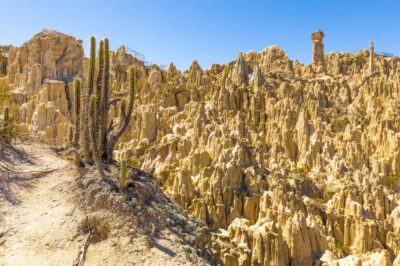
★ 4.5 · 73 reviews - From La Paz: Day Trip to Chacaltaya and Moon Valley
★ 4.4 · 65 reviews
Day one: fitting gear and learning on the glacier
You meet at the All Transport Tour Operator office at Av. Illampu 339 in La Paz at 8:30 a.m. The first task is an equipment check. Use this time carefully. Try the boots, jackets, trousers, helmet, and ice axe, and tell the staff at once if anything pinches, slips, or feels too light for the cold.
The drive to base camp takes about one hour and 45 minutes in private transport. Base camp sits at 4,700 meters, a major jump from city level. Even the arrival can feel demanding, especially if you have only recently reached La Paz.
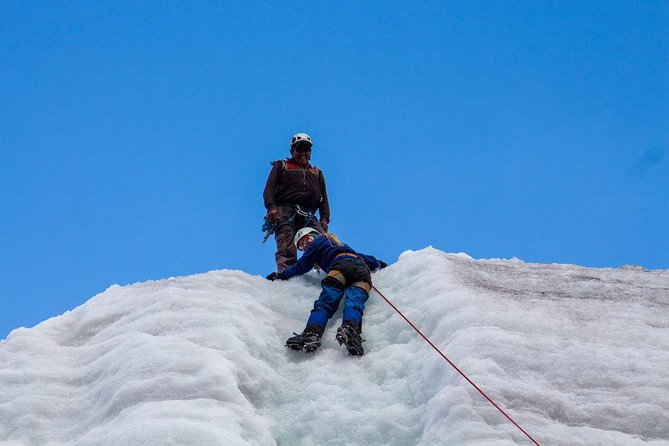
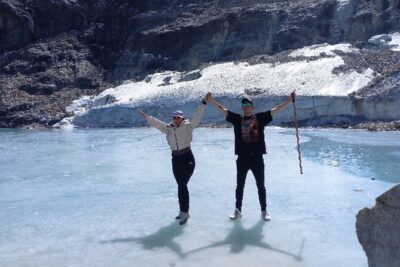
After lunch, you walk for about 90 minutes to an old glacier. This is the practical heart of the first day. For about an hour, you practice ice climbing with the equipment you will use higher on the mountain. You learn how to handle the ice axe and move in boots, while getting a first sense of steep snow and frozen ground.
This session is valuable for beginners because it turns unfamiliar gear into something usable before the summit night. Guides Johnny and Jhonny have been praised for taking time to explain equipment and for offering patient instruction at the training glacier. Cristian has also received strong praise for helping climbers reach the top.
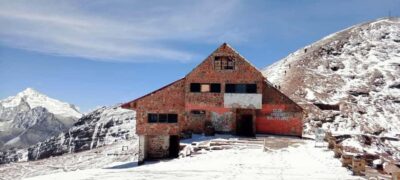
After practice, you return to the base-camp refuge. Dinner is scheduled for 6:00 p.m., followed by rest. The early dinner is practical, not luxurious. Your body needs time to adjust, and the next two days leave little room for lost sleep.
Day two: a slow gain to 5,130 meters
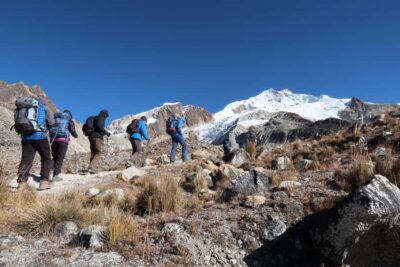
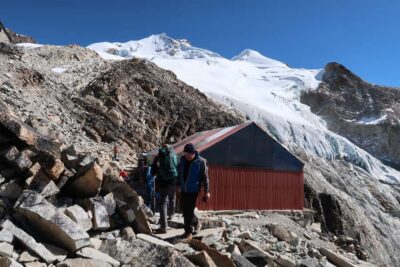
The second morning is kept for rest and acclimatization. Lunch is served at base camp, and then you begin the climb to the high camp refuge at 5,130 meters.
The ascent takes about three hours. That may sound short, but altitude changes the meaning of distance. A steady pace, regular breathing, and small sips of water matter more than speed. You carry your personal items, so pack only what you need for the climb and the night.
High camp is the staging point for the summit attempt. After reaching it, you have dinner and some free time for acclimatization. Rest begins around 6:00 p.m., though sleeping at 5,130 meters can be difficult. You wake around midnight for breakfast, so keep your evening simple and organize your headlamp, clothing, water, and gloves before trying to sleep.
This is also the point where you should be honest about how you feel. A moderate physical fitness level is required, but fitness does not prevent altitude sickness. If you have a strong headache, severe nausea, unusual weakness, or breathing trouble, tell the guide rather than trying to prove something.
Day three: the 6,088-meter summit push
Breakfast comes around midnight, and the climb begins at 1:00 a.m. You leave high camp roped to the guide and move onto the glacier. The route begins with slopes of about 35 to 40 degrees, and the climb to the summit usually takes four to seven hours.
The first section is described as relatively easy up to about 5,500 meters. That word is relative. In the dark, at high altitude, even moderate glacier travel can feel slow. The rope connection is important here, both for route control and for keeping the group together.
At about 5,500 meters, the route becomes more serious. You climb a wall about 50 meters long, with an incline of approximately 55 to 60 degrees. This is the section that separates a high-altitude hike from a genuine mountaineering outing. Your glacier practice from day one now has a clear purpose.
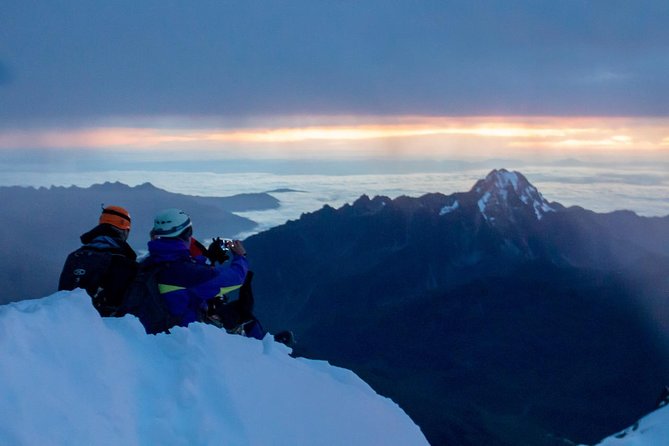
At roughly 5,800 meters, you reach a plateau. From there, the route follows a ridge to the summit at 6,088 meters. The planned arrival is around 6:30 a.m., which gives you a chance to see the Andes in the first light of day.
The summit stay is short, about ten minutes. That is sensible. At this altitude, the goal is to reach the top safely, enjoy the view, take a few photographs, and begin descending before fatigue builds.
You return to high camp in about two hours, collect your gear, and descend to base camp in another hour and a half. From base camp, private transport returns you to La Paz, with arrival expected around 2:00 p.m. It is a long final day, and you should not plan an important evening event immediately afterward.
A few more trips around La Paz worth a look
- La Paz and El Alto: Cable Car Rides and Walking Tour
★ 4.8 · 790 reviews - La Paz Half-Day Walking Tour
★ 4.8 · 591 reviews - La Paz: Private City Tour with Cable Car & Moon Valley Visit
★ 4.9 · 508 reviews - La Paz: Full Day Trip to Copacabana and Isla del Sol
★ 4.5 · 400 reviews
Guides and the quality of support
The strongest praise has gone to guides named Johnny, Jhonny, and Cristian. The spelling varies, but the message is consistent: these guides have been described as patient with equipment, encouraging during hard sections, and attentive to a climber’s pace.
That support matters more than cheerful conversation. On a 6,088-meter summit attempt, a guide needs to help you make sensible decisions, explain what is happening, and recognize when the mountain is winning. One climber described nearly quitting before Jhonny’s encouragement helped them continue to the top.
There is also a serious caution to consider. One account describes guides who failed to introduce themselves, gave little information, left climbers to walk alone after hikes, and did not stay close when one person was suffering from altitude sickness. That is a troubling description for a high-altitude trip.
I would handle this by asking clear questions at the office before departure: Who is my guide? How many climbers are attached to each guide? What happens if I cannot continue? Will the guide stay with me during every technical section and descent? The positive accounts suggest excellent support is possible, but you should confirm expectations directly.
Gear, food, and what you must bring
The included equipment covers the basics for a cold, technical climb:
- Helmet
- Feather jacket
- Wind jacket
- Thermal trousers
- Boots
- Ice axe
- High-mountain equipment
Food and shelter are included at base camp and high camp. The information does not specify menus, bedding, or refuge conditions, so do not expect a hotel-style stay. At 4,700 and 5,130 meters, the useful luxuries are a warm layer, dry socks, a good sleeping bag, and a reliable light.
You must bring or arrange:
- Sleeping bag
- Headlamp
- Sunglasses
- Two liters of water
- Mountain entry ticket
- Personal baggage carrier, if you need help carrying belongings
The headlamp is not optional in practical terms. You climb from 1:00 a.m., and the route is on a glacier and steep snow. Sunglasses are needed for the bright conditions after sunrise. The two liters of water are also your responsibility, so carry them from the start of the summit attempt.
Check the supplied boots before leaving La Paz. High-altitude footwear that does not fit can turn every step into a problem. The same goes for gloves and thermal layers, even though not every clothing item is listed separately.
Is $230.77 good value?
At $230.77, the tour sits in a useful middle ground for a three-day climb. You are paying for private transport from La Paz, meals, two mountain refuges, a guide, and a substantial amount of technical gear. Buying or renting all of that separately could take away much of the apparent saving.
The value depends heavily on the guide service and equipment condition. Several accounts describe high-quality gear, flexible date changes for illness, and professional mountain support. One account, however, says the price was much higher than competing local options and complains about extra charges for a headlamp.
That does not automatically make this package poor value. A cheaper climb is not necessarily a better climb if the equipment is worn or the guiding is weak. Still, compare prices in La Paz, ask exactly what is included, and confirm any rental charges before you pay.
The experience is recommended by 94 percent of customers and has a 4.8 rating from 50 reviews. Those numbers point to a strong overall record, but the negative safety account deserves attention because high-altitude climbing leaves little room for vague arrangements.
Who should book this climb?
This climb suits you if you already have decent fitness, have spent enough time acclimatizing in Bolivia, and want a real introduction to glacier travel. It is also a good fit if you value a short, focused trip with transport, food, shelter, equipment, and guiding arranged together.
You should think twice if you dislike cold nights, poor sleep, steep snow, or very early starts. Moderate fitness is the stated minimum, but the combination of altitude and technical climbing can be much harder than a normal three-day trek.
This is not the place to hide a medical problem or push through serious altitude symptoms. Tell the guide how you feel, and accept that reaching the summit is not the only successful outcome. Returning safely is the essential part of the climb.
Practical details before you commit
The meeting point is All Transport Tour Operator, Av. Illampu 339 in La Paz. The activity ends back at the same meeting point after the descent from base camp.
Confirmation is provided when you book. The experience requires good weather, and poor conditions can lead to a new date or a full refund. It also requires a minimum number of participants, although the activity itself is private for your group.
The cancellation policy is strict. If you cancel or request a change for another reason, your payment is not refunded. Because weather is central to the summit attempt, leave some flexibility in your Bolivia schedule if you can.
Should you book Huayna Potosí?
I would book this climb if you want a genuine high-altitude challenge and are willing to prepare properly. The glacier training, staged acclimatization, included technical gear, and praise for guides such as Johnny, Jhonny, and Cristian make the package appealing.
I would not book it blindly. Confirm the guide arrangement, inspect every piece of equipment, bring your own headlamp and sleeping bag, and ask how altitude problems are handled. If the operator answers those questions clearly, $230.77 can be a sensible price for a powerful three-day mountain experience. If the answers are vague, compare another La Paz outfitter before committing.
FAQ
Where does the Huayna Potosí climb begin?
You meet at All Transport Tour Operator, Av. Illampu 339, in La Paz, Bolivia.
How long does the experience last?
The climb lasts approximately three days and ends back at the La Paz meeting point.
What altitude is base camp?
Base camp is at approximately 4,700 meters.
What altitude is high camp?
The high camp refuge is at approximately 5,130 meters.
How high is the summit of Huayna Potosí?
The summit is at 6,088 meters.
What time does the summit climb begin?
You have breakfast around midnight, and the summit ascent begins at approximately 1:00 a.m.
How long does the summit ascent take?
The ascent from high camp usually takes four to seven hours.
Is climbing equipment included?
Yes. The package includes high-mountain gear, a helmet, feather jacket, wind jacket, thermal trousers, boots, and an ice axe.
What do I need to bring myself?
You need a sleeping bag, headlamp, sunglasses, two liters of water, the entry ticket, and a personal baggage carrier if required.
Just added around La Paz
- Private Tour of Tiwanaku Ruins from La Paz★ 5.0 · 3 reviews
- From La Paz: Lake Titicaca and Copacabana Private Tour★ 5.0 · 5 reviews
- Private Tiwanaku and Titicaca Day Trip from La Paz★ 4.8 · 3 reviews
- LA PAZ: GUIDED TOUR CHACALTAYA + VALLEY OF THE MOON★ 3.6 · 3 reviews
- La Paz: Uyuni tour ending in Atacama Chile by bus.★ 3.9 · 3 reviews
- Titicaca Lake: Highlights Tour from La Paz by Bus★ 4.0 · 3 reviews
- La Paz: The Feminist Tour★ 5.0 · 3 reviews
- From La Paz: Trip to Uyuni Salt Flats with Wine at Sunset★ 4.4 · 4 reviews
Huayna Potosi and Andean Climbs, compared.
Browse the lists this tour appears in