
Reviewed · HUAYNA POTOSI AND ANDEAN CLIMBS
From La Paz: Huayna Potosí 2-Day Climbing Trip
Huayna Potosí gives you a rare chance to attempt a 6,088-meter summit in only two days. The route begins with a drive from La Paz, reaches a glacier-side refuge at 5,150 meters, and finishes with a long night climb over snow, ice, and an exposed summit ridge.
I like the small-group guide ratio, about one guide for every two people, and the solid equipment package, including double boots, crampons, an ice ax, harness, helmet, and cold-weather clothing. I also like that the trip brings you close to real glaciers rather than keeping you on a simple hiking trail.
The catch is altitude. You need strong fitness and proper acclimatization, ideally six to eight days between 3,000 and 5,000 meters beforehand. The early start, cold, and 9 to 13 hours of climbing make this a serious mountaineering trip, not a sightseeing outing.
Key points before you book
- The summit reaches 6,088 meters: This is a genuine high-altitude climb with glacier travel and an exposed final ridge.
- The summit day lasts 9 to 13 hours: You climb from high camp, reach the top, and return to camp before descending to the road.
- Acclimatization matters more than past hiking alone: Six to eight days at altitude are recommended before attempting the peak.
- The gear package is generous: Crampons, double mountaineering boots, ice ax, harness, helmet, ropes, gaiters, and warm outer layers are provided.
- The $319 price includes the main logistics: Transport, one night at a refuge, meals and drinks at camp, a cook, guide, and first aid kit are covered.
- Private and small-group choices change the feel: Shared groups use roughly one guide per two climbers, while private trips provide one guide for each climber.
What kind of climb is Huayna Potosí?
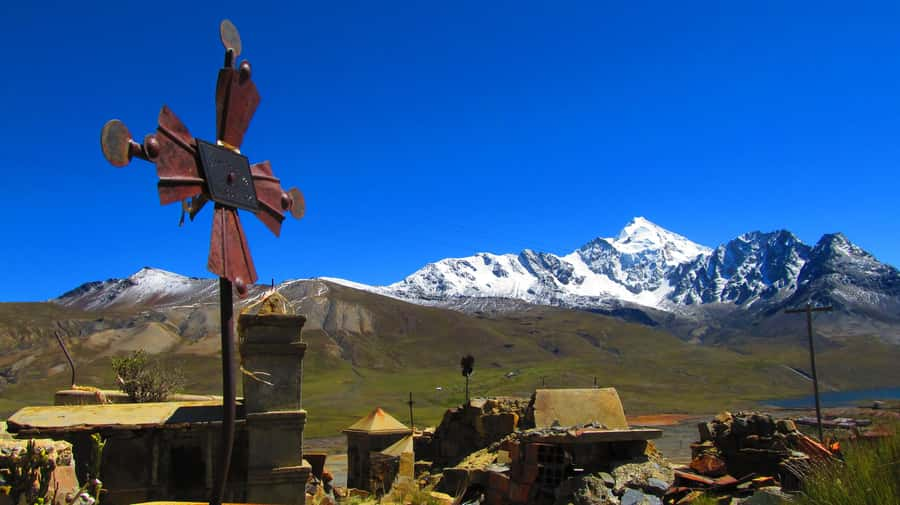
Huayna Potosí is often presented as an approachable 6,000-meter peak, but approachable does not mean easy. You still need to move over a glacier, manage climbing equipment, tolerate severe altitude, and keep going after very little sleep.
This two-day format is aimed at people with some climbing or high-altitude experience. It can also suit strong hikers who have trained properly and completed the recommended acclimatization. Your guide helps you build on existing skills, but the guide cannot remove the physical demands of thin air and cold.
You will climb in a shared group or choose a private arrangement. The shared option has about one guide for every two participants, a useful ratio for a technical route. The private option gives you one guide per person, which may be appealing if you want close attention or a pace tailored to you.
The operator uses English- and Spanish-speaking guides. A guide will check your gear either the day before or about 45 minutes before departure. Take that check seriously. It is the time to confirm that your boots fit, your layers work together, and your pack is not overloaded.
More Andean climbs and high-altitude days from La Paz
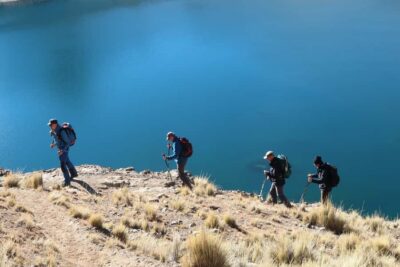
- La Paz: Charquini Mountain Guided Hike
★ 4.7 · 287 reviews - Full day Tour Charquini and Laguna Esmeralda
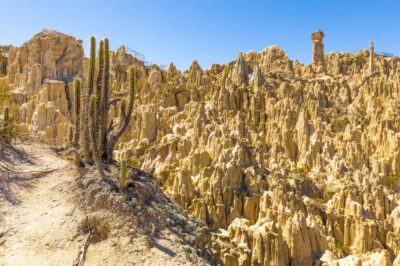
★ 4.5 · 73 reviews - From La Paz: Day Trip to Chacaltaya and Moon Valley
★ 4.4 · 65 reviews
Day 1: La Paz to Paso Zongo at 4,700 meters
The first day starts with about a 1.5-hour drive from La Paz. You climb from roughly 3,600 meters to Paso Zongo at 4,700 meters, so even the drive is part of your altitude adjustment.
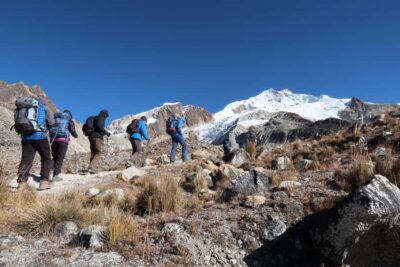
At Paso Zongo, you eat lunch at one of the refuges before starting the hike. The climb to high camp takes about three to four hours and follows a well-used rocky path. This is not yet glacier travel, but the height makes the walk much harder than the distance suggests.
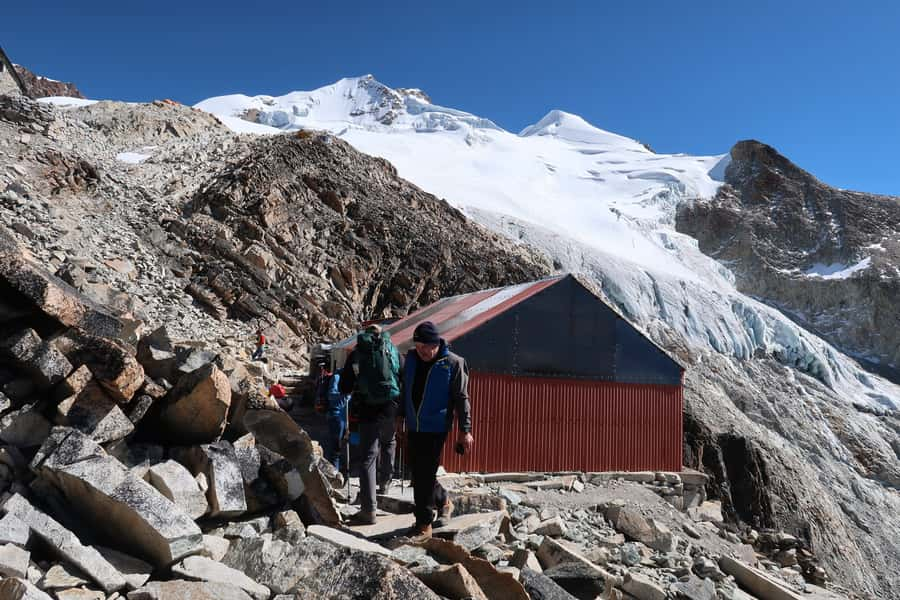
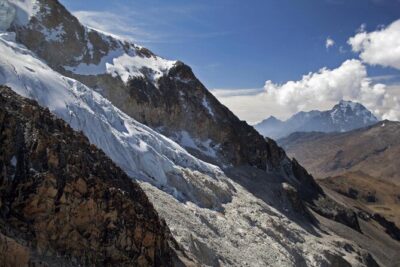
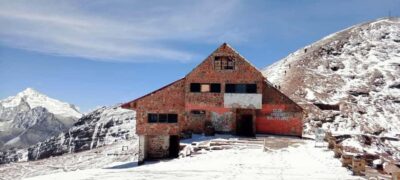
High camp sits on a rocky buttress at the base of the glacier, at 5,150 meters. The setting gives you your first close look at the ice route ahead, but comfort is limited. You will sleep in a refuge, prepare your equipment, eat dinner, and try to rest before the summit attempt.
Use this afternoon wisely. Drink steadily, sort your clothing, check your headlamp, and keep snacks where you can reach them. Your sleeping bag must be rated to minus 10 degrees Celsius, and the required pack size is 50 liters.
The supplied package includes main meals and drinks at camp, along with a cook. You still need to bring personal climbing snacks. That distinction matters, since the summit day is long and you should not depend only on the scheduled meals.
The midnight-style start and glacier route
The exact start time depends on conditions and the group, but day two begins very early. You put on warm clothing, climbing equipment, crampons, and a harness before leaving high camp.
The summit attempt takes about 9 to 13 hours. That figure includes the climb up, time at the summit, and the return to high camp. It does not describe a relaxed hike. You need to move steadily while conserving energy for the upper route.
The first section follows a trail across the glacier. Your guide manages the rope system and mountain protection, while you focus on footwork and pace. The operator provides ropes and protection, as well as an ice ax, crampons, helmet, gaiters, and double mountaineering boots.
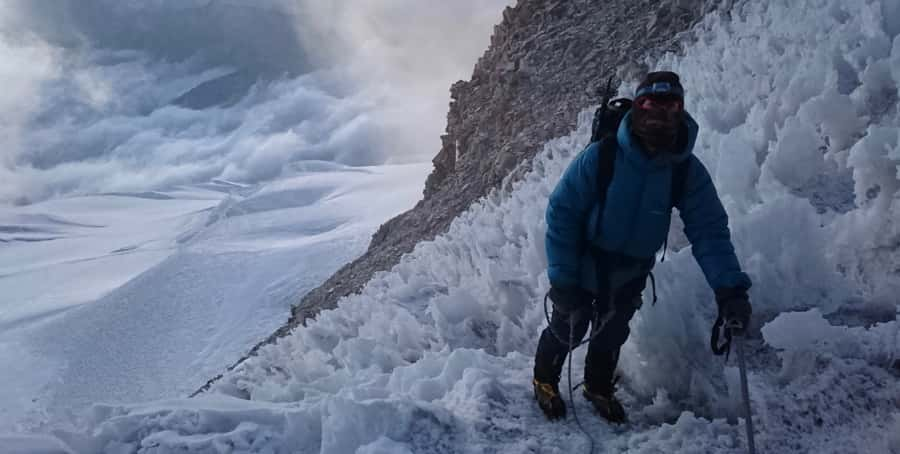
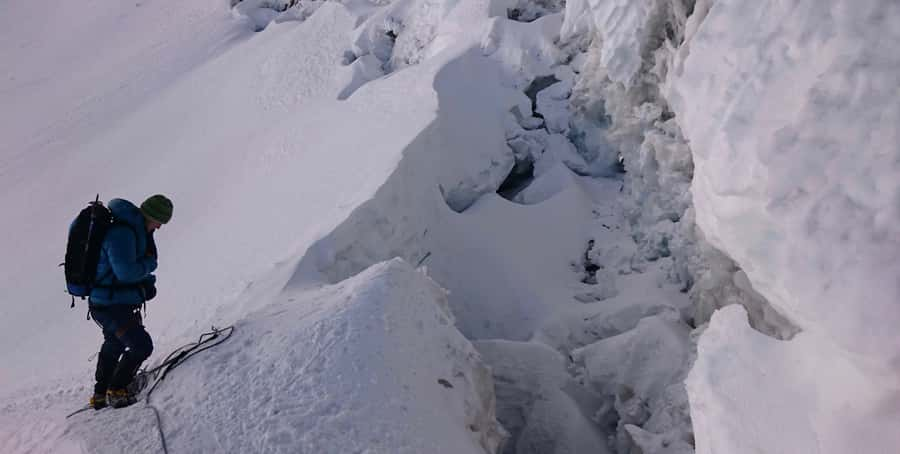
At about 5,600 meters, you reach Pala Chica. This is the first steep section, a small ice and snow wall around 10 meters high. It is short, but it changes the character of the climb. You are no longer simply walking uphill. You are using mountaineering technique under conditions where every movement costs more energy.
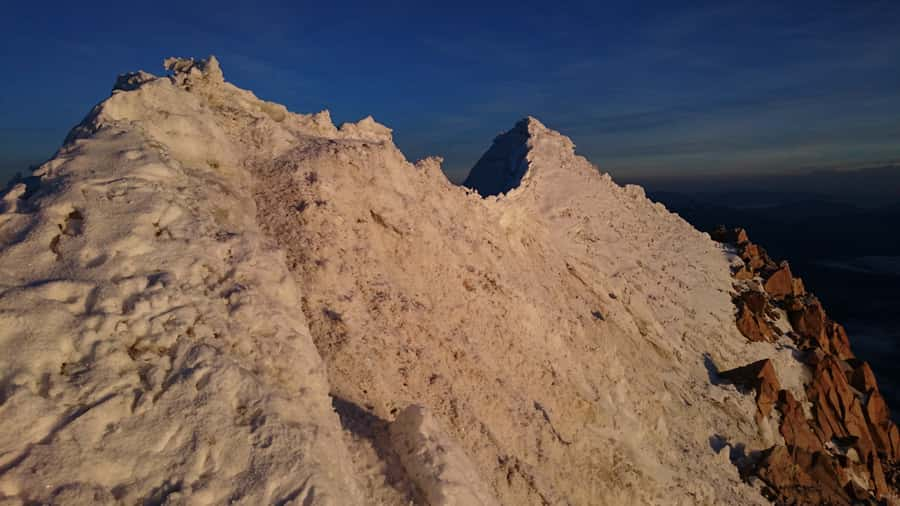
After Pala Chica, the glacier route continues toward 6,000 meters. From there, the summit at 6,088 meters comes into view. This can be a psychologically important point, but do not mistake sight of the summit for the end of the hard work. The final ridge remains exposed and demands care.
The 6,088-meter summit ridge
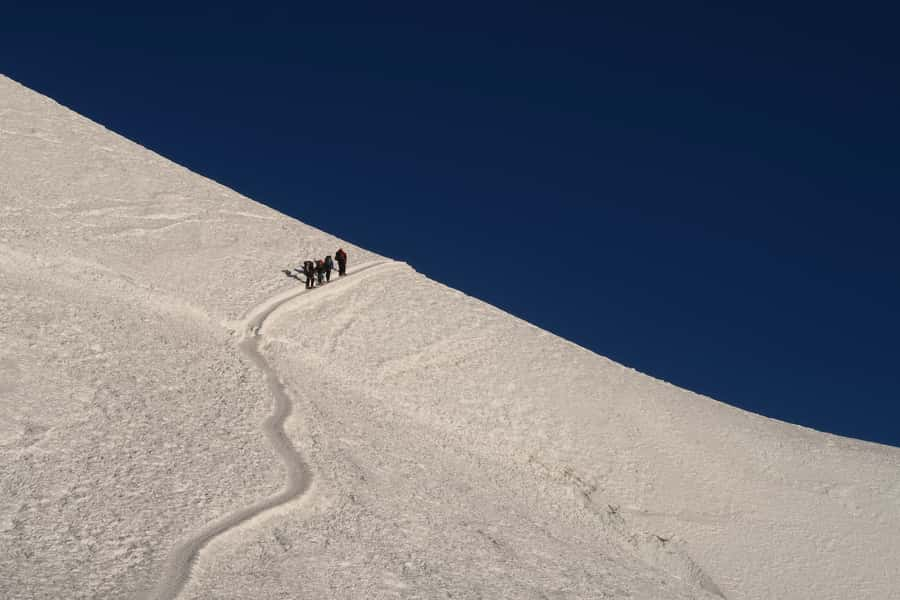
The last section takes you along an exposed ridge to the top. Your guide sets the pace and handles the climbing protection, while you concentrate on balance, breathing, and deliberate steps.
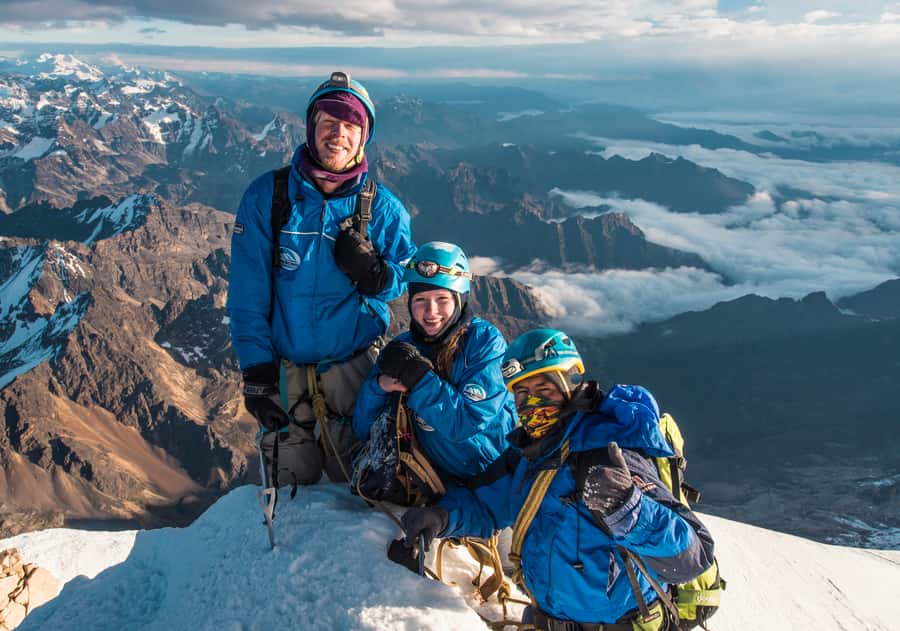
At the summit, the reward is not only the altitude number. You can look south toward Illimani, which rises to 6,439 meters, and north toward Illampu at 6,368 meters. Views also extend toward the Cordillera Real and Lake Titicaca, giving you a broad sense of the mountain region around La Paz.
You will have time for summit photos, but keep it sensible. At 6,088 meters, cold and fatigue are part of the equation. The summit is a place to appreciate the achievement, not a place to linger without reason.
The descent retraces the route to high camp. Going down can feel easier, but glacier travel still requires attention, especially after a long climb. Once back at high camp, you take a short rest, pack your gear, and descend to base camp.
From base camp, transport takes about an hour to return to La Paz. You are dropped at the original meeting point, though the exact meeting point can vary depending on the option booked. Hotel pickup is not included.
A few more trips around La Paz worth a look
- From La Paz: Uyuni Salt Flats 2-Day Tour with Bus Transfers
★ 4.3 · 90 reviews - From La Paz: 2-Day Tour to Isla del Sol & Lake Titicaca
★ 4.3 · 54 reviews - La Paz: 2-day Excursion to Lake Titicaca and Sun Island
★ 3.6 · 6 reviews - Sucre: 2 days trek in Inca Trails and the Crater de Maragua
★ 4.9 · 11 reviews
What the $319 price covers
At $319 per person, the trip offers reasonable value if you need a guided climb and equipment support in Bolivia. The cost includes the professional mountain guide, transport, one night of accommodation, a cook, main meals and drinks at camp, a first aid kit, and an emergency oxygen bottle kept only up to high camp.
The oxygen is not used during the climb. It is emergency equipment for high camp, so you should not treat it as a solution for poor acclimatization or altitude illness.
You also receive a free T-shirt at the end and a BUFF at the start. These are pleasant extras, but the important value lies in the guide, transport, refuge, food, and technical equipment.
Several useful items are add-ons. A sleeping bag and backpack can be booked, as can porters for loads up to 20 kilograms. Porter service is one-way only, so check exactly how your equipment will be handled before you leave. If you use your own sleeping bag, remember that a minus 10 degree rating is required.
You must supply snacks, thermal underwear, thin liner gloves, personal insurance, and any extra services not listed. Sunscreen and sunglasses are especially important at altitude, where snow and ice reflect strong light.
The local partner recommends tipping the guide 15 to 20 percent at the end. Build that into your budget if the service meets your expectations.
Equipment, clothing, and the gear check
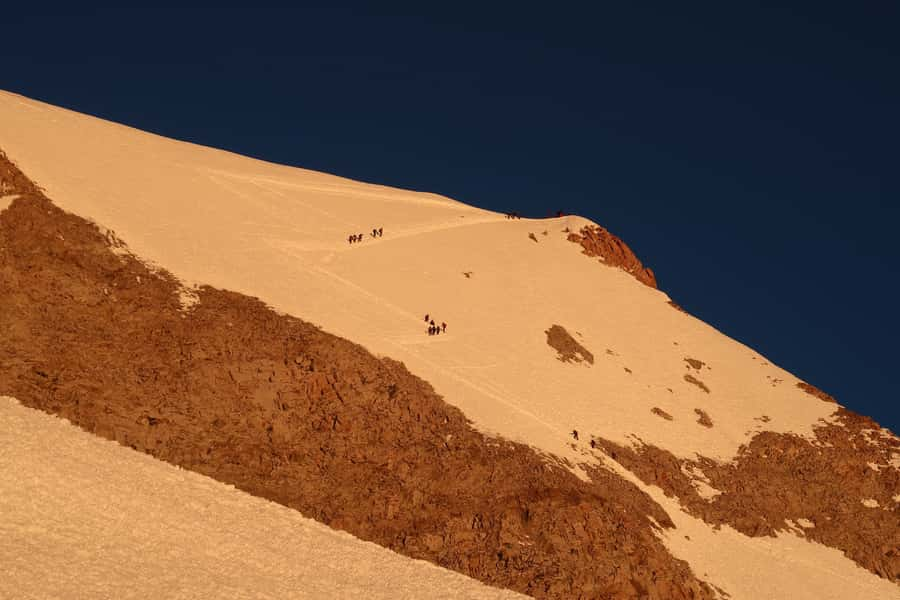
The included equipment removes one of the biggest barriers to trying a first serious mountaineering route. You receive double mountaineering boots, an ice ax, crampons, harness, helmet, gaiters, ropes, and protection for the climbing sections.
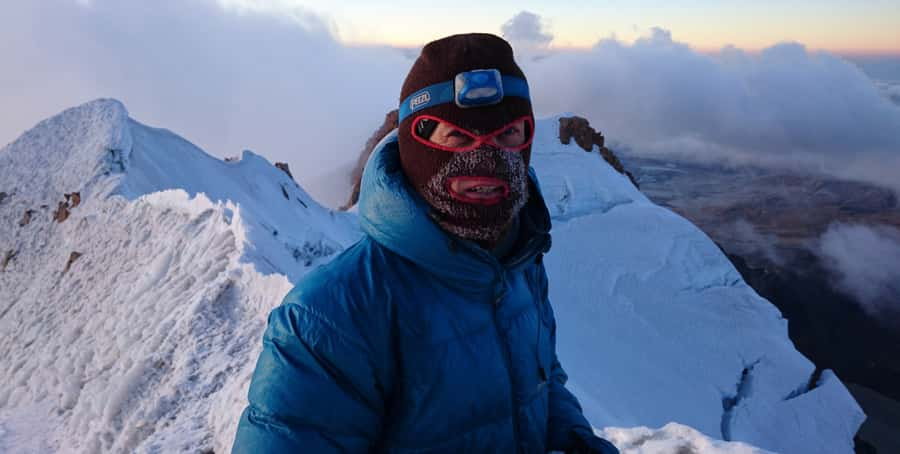
The clothing support includes extra jackets, cold-weather pants, thick gloves, and a balaclava. A headlamp is available if needed, but batteries are not included, so bring compatible batteries yourself.
You still need personal layers. Pack thermal underwear, warm clothing, socks, gloves, and a sleeping bag if you are not renting one. Bring sunscreen, sunglasses, snacks, and a passport or identity card.
The gear check may take place the day before or 45 minutes before the climb. Do not wait until the mountain to discover that your boots pinch or your gloves are too thin. A good fit matters more than looking neat, and you should tell the guide about any discomfort early.
Acclimatization and health concerns
Altitude is the main issue here. The recommended preparation is six to eight days between 3,000 and 5,000 meters, with an example such as Austria Peak at 5,300 meters. This advice is not a minor suggestion. It is the clearest sign that the climb should be treated as a planned mountaineering objective.
Past hiking experience helps, but it does not automatically prepare you for 6,000 meters. The climb demands fitness, patience, and the ability to function after an early start and limited rest.
The local partner suggests acetazolamide, also called Diamox, at 125 milligrams in the morning and 125 milligrams in the evening before the climb. Medication decisions should be handled carefully, and the supplied program does not replace personal medical advice.
This activity is not suitable for pregnant women, people with mobility impairments, people with heart problems, or people with pre-existing medical conditions. Personal insurance is not included, so check your coverage before committing.
Bad weather can cancel the climb without a refund. That is important for budgeting, since mountain conditions are beyond the operator’s control and the summit attempt depends on safe conditions.
Who should choose the private option?
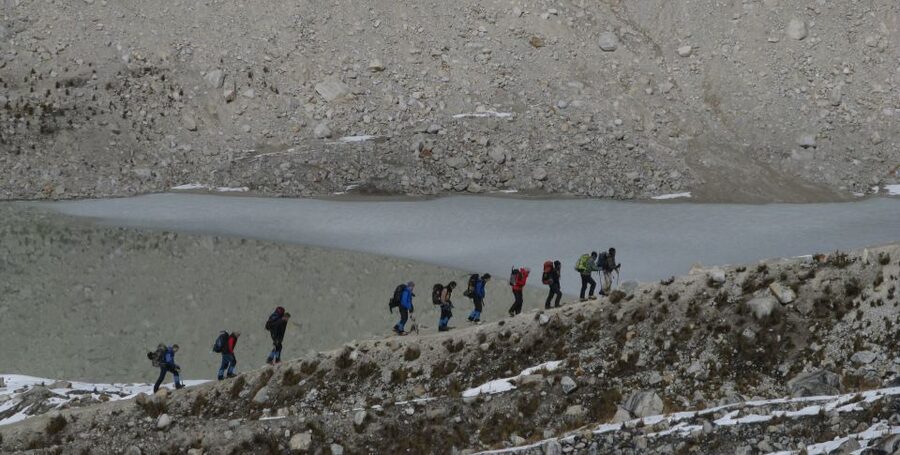
The shared group should suit climbers who are comfortable working at a steady group pace and want to keep the price lower. With about one guide per two participants, it still offers close supervision.
The private option is the stronger choice if you want one guide assigned to you. It may also make sense if you are nervous about glacier travel, have a preferred pace, or want the guide’s full attention during the steep sections.
Neither option changes the basic demands of the mountain. You still need to acclimatize, carry required personal items, and handle a long summit day. A private guide improves attention and flexibility, but it does not make 6,088 meters easy.
Should you book the Huayna Potosí climb?
Book it if you want a real high-altitude mountaineering challenge and can spend the time acclimatizing first. The combination of a glacier route, technical equipment, close guide support, and views from a 6,088-meter summit gives this trip much more substance than a standard day hike.
I would not book it as a spontaneous add-on to a short La Paz visit. The two-day schedule is compact, but the preparation is not. You need the right fitness, warm clothing, a proper sleeping bag or rental, and a realistic plan for altitude.
The strongest reasons to choose it are the experienced guide support, good equipment provision, and the chance to see glaciers at close range. The main reasons to hesitate are the severe altitude, long summit day, early start, and weather risk.
If you are properly acclimatized and ready for a demanding climb, the $319 cost is fair for the transport, refuge, meals, guide, cook, and technical gear. If you are unsure how your body handles altitude, choose a lower objective first and save Huayna Potosí for a better-prepared attempt.
FAQ
How high is the summit of Huayna Potosí?
The summit is 6,088 meters above sea level.
How long is the Huayna Potosí trip?
The experience lasts two days. The summit day involves about 9 to 13 hours of climbing.
How much acclimatization is recommended?
Six to eight days between 3,000 and 5,000 meters are recommended before the climb. Austria Peak, at 5,300 meters, is given as an example of a prior acclimatization climb.
What climbing equipment is provided?
The equipment includes double mountaineering boots, ice ax, crampons, harness, extra jackets, cold-weather pants, thick gloves, balaclava, gaiters, helmet, ropes, and climbing protection. A headlamp can be provided if needed, but batteries are not included.
Is a sleeping bag included?
A sleeping bag is included only if you book it as an add-on. The required rating is minus 10 degrees Celsius.
Are meals and accommodation included?
One night of accommodation at high camp is included, along with main meals and drinks at camp and a cook.
What happens if bad weather cancels the climb?
There is no refund if the tour is canceled because of bad weather. Free cancellation is available up to 24 hours before the activity for a full refund when the cancellation is made within the stated policy.
Just added around La Paz
- Private Tour of Tiwanaku Ruins from La Paz★ 5.0 · 3 reviews
- From La Paz: Lake Titicaca and Copacabana Private Tour★ 5.0 · 5 reviews
- Private Tiwanaku and Titicaca Day Trip from La Paz★ 4.8 · 3 reviews
- La Paz: Uyuni tour ending in Atacama Chile by bus.★ 3.9 · 3 reviews
- LA PAZ: GUIDED TOUR CHACALTAYA + VALLEY OF THE MOON★ 3.6 · 3 reviews
- La Paz: The Feminist Tour★ 5.0 · 3 reviews
- Titicaca Lake: Highlights Tour from La Paz by Bus★ 4.0 · 3 reviews
- From La Paz: Trip to Uyuni Salt Flats with Wine at Sunset★ 4.4 · 4 reviews
Huayna Potosi and Andean Climbs, compared.
Browse the lists this tour appears in